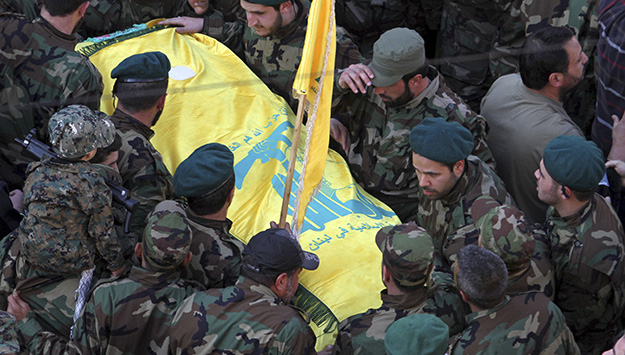
An Israeli helicopter fired rockets on a convoy in the Golan Heights on January 18, killing six members of Hezbollah and an Iranian general. MEI’s Randa Slim explains the context surrounding the attack and the likely repercussions.
Why did Israel choose this time to attack Hezbollah and Iranian targets in the Golan Heights?
As fears of an ISIS surge in northern Lebanon continue to rise, it is important to have a balanced perspective on the makeup of current Lebanese Sunni Islamist groups. I recently spent three months conducting fieldwork in Lebanon, interviewing representatives from a wide variety of Islamist groups. I present my findings below.
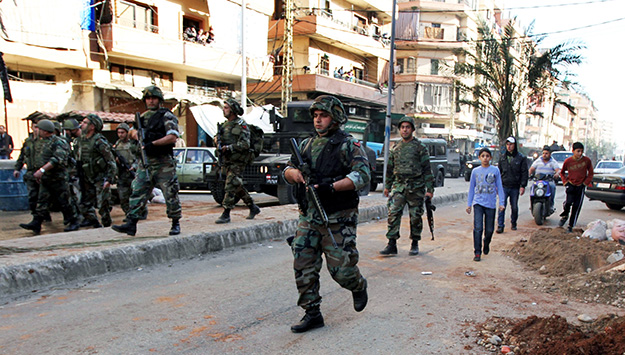
The Syrian Conflict and the Ascendancy of the Lebanese Armed Forces
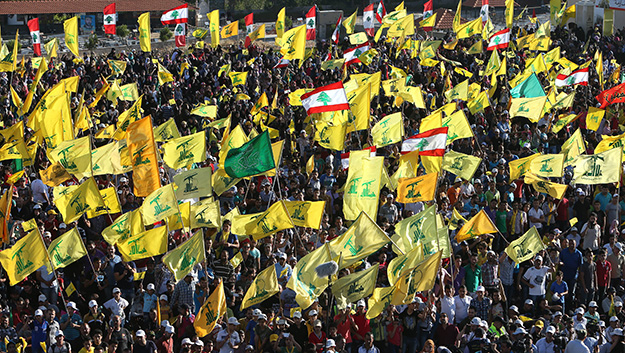
In the past, the Lebanese Armed Forces’ (LAF) inability to confront or deter Israel was reflected as political weakness for the Lebanese government vis-à-vis Hezbollah. Israel’s withdrawal from south Lebanon in 2000 heralded a growing political role for Hezbollah. This role was further enhanced by the 2006 war with Israel, with Hezbollah claiming victory and consolidating its influence within the LAF and the government.
As Syrian President Bashar al-Assad gazes across Damascus from his palace on Mount Qasioun, he can be grateful to his Russian, Iranian, and Hezbollah allies that he is still in a position to enjoy such a view.
Lebanese Presidential Election Unlikely to Alter Hezbollah’s Syria Calculus
The presidential vacuum in Lebanon since May 24, when president Michel Sleiman’s term ended without the Lebanese parliament having elected a successor, is likely to continue until an electable candidate is found who respects Hezbollah’s military autonomy and does not challenge its Syria policy.
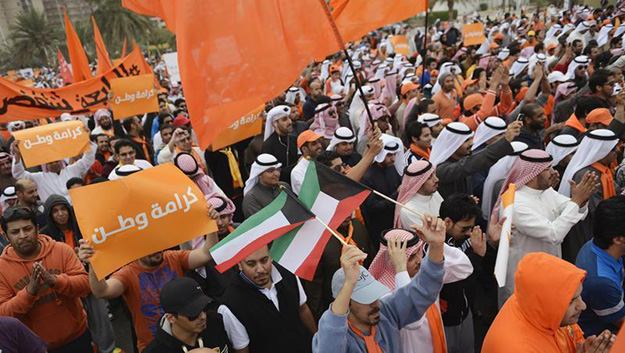
Kuwait: At the Crossroads of Change or Political Stagnation
Though Kuwaitis have been striving for change, particularly since 2011, their country’s political structures remain more or less unaltered. Yet change is inevitable, writes Shafeeq Ghabra in this MEI Policy Paper. At issue is a semi-democratic system that has proven ineffective at dealing with problems such as government mismanagement, corruption, a lack of economic transparency, and inequality toward tribes and undocumented immigrants.
Five Arab Elections in Search of a Democratic Transition
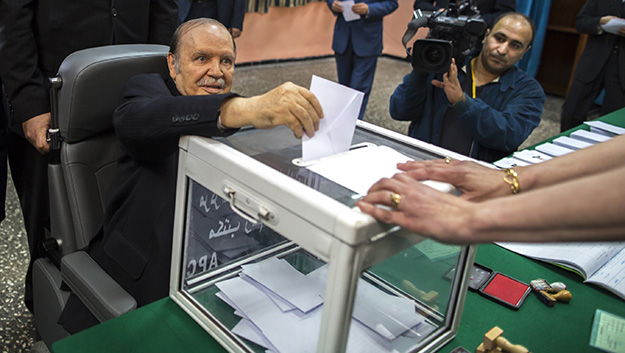
Algerian President Abdelaziz Bouteflika casts his ballot on April 17.
In the current two months between mid-April and early June, five Arab countries—Algeria, Lebanon, Iraq, Egypt, and even war-torn Syria—are holding key elections, with little sign that any is moving in the direction of meaningful democratic transition.
The Impact of the Syria Conflict on Salafis and Jihadis in Lebanon
This MEI Policy Focus seeks to address the Syrian war’s effects on Lebanon against the backdrop of exacerbated sectarian tensions and political-religious instability. The study first provides a brief background on the state of Salafism in Lebanon, followed by an assessment of the situation of the Sunni street at large. It then examines the wider implications that the Syrian war has had on Lebanon, namely the call for jihad launched in 2013 by Sunni sheiks around the country and the resulting burgeoning of relations between Salafis and Syrian military and radical organizations.
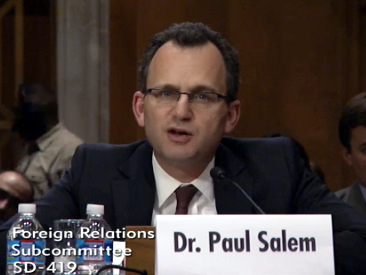
Testimony by MEI’s Paul Salem before the U.S. Senate Committee on Foreign Relations, Subcommittee on Near Eastern and South and Central Asian Affairs, delivered February 25, 2014. Find more information here about the hearing, including full video (Salem’s testimony begins at 1:22:40).
Scenarios of Change and Possibilities of Reform in Lebanon
The recent spate of bombings in Beirut underline the degree to which Lebanon has become entangled in the wider regional conflict being fought in and around Syria, but the paralysis of Lebanon’s political institutions indicate an equally deep domestic dysfunction. There is no doubt that part of Lebanon’s problems derive from its difficult geostrategic environment and require external developments and changes, and part of them come from the weaknesses of its domestic political and socioeconomic system and require internal reform.
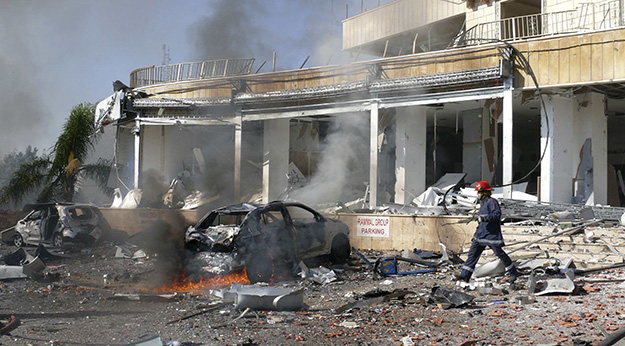
On January 2, only days after a car bomb in Beirut took the life of former Finance Minister Mohamad Chatah and several bystanders on December 27, another bomb struck the capital’s southern suburbs. With initial reports of four dead and 40 wounded, this latest, and possibly retaliatory, attack fits into an ominous pattern as Syria’s conflict spills into Lebanon.
On Wednesday, December 4, Hassan Laqees, a Lebanese Hezbollah leader who was reportedly involved in the group’s weapons procurement and development, was assassinated south of Beirut. On Sunday, another Hezbollah military commander was killed in Syria, bringing the number of Hezbollah dead in the Syrian conflict into the hundreds.
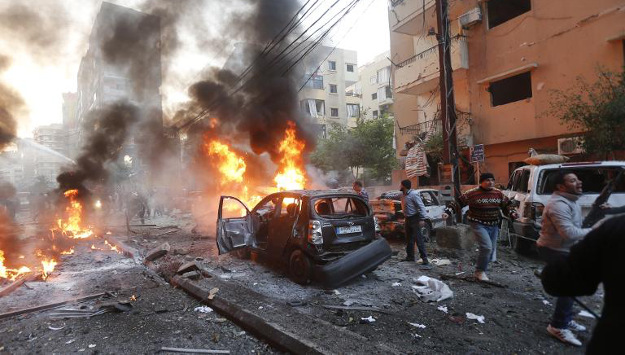
Earlier today, double explosions near the Iranian embassy in Beirut killed at least 23, including an Iranian diplomat. The Abdullah Azzam Brigades, an Islamist group with links to al-Qa`ida, took responsibility for the attack. MEI sat down with its Vice President for Policy and Research, Paul Salem, to discuss the significance of the bombings in Lebanon as well as their regional and global implications.
Tell us about the bombing and the group that claimed responsibility for it.
Helsinki and US-Russian Cooperation in the Middle East
Andrey Kortunov, director general of the Russian International Affairs Council, and Randa Slim, director of MEI’s program on Conflict Resolution and Track II Dialogues, join host Paul Salem to discuss the Helsinki Summit and takeaways from the latest meeting of the US-Russia Middle East Dialogue in Berlin, where participants outlined challenges and opportunities for US-Russian cooperation in Syria and elsewhere in the region.