Egypt’s Sexual Harassment Law: An Insufficient Measure to End Sexual Violence
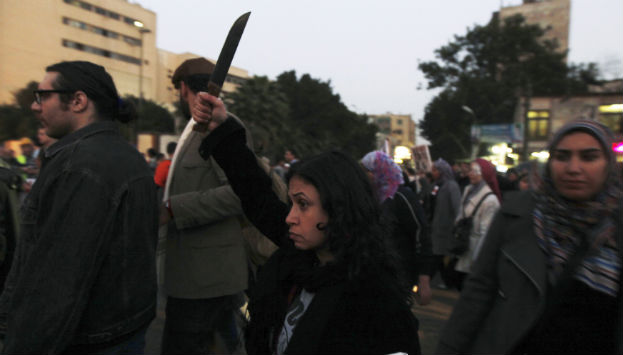
A few days ago, heavy court sentences were imposed on seven men who were convicted of attempted rape, attempted murder, and torture, in a ruling seen by many as unprecedented in Egypt. In the words of one activist, the verdict was “a strong message to all harassers that their actions are no longer tolerated or accepted.”[1] This comes in the wake of the government’s vows to combat the problem of sexual harassment; a new law passed last month criminalized sexual harassment for the first time.
Egypt’s New Parliamentary Election Law: Back to the Future
Just 48 hours before handing over the reigns to now President Abdel Fattah al-Sisi, Egypt’s interim President Adly Mansour signed into law a controversial piece of legislation that regulates elections for Egypt’s new House of Representatives.[1] Since the law was announced in early June, it has generated conflicting analysis regarding its impact on the nature of the electoral system, the character of the legislature that will be elected as a result, and the extent to which it might further empower the president.
One year after the massive June 30 demonstrations against the Muslim Brotherhood (MB) and the July 3 ouster of President Mohammad Morsi by the military, the Egyptian MB is facing grave challenges that will shape the group’s future and that of political Islam.
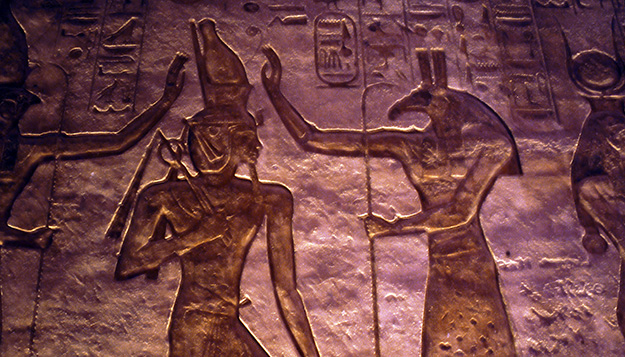
The Science of Preserving Egypt’s Cultural Heritage
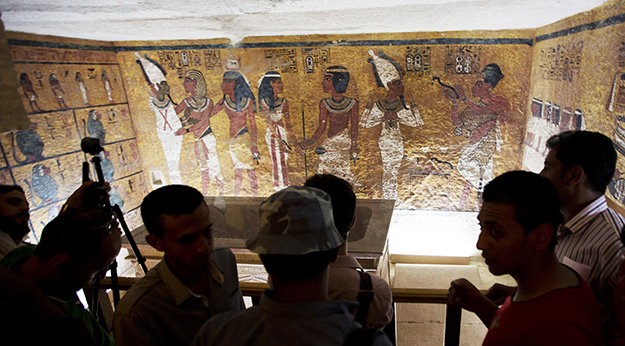
Around the world, priceless monuments and artifacts are disintegrating due to exposure to pollution and hordes of visitors coupled with the sheer weight of age. The inexorable loss of cultural heritage concerns us all, but is especially troubling for decision-makers in places like Egypt that rely on cultural tourism-generated income to stay afloat. How to reconcile the need to make decaying treasures available to the public with the fact that public display is ruining them?
Sabbahi, Spoiled Ballots, and the Egyptian Election
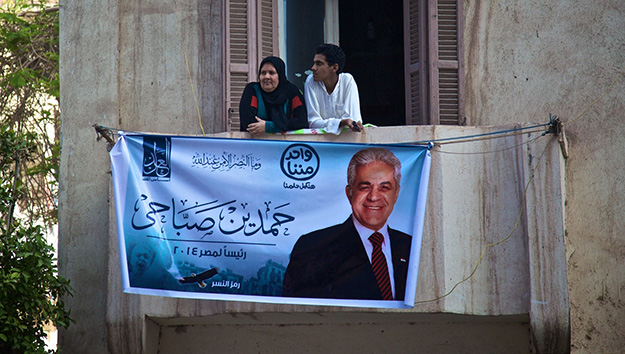
Egyptian presidential elections underdog Hamdeen Sabbahi achieved the impossible: he came in third in a two-horse race. The 60-year-old leftist politician and sole rival to the country’s ex-army chief Abdul-Fattah el-Sisi secured just under 757,000 votes in the preliminary count as opposed to Sisi’s more than 23 million votes—as well as to the votes of a last-minute unexpected entrant: the spoiled ballot.
Egyptians have headed to the polls to elect a president for the second time since the January 2011 revolution. Field Marshal Abdul-Fattah el-Sisi is expected to win by a wide margin over the only other contender, leftist politician Hamdeen Sabahi. The magnitude of that victory, however, will have an important impact on Sisi’s electoral mandate, and many questions remain about what he plans to do with it once in power.
The Egyptian Military’s Economic Channels of Influence
Egypt’s new constitution grants the country’s generals greater autonomy and an increased formal political role. The draft authorizes military trials for civilians (Article 204) and ensures that the military’s budget be beyond civilian scrutiny. The most significant change is that the Supreme Council of the Armed Forces (SCAF) will have the final say in choosing or dismissing the defense minister for two presidential terms (Article 234).
Civilianizing the State: Reflections on the Egyptian Conundrum
The military, though it has been the most powerful and influential actor during Egypt’s transition since 2011, is not the great deus ex machina of the Egyptian system. Rather, it is an actor that, since the fall of Mubarak, has managed to maintain some organizational coherence and legitimacy and has served as the convener for various and changing forces that are the crux of a new ruling coalition. Consequently, civilianizing the Egyptian state will require that security sector reforms be embedded in a broader set of political reforms.
Five Arab Elections in Search of a Democratic Transition
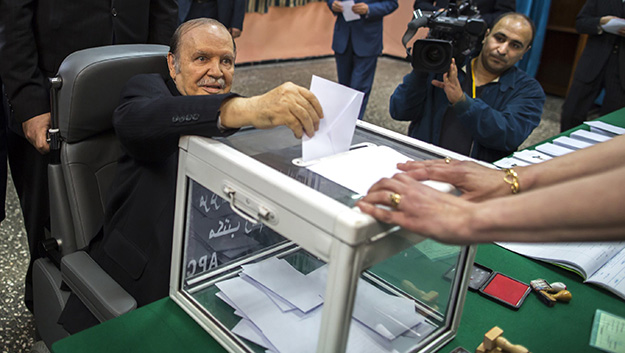
Algerian President Abdelaziz Bouteflika casts his ballot on April 17.
In the current two months between mid-April and early June, five Arab countries—Algeria, Lebanon, Iraq, Egypt, and even war-torn Syria—are holding key elections, with little sign that any is moving in the direction of meaningful democratic transition.
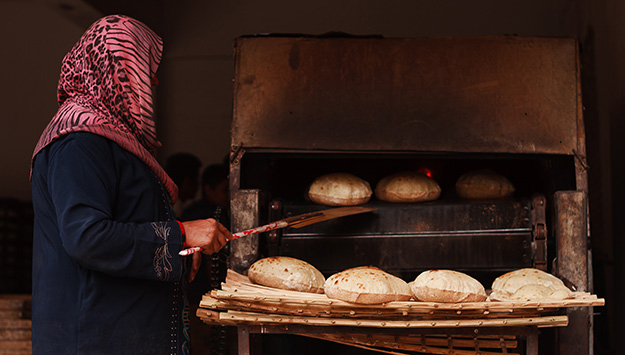
Egypt and Subsidies: A Country Living Beyond Its Means
Since Egypt’s 2011 revolution, the country’s economy has been suffering, with almost all economic indicators pointing to a deteriorating situation—and this despite the unprecedented support of some of the Arab Gulf countries. Subsidies, which have always represented the social contract between the governing regime and the population, are a major problem. Though reforming subsidies has consistently been a concern, no regime over the last 60 years has been able to implement serious measures. Rather, a piecemeal approach has been used when adjustments to the subsidies system became urgent.
Shortly after the onset of the Egyptian revolution in January 2011, the police and many of the associated security forces abandoned their posts, creating a vacuum that has had a devastating effect on Egypt’s antiquities. With great alacrity, villagers who lived near historic sites started appropriating land, while others with more nefarious intentions, such as tomb robbers and organized mafias, began the process of plundering.
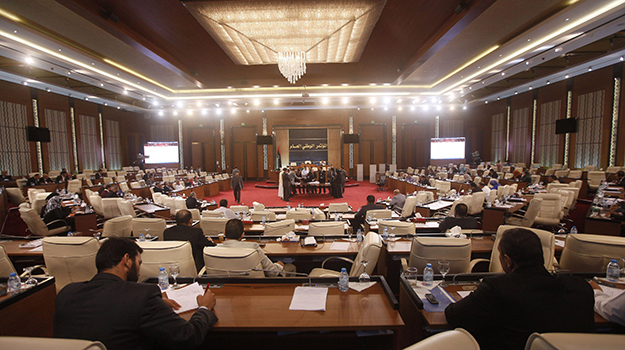
Libya’s road to democracy is shaky at best. Security is deteriorating, with targeted killings, criminal attacks, and bombings on the rise and clashes between rival armed groups—some apparently with government legitimacy and others not—growing more frequent. While these negative trends put tremendous pressure on the transition, Libya’s political process, albeit fickle, manages to keep moving. The efforts at institution building in Libya present a nuanced landscape: for every step forward in one aspect, there are steps backward in others.