Why Securing a Cease-Fire Will Be Harder This Time
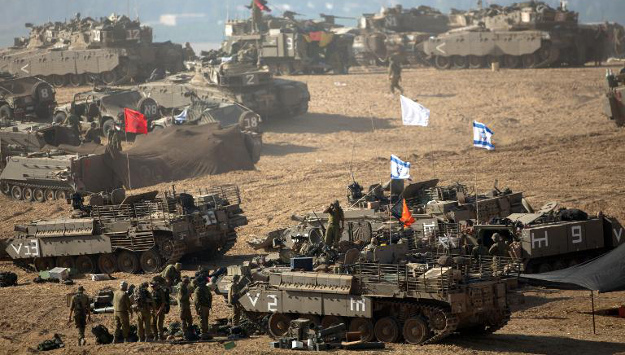
In thinking about how the crisis between Israel and the Hamas leadership in Gaza might play out, it’s useful to reflect upon the preceding Israeli incursion into Gaza in November 2012.
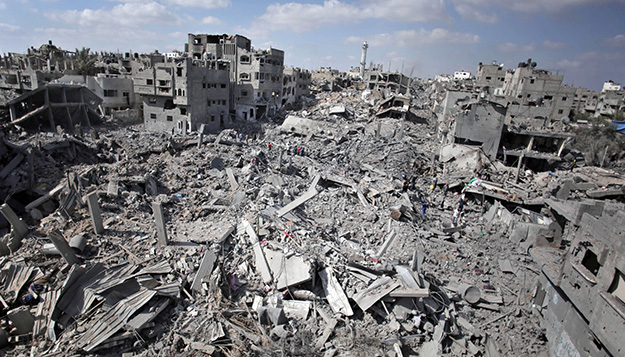
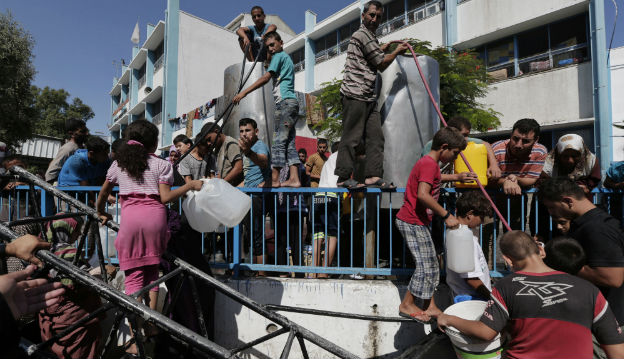
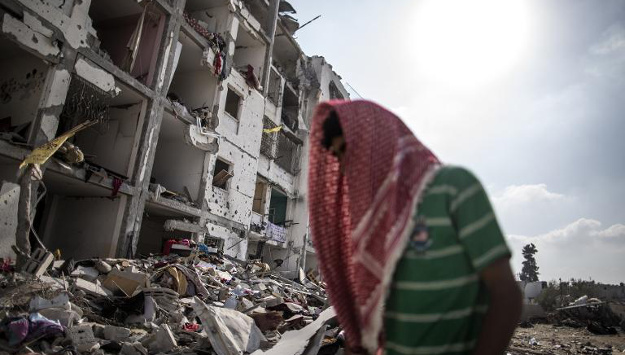
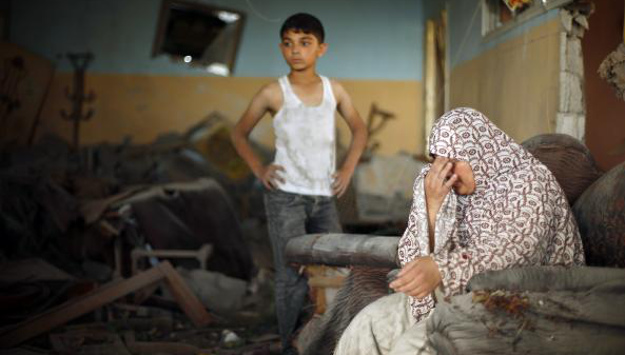
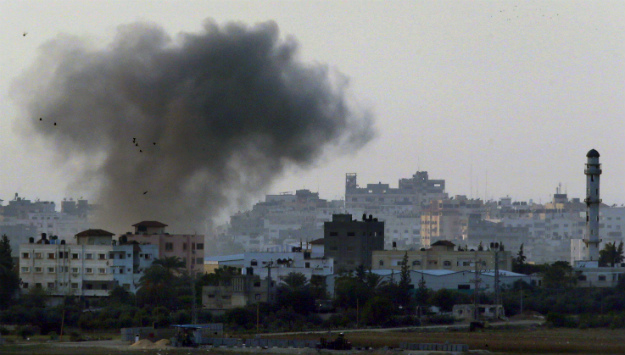
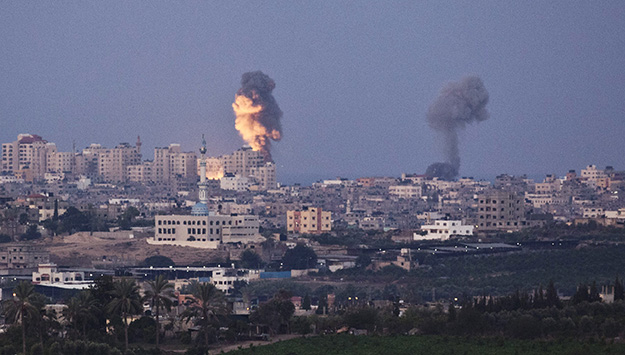
The recent wave of violence between Israel and Hamas, which to date has resulted in the death of more than 100 Palestinians and the injury of several Israelis, continues to escalate with no clear sign of when it might end.
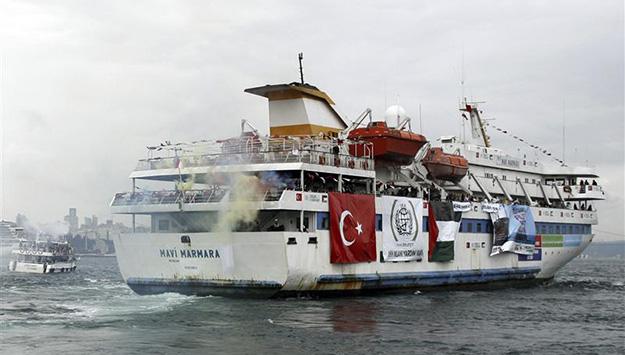
On the north side of Istanbul’s Golden Horn, the Mavi Marmara sits in quiet isolation. In May 2010, the Turkish vessel was carrying aid for the besieged Gaza Strip when Israel forcibly intercepted it in international waters. Nine activists were killed in the raid, and a tenth succumbed to his injuries last month.
The maritime crisis set off several years of polarized relations between Israel and Turkey that both countries believe are now on the mend. These improving ties may produce humanitarian and economic benefits for the West Bank and Gaza Strip.
This article first appeared on the Partners for Progressive Israel Blog.
U.S. diplomatic efforts to resolve the conflict between Israel and the Palestinians have in the last year focused on relations between Israel and the Ramallah-based Palestinian Authority, led by PLO chairman Mahmoud Abbas. Yet there is arguably a far more dynamic and perilous front: one that encompasses Israel, Egypt’s lawless Sinai Peninsula, and the Gaza Strip, the latter of which is run by Hamas.
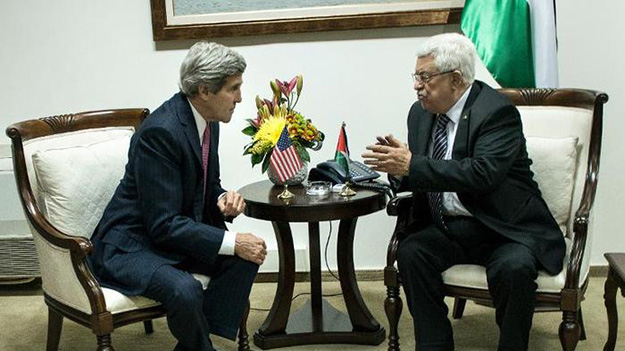
John Kerry’s extraordinary efforts to make peace between Israel and Palestine through six months of bilateral talks have produced no significant results. Kerry, determined to succeed, is turning to a “framework” that would create a new basis for continued negotiations. The framework has not yet been released. But if it is a clear outline of an American plan for peace, not just a collection of ideas that avoids laying out U.S. positions, it could be a game changer.
In the Middle East today, diplomatic success and failure are unfolding side by side, often with some of the same players. High-profile attempts are being made to end the conflict between Israel and the Palestinians, to stop the massacre of innocents in Syria, and to bring Iran in from the cold.
Ori Nir of Americans for Peace now will hold a conversation with Akiva Eldar on the current situation in Israel and Palestine.Akiva Eldar is a senior political columnist for Al-Monitor news service’s Israel Pulse. He was formerly a senior columnist and editorial writer for Haaretz and served as Haaretz’s US bureau chief and diplomatic correspondent in the 1980’s. His most recent book (with Idith Zertal), Lords of the Land, on the Jewish settlements, was a best-seller in Israel and has been translated into English, French, German and Arabic.
2013 Annual Conference: Overview | Banquet | Conference | Luncheon
Moderator: Amb. Daniel Kurtzer, Middle East InstituteMunib Masri, PADICO HoldingYossi Vardi, High-tech investor and entrepreneurMiroslav Dusek, World Economic Forum
The Middle East Institute, The Foundation for Middle East Peace, Churches for Middle East Peace, and Americans for Peace Now Present Breaking the Silence, A book discussion with Avner Gvaryahu Author of Our Harsh Logic: Israeli Soldiers’ Testimonies from the Occupied Territories, 2000-2010 Moderated byAmb.
The Middle East Institute is proud to host author and Brookings senior fellow Stephen P. Cohen for a reading and discussion of his book, Shooting for a Century: The India-Pakistan Conundrum (Brookings Institution Press, 2013). In his latest book, Dr. Cohen explores one of the most intractable conflicts in modern history and examines the parallels with the ongoing Israeli-Palestinian conflict, observing how nuclear weapons, minority and victim psychology, and outside powers come into play in both regions. Widely regarded as one of America’s foremost experts on South Asian affairs, Dr.
The dramatic events of July 3, which saw the unseating of Egypt’s first and only democratically-elected government by a military coup stimulated by enormous popular demonstrations, has created a huge question mark as to the future governance of the Arab world’s largest and most important country. The ramifications and repercussions will be playing out for months and years, whatever steps are taken in the next days and weeks. However, two parties acutely affected by these events are watching with particular concern.
…in any peace agreement, the Palestinian area must be demilitarized. No army, no control of air space. Real effective measures to prevent arms coming in, not what’s going on now in Gaza. Israel must govern its own fate and security. (Prime Minister Benjamin Netanyahu, June 14, 2009)[1]