Skip to Content

Research & Commentary Results

Filter by
1708 Results
Election 2020: Challenges and Opportunities for US Policy in the Middle East
  • Analysis
  • Election 2020: Challenges and Opportunities for US Policy in the Middle East

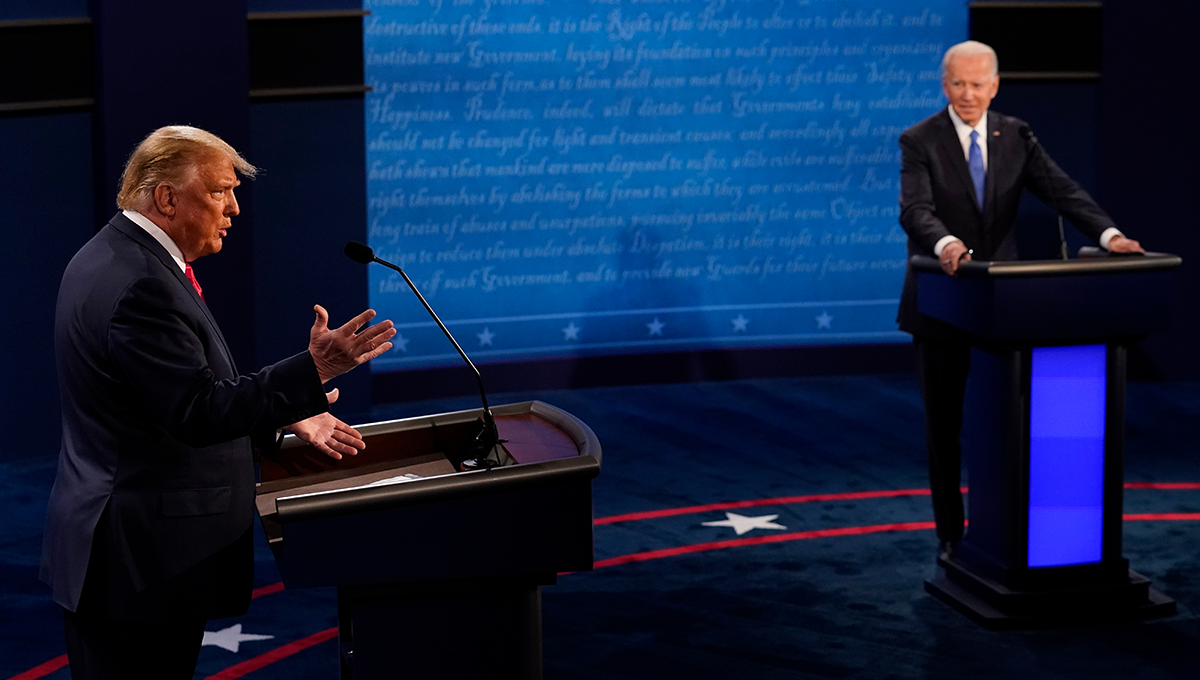
    In a new briefing book released ahead of the U.S. elections in November, entitled Election 2020: Challenges and Opportunities for US Policy in the Middle East, MEI scholars lay out key issues across the region, highlight the U.S. interests at stake, and provide policy insights and recommendations for the path forward. 

    The GCC, US-China tech war, and the next 5G storm
  • Analysis
  • The GCC, US-China tech war, and the next 5G storm

    The U.S.-China rivalry is in uncharted territory. There is no clearer example of this than the U.S.’s intensifying and increasingly global fight with Chinese company Huawei over the security of 5G.

    How is the crisis in Lebanon impacting Syria’s economy?
    Photo by AFP via Getty Images
  • Analysis
  • How is the crisis in Lebanon impacting Syria’s economy?

    The explosion at the Port of Beirut on Aug. 4 has resulted in a further escalation of the political and economic crisis in Lebanon. Its repercussions can already be deeply felt in neighboring Syria and are expected to take an even greater toll on the country given its complex links to Lebanon. This crisis is feeding into Syria through multiple channels and has severe implications for its ability to import goods and, ultimately, its food security.

    August 28, 2020

    What to expect from Syria’s new cabinet
    Photo by LOUAI BESHARA/AFP via Getty Images
  • Commentary
  • What to expect from Syria’s new cabinet

    On Aug. 25, Syrian President Bashar al-Assad tasked Hussein Arnous with forming a new cabinet. What should we expect from it? Ayman Abdel Nour highlights 12 important considerations that will factor into its makeup.

    August 28, 2020

    Strategic pause: What explains Russia’s inertia in eastern Syria?
    Photo by DELIL SOULEIMAN/AFP via Getty Images
  • Analysis
  • Strategic pause: What explains Russia’s inertia in eastern Syria?

    Moscow has been scaling down its activities in eastern Syria and the most likely reason for this inertia lies in Moscow’s reluctance to be associated with actors seeking to erode the quasi-autonomy of the Trans-Euphrates region. Instead, Russia prefers to stand to the side and watch events unfold, while contemplating the right moment to jump in as a mediator and reap the political rewards.

    Yemen's dire crisis continues
    Middle East Institute
  • Podcast
  • Yemen's dire crisis continues

    MEI’s Gerald Feierstein and Mick Mulroy join host Alistair Taylor to discuss the ongoing conflict in Yemen and the country faces crises on multiple fronts, from the unchecked spread of COVID-19 and widespread hunger to renewed fighting and a lack of international funding.

    August 26, 2020

    Assad tends to his base by making amends with the Makhloufs
    Photo by AFP via Getty Images
  • Commentary
  • Assad tends to his base by making amends with the Makhloufs

    Reports emerged this week that President Bashar al-Assad traveled on Sunday to his ancestral hometown and Alawi stronghold of Qardaha for a meeting with members of the powerful Makhlouf family.

    August 26, 2020

    Saudi Arabia’s Nuclear Program and China
    Middle East Institute
  • Analysis
  • Saudi Arabia’s Nuclear Program and China

    In recent years, Saudi Arabia and China have publicly announced several joint nuclear projects in the Kingdom, including one to extract uranium from seawater, with the stated goal of helping the world’s largest oil producer develop a nuclear energy program or become a uranium exporter. This article discusses China’s reported involvement in Saudi Arabia’s nascent nuclear program.

    August 19, 2020

    The Impact of Middle East Regional Competition on Security and Stability in the Horn of Africa
    Photo by Volkan Furuncu/Anadolu Agency/Getty Images
  • Analysis
  • The Impact of Middle East Regional Competition on Security and Stability in the Horn of Africa

    The relationship between the Middle East and the Horn of Africa is centuries-old and complex. While the world’s attention is focused mainly on the “great power competition” in the region, primarily between the U.S. and China, the Horn of Africa has also become a central battleground for influence among competing regional players, principally Saudi Arabia, the UAE, Turkey, Qatar, Iran, and Egypt. As they pursue their interests in the region, from Ethiopia and Sudan to Somalia and Djibouti, these competing states are the main drivers of tension and instability in the Horn of Africa.

    August 18, 2020

    Looking to repair ties, Pakistan’s Gen. Bajwa heads to Saudi Arabia
    Photo by FAROOQ NAEEM/AFP via Getty Images
  • Commentary
  • Looking to repair ties, Pakistan’s Gen. Bajwa heads to Saudi Arabia

    All is not well in Pakistan-Saudi relations, which seem to have gone into a tailspin. In order to repair the fractured ties with one of the country’s strongest allies, Pakistan’s army has swung into action and its chief, Gen. Qamar Javed Bajwa, will travel to Saudi Arabia for talks this weekend.

    August 14, 2020

    Kuwait’s Yemen foreign policy
    Photo by YASSER AL-ZAYYAT/AFP via Getty Images
  • Analysis
  • Kuwait’s Yemen foreign policy

    When the Saudi-led coalition launched military operations against the Houthi insurgents on March 26, 2015, all of the Gulf Cooperation Council (GCC) states, except for Oman, joined the multinational force. As has become clear, each of the Arab Gulf sheikdoms has its own national interests and unique history of relations with Yemen and Yemeni factions, and these have shaped their changing perceptions of the war over the past five and a half years. Kuwait’s role in Yemen’s multidimensional conflict is a case in point.

    August 12, 2020

    Syria is facing a COVID-19 catastrophe
    Photo by LOUAI BESHARA/AFP via Getty Images
  • Analysis
  • Syria is facing a COVID-19 catastrophe

    After months of under-reported cases and relaxed lockdown measures, the rapidly spreading COVID-19 pandemic has gripped government-held areas. A worrying rise in daily deaths and infections, especially in Damascus, has left Syria facing what could be its biggest challenge yet.

    Monday Briefing | Lebanon: The twilight of an impotent government
  • Commentary
  • Monday Briefing | Lebanon: The twilight of an impotent government

    This week’s briefing on recent news and upcoming events in the region featuring Paul Salem, Hafsa Halawa, Marvin G. Weinbaum, Anne-Linda Amira Augustin, and Gerald Feierstein.

    August 3, 2020