Skip to Content

Research & Commentary Results

Filter by
943 Results
Key dates in the MENA region in 2020
Photo by Mohammed Hamoud/Getty Images
  • Analysis
  • Key dates in the MENA region in 2020

    This calendar lists key dates in the MENA region over the course of 2020 broken down by month.

    December 30, 2020

    Let justice be done: Respect for female land rights in the Middle East and North Africa
    Young Afghan girl holding bread.
  • Analysis
  • Let justice be done: Respect for female land rights in the Middle East and North Africa

    Ownership of economic resources is integral to exercising agency and to assuring the human security needed to live free from fear, want, and indignity. In agrarian societies, land and its natural resources are instrumental to financial, physical, and psychological wellbeing. Yet in half the world, secure land ownership is out of reach for most females. In the Middle East and North Africa (MENA), there is a huge gender-based gap in holding agricultural land, including where agriculture is a vital source of livelihood. In Egypt, Morocco, Sudan, Tunisia, and Jordan, most females, regardless of their education or socio-economic status are landless. Gender-based inequalities are often rooted in cultural norms that permit and exacerbate patterns of discrimination against females within the family and in economic transactions. These discriminatory attitudes trump humanistic and moral considerations, creating and reinforcing inequality. Discrimination against females in resource ownership has far-reaching implications for their lives, their families, and society. It is imperative to combat this regressive practice to ensure a dignified life for all.

    December 28, 2020

    Putting up a fight: Tunisia’s counterterrorism successes and failures
    A suicide attack targeted police on the main street of Tunisia's capital morning, wounding a civilian and several police personnel, a police officer at the scene told AFP. (Photo by Fethi Belaid / AFP) (Photo credit should read FETHI BELAID/AFP via Getty Images)
  • Analysis
  • Putting up a fight: Tunisia’s counterterrorism successes and failures

    Alongside a stalled economy and a messy political transition, the decade since the 2011 revolution has left Tunisia with an intermittent yet ferocious terrorism problem. The frequency of terrorist attacks highlights the dangers posed by an uncertain political environment, widespread economic problems, and regional instability. But the fact that they have become less deadly over time also seems to underline the improvements that successive governments have made to Tunisia’s security apparatus.

    December 16, 2020

    Palestinian refugees can no longer be sidelined
    A man cleans in a street near destroyed buildings in the Palestinian camp of Yarmuk southern Damascus on November 1, 2018. - Former residents of the Palestinian camp of Yarmuk are desperately counting on help from abroad to help raise the once-bustling neighbourhood back out of the rubble.
  • Commentary
  • Palestinian refugees can no longer be sidelined

    On Dec. 3, MEI’s Program on Palestine and Palestinian-Israeli Affairs convened a webinar on the future of Palestinian refugees and their place in the policy discourse following the election of President-elect Joe Biden and the departure of the Trump administration. Below is a summary of the major takeaways from the event, organized by topic.

    December 16, 2020

    The last emir?: AQIM’s decline in the Sahel
    Photo by ISSOUF SANOGO/AFP via Getty Images
  • Analysis
  • The last emir?: AQIM’s decline in the Sahel

    Five months after the elimination of Abdel Malek Droukdel, aka Abu Musab Abdel Wadud, the leader of al-Qaeda in the Islamic Maghreb (AQIM), by the French army in the Malian city of Talhandak, AQIM appointed a new emir on Nov. 21. His name is Yazid Mebarek, aka Abu Ubayda Yusef al-Annabi, a 51-year-old Algerian and a jihad veteran.

    December 7, 2020

    Economic desperation and dependence are driving the Palestinian Authority’s political decisions
    Photo by Issam Rimawi/Anadolu Agency via Getty Images
  • Analysis
  • Economic desperation and dependence are driving the Palestinian Authority’s political decisions

    Faced with the Trump and Netanyahu governments’ persistent dismissal of the Palestinians and their rights, the PA has spent the better part of the last three years threatening to terminate all relations with Israel, and even to withdraw the Palestine Liberation Organization’s (PLO) recognition of Israel. The deteriorating situation culminated in Palestinian President Mahmoud Abbas’ May 2020 declaration that the Palestinian leadership was absolved “of all the agreements and understandings with the American and Israeli governments.” Notwithstanding previous similar warnings from Abbas in recent years, the announcement prompted speculation among Palestinian political parties, Palestinians at home and in the diaspora, scholars, activists, and journalists over the future of Palestinian politics in the post-Oslo era.

    December 2, 2020

    DIY futures in the Middle East: What if small got bigger?
    Photo by Marwan Naamani/picture alliance via Getty Images
  • Analysis
  • DIY futures in the Middle East: What if small got bigger?

    It’s difficult to look at the Middle East and consider its future optimistically. Much of the analysis of the region centers on crisis and collapse. There is plenty of both, fueled by wars and civil conflicts, poverty, extremism, and more. Given the human toll, focusing on all this is natural. It is also necessary if solutions to deeply rooted problems are ever to be developed, leading to a better future.A related risk is becoming blinded to “weak signals” — early indicators of what could become features of potential alternative futures. Weak signals are developments that are emerging outside the dominant norms and trends of today. In the Middle East, probably the most dominant norm is the inability of governments throughout the region to provide security and prosperity for their citizens. The COVID-19 pandemic is making this even more apparent, and markedly worse. It is not just the obvious failed states — as Steven Cook recently observed, “sometimes state failure is a more chronic condition.” But in the midst of this — and fueled by it — there is evidence of activities at the local level to create what is missing. Could these be signals of a future different than the one it is so easy to expect for the region?

    December 1, 2020

    State of play for Middle East cybersecurity leaders
    Photo by VALERY SHARIFULIN/TASS via Getty Images
  • Analysis
  • State of play for Middle East cybersecurity leaders

    This new white paper distills the findings of the Middle East Institute panel “State of Play for Middle East Cybersecurity Leaders,” a discussion held in September 2020 about the unique threats, best practices, and corporate landscape in the Middle East and North Africa region.

    November 25, 2020

    Foreign Terrorist Fighters: Implications for Malaysia’s Border Security
     (Photo credit should read MOHD RASFAN/AFP via Getty Images)
  • Analysis
  • Foreign Terrorist Fighters: Implications for Malaysia’s Border Security

    As governments around the world continue to deal with the COVID-19 pandemic, the world must not lose sight of the ongoing threat of returning Islamic State (IS) foreign terrorist fighters from Syria. As foreign fighters and their families scour for places to seek refuge, Malaysia may inadvertently turn out to be an attractive destination given the country’s visa-waiver program; the porousness of the tri-border region of Sabah, Indonesia, and the Philippines; and insider threats. In the past, terrorists have capitalized on these vulnerabilities. Given the country’s susceptibility to being used as a terrorist safe haven and platform for staging trans-border terrorist attacks, Malaysian authorities need to strengthen and improve existing measures aimed at countering terrorist infiltration.

    November 24, 2020

    The UAE eyes AI supremacy: A key strategy for the 21st century
    Photo by Rustam Azmi/Getty Images)
  • Analysis
  • The UAE eyes AI supremacy: A key strategy for the 21st century

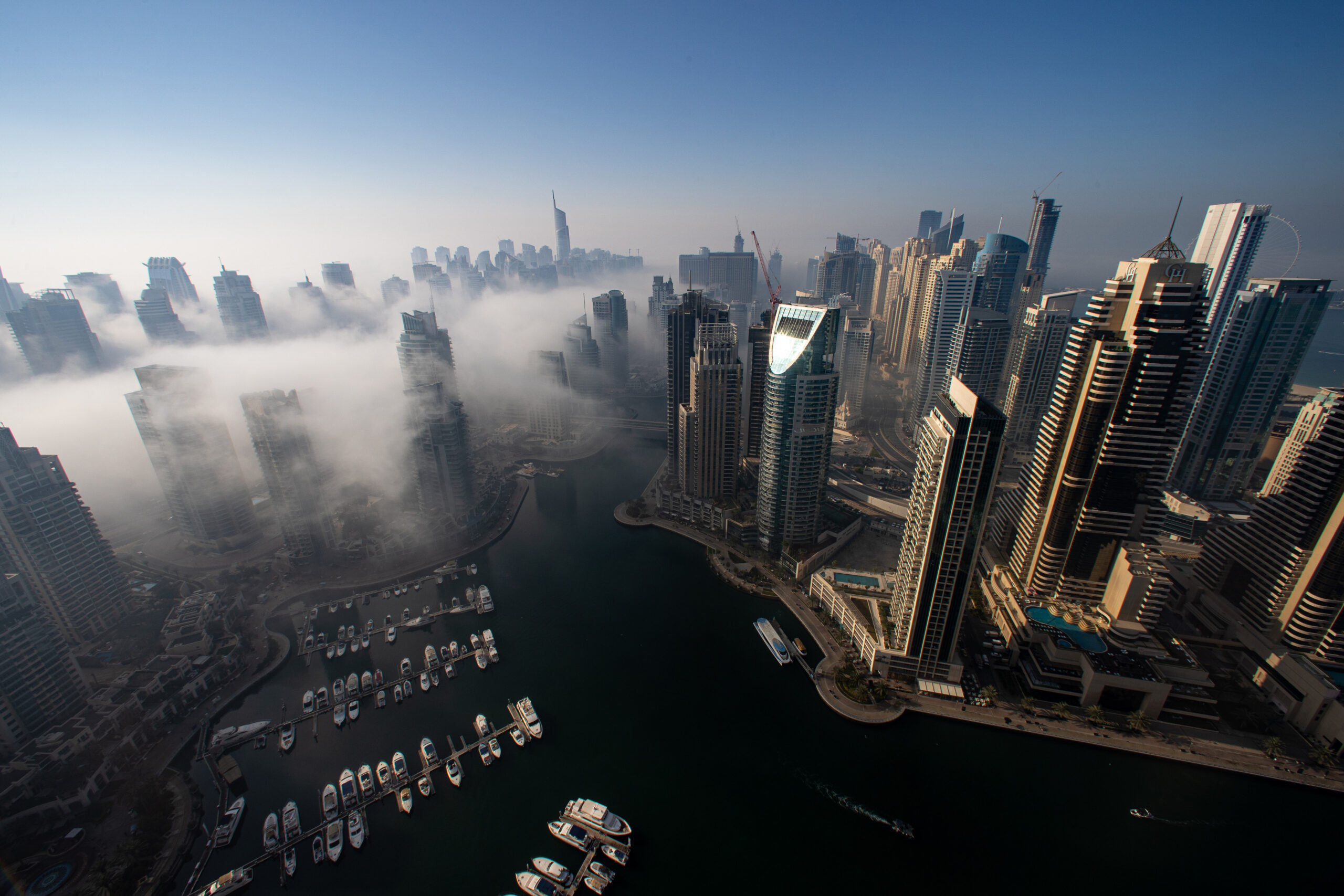
    The (UAE is laying the groundwork for regional supremacy in AI. By fostering a web of novel institutions and partnerships, the Gulf state aims to augment its capacity to execute lofty AI policy initiatives. Further signaling its resolve, Abu Dhabi is lavishing the nascent sector with a host of incentives: financial privileges, office space, and even health care coverage. The embrace of AI comes as the UAE is cultivating emerging technologies as a means of boosting and diversifying its rentier economy, as well as signaling its innovation capacity and viability as a global trade powerhouse.

    November 19, 2020

    A Sea Change?: China's Role in the Black Sea
  • Analysis
  • A Sea Change?: China's Role in the Black Sea

    Through its Belt and Road Initiative, China seeks to play a larger role in the Black Sea region. China has been wooing littoral states in hopes of securing new markets for its goods and investing in infrastructure projects. But some worry that there is more to Chinese actions in the region than meets the eye. The worry is that China will increase its political and diplomatic clout in a region that is considered vital for Russian interests and create tension between Moscow and Washington. Despite the uneasiness in the West about China’s increasing presence in the Black Sea, there is not enough focus on the issue in the scholarly debates in Western capitals. The MEI’s Frontier Europe Initiative aims to contribute to the debate on the role of China in the Black Sea. We hope the articles in this report will help to address several important unaddressed questions.

    November 18, 2020

    Joe Biden must quickly make a call on America’s longest war
    Smoke rises from the site of an attack after a massive explosion the night before near the Green Village in Kabul on September 3, 2019. - A massive blast in a residential area of Kabul killed at least 16 people, officials said on September 3, yet another Taliban attack that came as the insurgents and Washington try to finalise a peace deal.
  • Analysis
  • Joe Biden must quickly make a call on America’s longest war

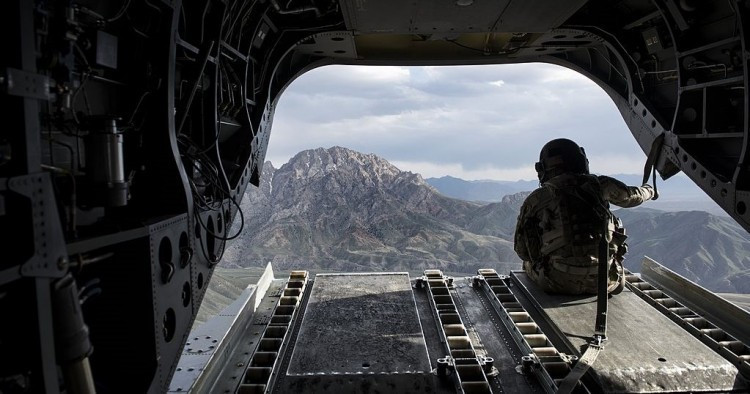
    Though the war in Afghanistan largely went unmentioned in the U.S. presidential race, the incoming Joe Biden administration must make a major decision in the coming weeks and months on whether to follow through on the U.S. commitment to withdraw all troops from the country by the end of April 2021.

    November 17, 2020

    A “blue mirage”: Biden’s presidency and the Iranian economy
    This picture illustrates Iranians on January 12, 2012 counting and exchanging the United States 100-dollar bills and Iran's Rial banknotes, bearing a portrait of Iran's late founder of Islamic Republic Ayatollah Ruhollah Khomeini in Tehran. The Rial's plunge, to 18,000 to the dollar hit a record low on January 18, based on rates in black market trading that the government has tried to ban.
  • Analysis
  • A “blue mirage”: Biden’s presidency and the Iranian economy

    What does a Biden presidency mean for the economy of Iran? The short answer is: not much. While the Iranian public considers his election good news for the country, these sentiments are fleeting and will soon fade. The reason is simple: Even if Joe Biden decides to reengage with Iran or reenter the 2015 nuclear deal on his first day in office, a Biden presidency will not change many crippling realities for the Iranian economy.

    November 12, 2020

    Iraq’s reform program: A white paper with no action plan
    Photo by Murtadha Al-Sudani/Anadolu Agency via Getty Images
  • Analysis
  • Iraq’s reform program: A white paper with no action plan

    Iraq’s economic and fiscal crises, which came to the forefront this year following the onset of the coronavirus pandemic, were bound to happen at some point. What corona and the ensuing drop in oil prices and declining demand for oil did is accelerate the timing, according to the recently released Iraqi government white paper, a report of the Emergency Cell for Financial Reform. What the paper doesn’t predict is that in the next 6-12 months, and possibly beyond, we could see a worsening of the crisis with both current and future governments trying to adjust oil production and revenues in an effort to contain public discontent.

    November 2, 2020