Skip to Content

Research & Commentary Results

Filter by
1113 Results
How the UAE-Israel deal could change the regional power balance
TEHRAN, IRAN - MAY 06: (----EDITORIAL USE ONLY â MANDATORY CREDIT -
  • Analysis
  • How the UAE-Israel deal could change the regional power balance

    While most experts believe that the recent normalization of ties between Israel and the UAE will not lead to a significant change in the regional balance of power, there are indications that it has the potential to bring about such a change in the long run.

    November 2, 2020

    Oman plays it safe on Israel
  • Analysis
  • Oman plays it safe on Israel

    Since Aug. 13, speculation has been rife that the Sultanate of Oman will soon follow the United Arab Emirates’ (UAE) lead and formalize full-fledged ties with Israel. Yet, at least thus far, Muscat has refused to join the UAE, Bahrain, and now Sudan in normalizing relations with Tel Aviv. As a moderate Arab country, where tolerance is firmly embedded into the national ethos and the Ibadi sect of Islam, Oman appears to be maintaining a balanced position on the overall Arab trend toward normalizing relations with Israel. Muscat’s positive reaction to the Abraham Accords is not a major change in strategy and is more illustrative of Oman’s longstanding position on normalization.

    October 27, 2020

    The 2020 American election: A view from the Gulf
    President Donald Trump answers a question as Democratic presidential candidate former Vice President Joe Biden listens during the second and final presidential debate at Belmont University on October 22, 2020 in Nashville, Tennessee. This is the last debate between the two candidates before the election on November 3.
  • Analysis
  • The 2020 American election: A view from the Gulf

    The upcoming American presidential election is top of mind for the Arab Gulf states. This is no surprise as there is so much at stake for them. As the race enters its final critical week, all eyes are on who will occupy the White House for the next four years — and the Arab Gulf states have their preferences. America is still indispensable to Gulf security, but the Gulf is also becoming an indispensable regional partner for whoever wants to lead the world in the 21st century. Today both sides need each other more than ever before.

    October 23, 2020

    Using the Convention against Torture to hold Syria to account
    A general view of the Peace Palace is seen as Myanmar State Counsellor Aung San Suu Kyi leads its delegation to the International Court of Justice to defend the national interests of Myanmar during Gambia's genocide case against Myanmar on December 11, 2019 in The Hague, Netherlands.
  • Analysis
  • Using the Convention against Torture to hold Syria to account

    Last month, the Netherlands announced its intent to hold Syria responsible for gross human rights violations and torture under the U.N. Convention against Torture (CAT). With only one other case — Belgium v. Senegal — brought to the International Court of Justice (ICJ) under the CAT, the Netherlands is entering relatively uncharted waters. Indeed, it would be the first country to litigate the substance of Article 1 of the Convention. While it is unlikely that the Netherlands’ claims will reach the ICJ for another year or more, its announcement serves as an important step in the push for broader accountability in Syria.

    October 22, 2020

    Will Trump’s Syria hostage diplomacy work?
    Photo by JOSEPH EID/AFP via Getty Images
  • Analysis
  • Will Trump’s Syria hostage diplomacy work?

    With a presidential election looming in the United States, the continuing crisis in Syria is unlikely to make headlines. Aside from the COVID-19 pandemic, raging wildfires, and the occasional flare-up of violence in Idlib, Syria has been largely off the radar in the U.S. for quite some time. Yet dramatic new revelations suggest that Syria could be on the administration’s agenda more prominently as President Donald Trump makes a serious, if desperate, move to secure American hostages thought by U.S. officials to be held in Damascus.

    US sanctions hurt Syrian civilians — they need to be worth it
    Photo by Hasan Belal/NurPhoto via Getty Images
  • Analysis
  • US sanctions hurt Syrian civilians — they need to be worth it

    On June 17, 2020, the U.S. State Department’s special envoy to Syria, Joel Rayburn, announced the beginning of the “summer of Caesar,” promising a wave of sanctions designations under the newly activated Caesar Syria Civilian Protection Act. Summer has come and gone, but there’s little to show for it.

    October 15, 2020

    Jordan: US security assistance and border defense capacity building
  • Analysis
  • Jordan: US security assistance and border defense capacity building

    The Department of Defense (DoD) border security assistance programs in the Middle East region have helped partner countries to defend their borders against terrorist militia groups and other transnational security threats in the region. These programs set the standard for how the US military can foster long-term stability in the Middle East, while gradually drawing down its presence in the region.

    October 6, 2020

    Farcical treaties
    Photo by Alex Wong/Getty Images
  • Analysis
  • Farcical treaties

    Are the treaties with the UAE and Bahrain in any way comparable to previous genuine milestones, like the agreements with Egypt and Jordan? Can we realistically see them as helping to lead the way to a brighter future, at least as far as Israel’s conflicts with its neighbors are concerned? The answer is almost certainly “not really.”

    October 6, 2020

    What are the implications of the passing of Kuwait’s emir, Sheikh Sabah?
    Photo by BANDAR ALGALOUD/SAUDI ROYAL COUNCIL/HANDOUT/Anadolu Agency/Getty Images
  • Analysis
  • What are the implications of the passing of Kuwait’s emir, Sheikh Sabah?

    With the announcement that Kuwait’s long-time ruler, Sheikh Sabah al-Ahmad al-Sabah, had passed away, on Sept. 29, at the age of 91, the Gulf states lost their second senior statesman of 2020 following the death of Sultan Qaboos of Oman at the beginning of the year. Like Qaboos, Sheikh Sabah played an outsized role within the GCC as well as in regional and international affairs.

    October 1, 2020

    How Palestinians agreed on elections
    Mahmoud Abbas, President of the Palestinian Authority
  • Analysis
  • How Palestinians agreed on elections

    Fourteen years after the Palestinian pro-Islamist group Hamas won a majority of seats in the Palestinian Legislative Council (PLC) in 2006, Palestinians may finally be returning to elections as a mechanism to resolve their differences and to present a unified legitimate national leadership. In a sign of progress toward reconciliation, Palestinian leaders met in person and over teleconference on September 3 and vowed to address threats to the Palestinian national movement. Most recently, President Abbas, addressing the U.N. General Assembly on September 25, declared that presidential elections would take place soon.The question now will be whether a unified Palestinian policy, means of accomplishing it, and a new leadership can be born in the coming six months.

    October 1, 2020

    Iran, the GCC, and the failure of HOPE
    Photo by Drew Angerer/Getty Images
  • Analysis
  • Iran, the GCC, and the failure of HOPE

    Last September, at the 74th session of the U.N. General Assembly, Iranian President Hassan Rouhani proposed the optimistically named “Hormuz Peace Endeavor” (HOPE). Over the past year, however, Iran’s plan has failed to gain any traction with the GCC states, even as the region’s security environment has fundamentally changed in ways that are detrimental to the Islamic Republic.

    September 24, 2020

    China and the Abraham Accords Peace Agreement
    (Photo by SAUL LOEB / AFP) (Photo by SAUL LOEB/AFP via Getty Images)
  • Analysis
  • China and the Abraham Accords Peace Agreement

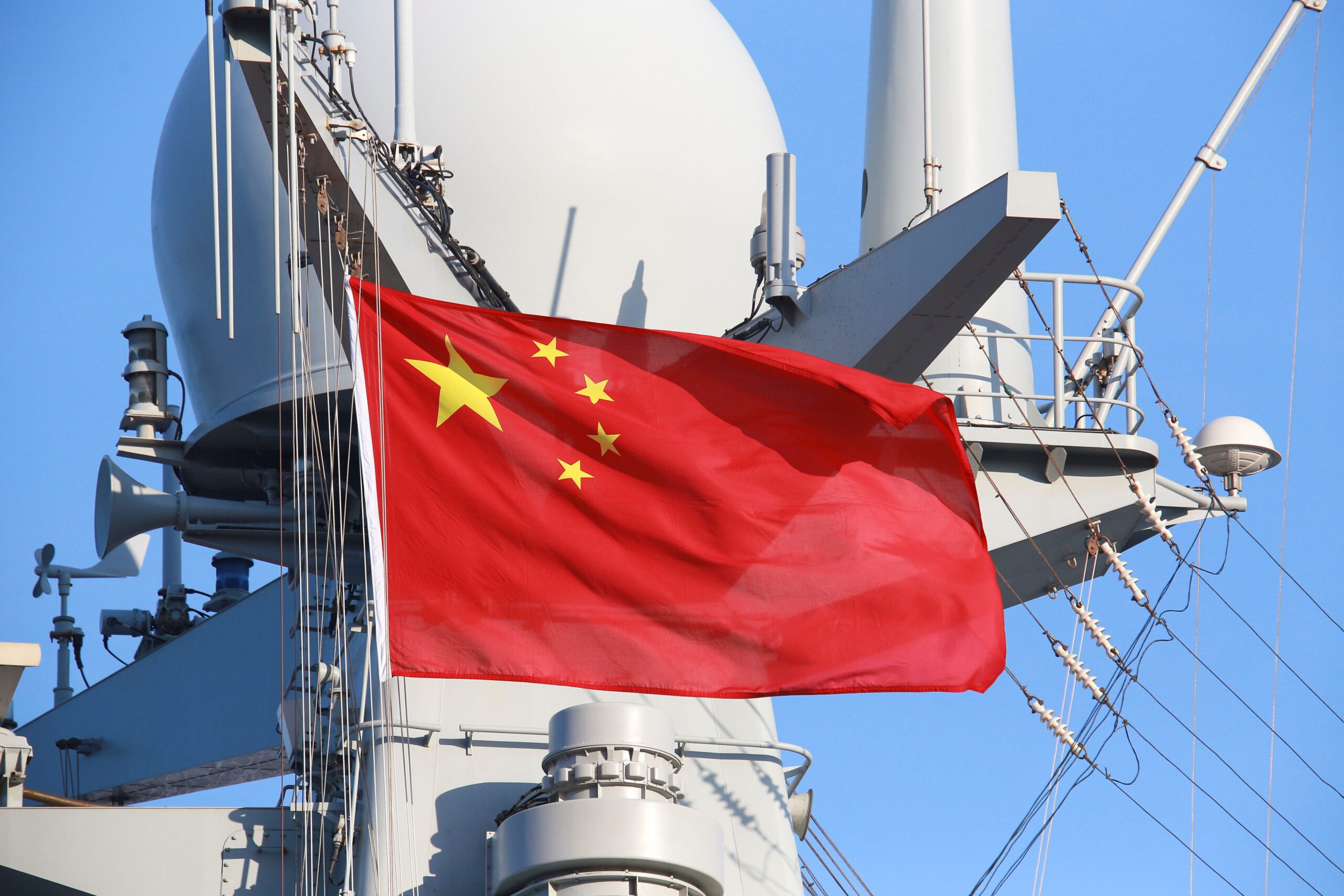
    On September 15, President Trump presided over a ceremony on the South Lawn of the White House where Prime Minister Benjamin Netanyahu of Israel and the foreign ministers of the United Arab Emirates (UAE) and Bahrain, Abdullah bin Zayed Al Nahyan and Abdullatif Al Zayani, respectively, signed a general declaration of principles, called “The Abraham Accords.” Numerous analysts have focused on the regional impact of the normalization of relations between Israel and these two Gulf Arab countries. However, this development has worldwide geopolitical implications — including for China.

    September 22, 2020

    The benefits and challenges of UAE-Israel normalization
    Photo by JACK GUEZ/AFP via Getty Images
  • Analysis
  • The benefits and challenges of UAE-Israel normalization

    Israel and the United Arab Emirates (UAE) have initiated a process that, if it comes to fruition, will bring about the normalization of relations between the two countries. The broader geostrategic challenges that the agreement could pose for Israel and the UAE have not been part of the public discourse, however, and any balanced treatment requires a discussion of those aspects as well.

    Is the Israel-UAE agreement a game changer for Israel?
    Photo by Alex Wong/Getty Images
  • Analysis
  • Is the Israel-UAE agreement a game changer for Israel?

    In an Aug. 13 tweet, U.S. President Donald Trump celebrated the Israeli-Emirati accord to normalize relations as a “HUGE breakthrough.” Israel’s integration into the region has been a goal of U.S. and Israeli foreign policy for decades, and the mid-August announcement was the first major official step in that direction in over 25 years. But is this really a game changer for Israel’s strategy in the Middle East?

    UAE-Israel normalization gives rise to new risks for Yemen and the region
    Photo by MOHAMMED HUWAIS/AFP via Getty Images
  • Analysis
  • UAE-Israel normalization gives rise to new risks for Yemen and the region

    As unimportant as the move may seem for Yemen, the UAE’s normalization of relations with Israel and patronage of the STC, if left unaddressed, may ultimately lead to undesirable outcomes for both Yemen and the broader Arab world

    September 14, 2020