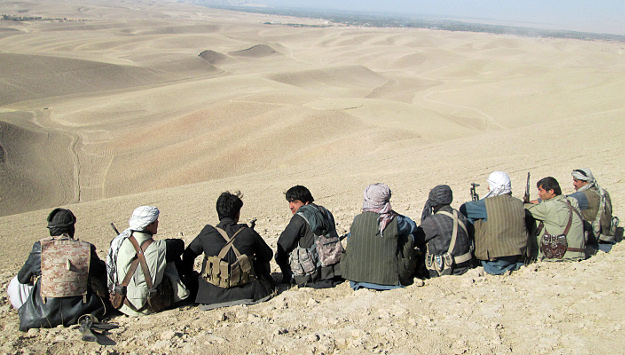
President Barack Obama has notoriously disparaged the moderate opposition as “farmers or dentists or maybe some radio reporters who didn’t have a lot of experience fighting.” The key question about the Syrian opposition is not whether it can fight — in fact many of its cadres are former Syrian army soldiers — but whether it can govern.
Arab Civil Society after the Arab Spring: Weaker but Deeper
Formal organizations can be easily studied, but they alone will not bring about democratization: the conceptual history of civil society scholarship in the Middle East is testament to this. We must instead peer into hidden spaces of resistance not captured by the formal sector.
A recent United Nations report warned that the Gaza Strip might become “uninhabitable” by 2020 for its 1.8 million residents.[1] Serious changes must be implemented as soon as possible to reverse the coastal enclave’s de-development.
Civil Society in Southeast Asia: Not All It’s Cracked Up to Be
In Southeast Asia, civil society arrived early and has mostly remained buoyant. But the region is complex, diverse, and highly dynamic, ensuring that civil society’s motivations and trajectories have been too. Despite the many democratic transitions in Southeast Asia, civil society’s performance has since been inconsistent. Some civil society organizations and social movements, then, have behaved in ways that have prevented new democracies from gaining in quality—or have even contributed to authoritarian reversals.
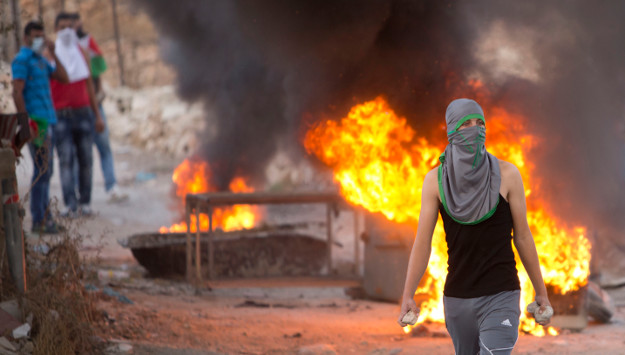
Although the Israeli-Palestinian conflict has been around for generations, it still has the capacity to surprise. Even the experts are confused by the current violence that has been roiling Jerusalem for weeks now. Is this the long-awaited third intifada? What is causing it? Why is it centered in Jerusalem, not the West Bank? Who is leading it, and why are the principal actors teenagers with household knives? In fact, similar questions were asked at the beginning of the two previous intifadas, and of the Palestinian Revolt during the British Mandate. Why now? What for?
Palestinian Security Forces: Living on Borrowed Time
On a scale not seen since April 2002, Israel is instituting dramatic increases in the deployment of its military and police forces throughout Israel, East Jerusalem and the West Bank proper. These moves by the government of Prime Minister Benjamin Netanyahu comprise the initial security response to limited but escalating Palestinian attacks against Israeli civilians, settlers, and military forces throughout Israel and the occupied West Bank.
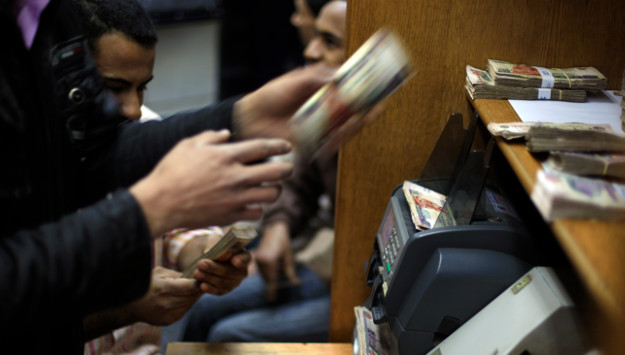
Since the 1990s, the need for streamlined procedures to facilitate business, trade and investment has grown to crisis proportions in Egypt. But the political will to deliver administrative reform was always lacking, not least because it would involve lay-offs and wage reductions; in other words, direct threats to the livelihoods of some seven million state employees and consequently the regime’s popularity. But with the government wage bill estimated to reach USD30 billion next year, Egypt has finally taken action.
A Flawed Nexus?: Civil Society and Democratization in the Middle East and North Africa
The core assumption—building on a specific understanding of the recent political history of Latin America and Eastern Europe—is that civil society activism is positively correlated with democracy and democratization. However, a conceptualization of Arab civil society in liberal terms is destined to disappoint since liberal and democratic values have much shallower roots than would be required for successful challenge to authoritarian rule. Indeed, evidence is lacking either for the pro-democratic orientation of civil society in the Arab world or its capacity to drive democratic reform.
Democratization and the Changing Role of Civil Society in Indonesia
This essay discusses some of the contradictions and difficulties that Indonesian democracy faces. Focusing on the political zigzag around the law used for the direct election of regional heads, the author demonstrates that it is elite competition rather than the ability of a fragmented civil society that occasioned the triumph of “people power”.
Two news items sparked debate across the Arab region recently. One reinforced Gulf stereotypes, while the other highlighted a bold out-of-the-box initiative. The first was Saudi King Salman’s official two-day visit to Washington, for which he brought an entourage numerous enough to take over a large Georgetown hotel. The second was Egyptian mega-entrepreneur Naguib Sawiris’ offer to purchase a Mediterranean island and supply it with infrastructure so that Syrian refugees could build new lives there. Both of these men have great wealth at their disposal.
Civil Society, Political Alliance-Building, and Democratization in the Philippines: An Instructive Example for the MENA Region?
If the case of the Philippines is any measure, civil society actors rely on strategic alliances with political elites in order to be able to exert profound political influence, and popular demonstrations led by civil society are dependent on at least tacit military support to succeed. A cursory look at the MENA region shows a rather similar pattern. During the Arab Spring, civilian protests toppled authoritarian regimes only in those countries where the military chose not to crack down, or even sided with the protesters.
U.S. troops in Afghanistan lowered the flag and boxed up their gear at the end of last year as President Obama declared the formal end to 13 years of U.S. combat operations.
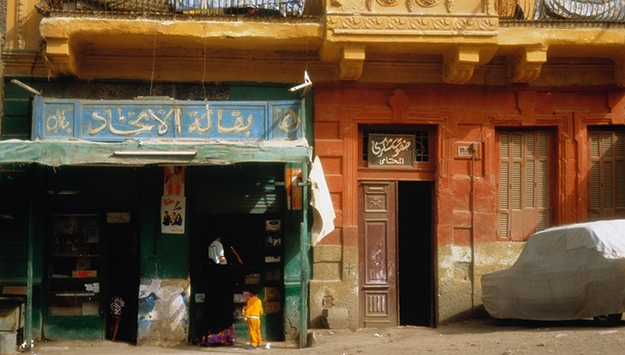
In mid-June, just before Ramadan, the pre-dawn calm of downtown Cairo was shattered by the sound of heavy machinery. The municipality had decided to repair the battered sidewalks, a fairly regular occurrence since shoddy concrete tiles are typically used for the job. Truckloads of sand were deposited at intervals along the main boulevards to be spread as a bed for the new tiles, while much of the rubble from the old ones was left piled by the curbs. To avoid the rough new terrain pedestrians took to the streets with the cars.
The Rise and Fall of Uncivil Society? Salafism in Tunisia After the Fall of Ben Ali
In some ways, the arrival of illiberal movements on the public scene and their ability to propagate their message unhindered is ultimately beneficial to the political growth of society because liberals then have a clear target they can fight rather rely on authoritarianism to sweep problematic debates within society under the carpet through the use of repression. Up to a point, therefore, Salafism in Tunisia helped unify society through strengthening the political system.