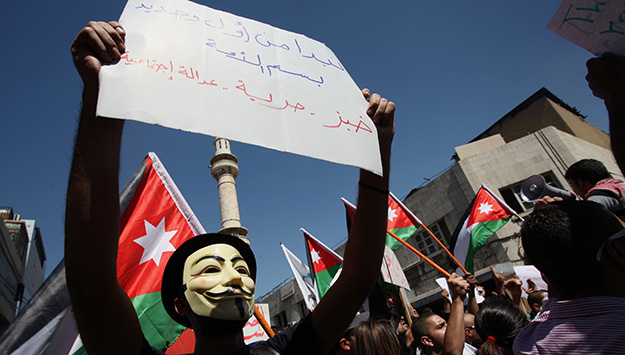
Liberalism in the Arab World: Accounts from the Region
Ismael Mohammed of Egypt recalls the moment he lost his religion. It happened four years ago, at the age of 26, when he heard about the theory of evolution for the first time. He had come across it online by watching YouTube videos and reading all the material he could fit through Google Translate. He sent query emails to evolution scientists around the world, asking them if what they were saying was true. Some responded, sending him the nuts and bolts of Darwin’s work.
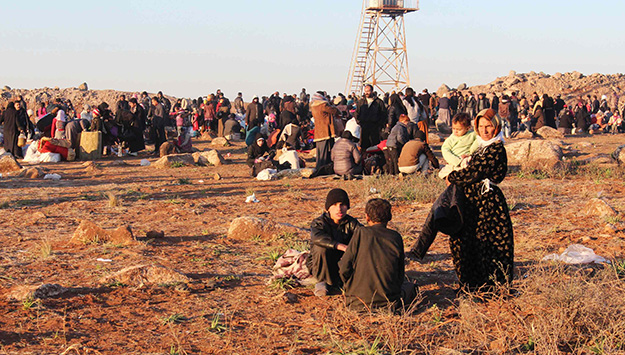
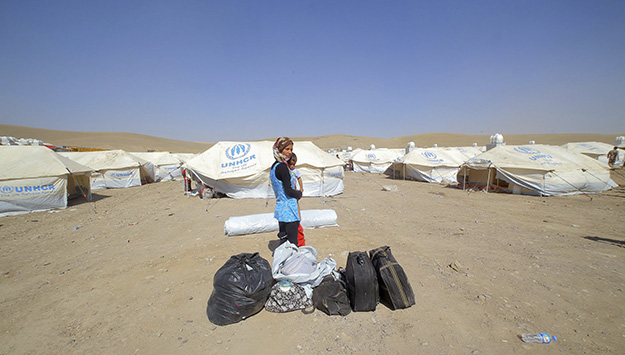
“What’s going to happen to the Syrian refugees?” This was the question I asked of everyone I met during a recent trip to Lebanon and Turkey to research Syrian displacement. Without exception, those I asked—government and UN officials, academics, business and NGO representatives, Syrian diaspora groups, and Syrian refugees—responded with the same answer: “I don’t know” (or sometimes “‘God only knows”). When pressed, almost everyone said that the war in Syria would continue for the foreseeable future and that more people would likely leave or try to leave.
Sectarianism and the Search for New Political Orders in the Arab World
In many Arab countries, the homogenizing, authoritarian, centralized state is a relic of a bygone past. However, what will replace it is not yet clear. The popular Arab uprisings that exploded in December 2010, and their overlap with already-underway geopolitical battles unleashed by the 2003 U.S. invasion and occupation of Iraq, combined to torpedo the political orders of a number of Arab states.
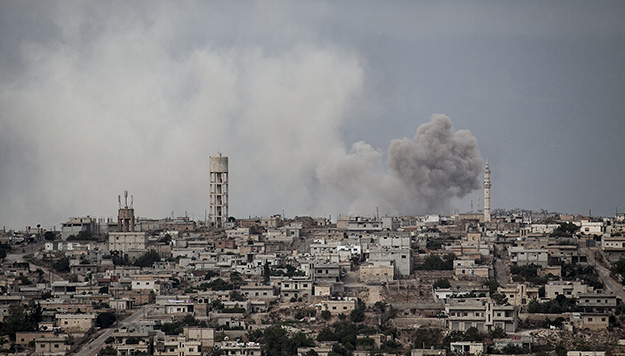
Probably the most important group fighting the Syrian regime now is Ahrar al-Sham (Free Men of the Levant), a Salafi group fighting mainly in the north but also in central and southern Syria. Contrary to Western reports suggesting that the al-Qa‘ida-linked Nusra Front led the battle to capture the northwestern Syrian provincial capital of Idlib last March, Ahrar had more fighters in the battle—a fact demonstrated by its predominance in the subsequent military oversight council established for Idlib.
From Nonintervention to What?: Analyzing the Change in China’s Middle East Policy
Though China still adheres to the principle of nonintervention, its unprecedented proactivity and break from its position to “pursue friendly, cooperative relations with all Middle Eastern countries” has already distinguished its behavior in the Syria crisis from its traditional stance.
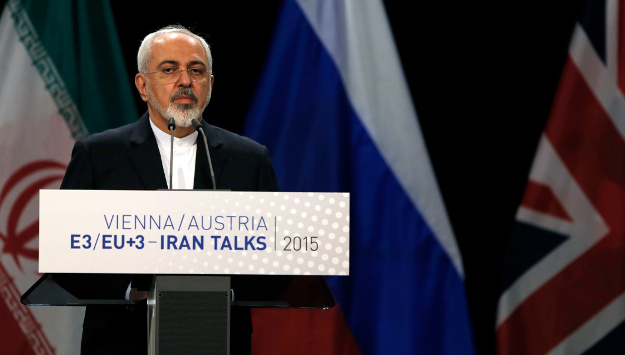
The Iran nuclear deal has only one big surprise: it is consistent with the April 2 “parameters” that preceded it and contains no surprises. No one caved. Nothing got walked back.
Iran Nuclear Deal: A Platform for Future Cooperation?
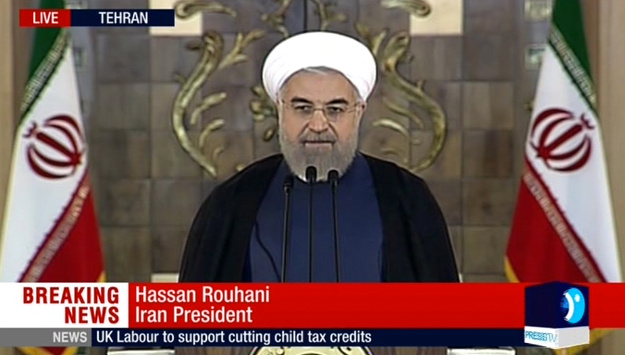
MEI interviewed Senior Fellow Alex Vatanka about the historic nuclear agreement between Iran and the P5+1 that was reached on July 14, 2015, and how it may impact regional dynamics and the long-term relationship between Iran and the West.
Arab Armed Forces: State Makers or State Breakers?
Proliferation and intensification of coercive force in the Arab world since 2011, combined with apparent decay of Arab states, seems at first glance to run counter to the implicit predictions of two relevant bodies of literature.
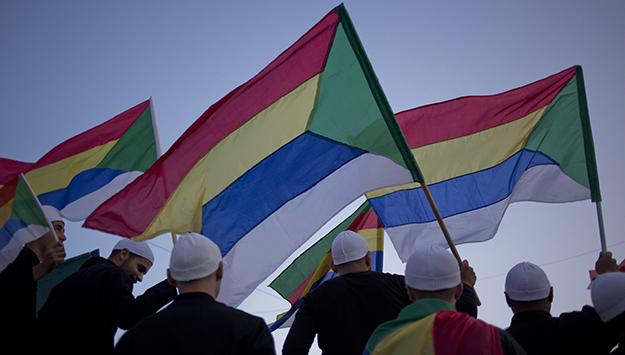
In the last few weeks, the Syrian Druze have been a focal point in significant fighting on the ground. If their role in the fighting continues, or even if it changes, the Druze will likely have a profound impact on the trajectory of the Syrian conflict.
Activism and Engagement: Envisioning a Possible New Doctrine for Indonesia’s Middle East Policy
The Asia-Pacific region, exemplified by the Association of Southeast Asian Nations (ASEAN) countries, has been the cornerstone of Indonesia’s foreign policy, with relationships in the Middle East being of secondary importance. Nevertheless, Indonesia has worked for years to develop fruitful bilateral relations with Arab countries in the economic, religious, and educational spheres.
The Humanitarian Crisis in the Middle East: Highlights from the MEI Conference
For decades, most refugee crises followed a pattern: A war erupted, usually in a poor country, and beleaguered civilians staggered across the nearest border. The United Nations organized a response, rich nations footed the bill, and aid groups sent in workers to tend to the needy. Even in extreme cases, such as the mass exodus from Afghanistan during the Soviet invasion in the 1980s, the crisis was largely confined to the country at war and a few immediate neighbors.
The Promise of Arab Youth: Gone Today, Here Tomorrow
After the latest attacks in Tunisia, Kuwait, Paris, and Sinai, attention is focused once again on the threat posed by the radicalization of youth. Indeed, Arab youth do represent a threat—to the established order. They came out in their millions in 2011 to demand freedom, dignity, and jobs, and these demands will not go away. They have been pushed back out of the public space by older institutions reviving fights between state authoritarianism and dreams of a caliphate, and indeed some youth, out of frustration, will radicalize and turn to violence.
For Egypt’s low-income majority, weddings are the prime source of group entertainment, celebrated like block parties in cramped streets decorated with arabesque tapestries and drenched in colored lights and sound. You won’t hear romantic crooning at these gatherings; in Cairo’s densely-inhabited popular quarters, wedding parties are more akin to raves. The music is raw synthetic beat embroidered with syncopated tabla (Egyptian drum) samples and queasy electronic loops.