This Opinion was first published in The National Interest on July 12, 2012
After an eighteen-month free fall, there is tangible improvement in the tumultuous U.S.-Pakistan relationship and an opportunity to leverage these gains for a durable peace in Afghanistan. Backtracking from a messy divorce, both Washington and Islamabad have forsaken their previous approaches of unrelenting maximalism, each making necessary compromises to make the partnership work.
Bruce Richardson raises an important issue regarding the protection, trafficking, and exploitation of cultural patrimony. Aspects of this issue range across research, polemics, and litigation in attempts to document loss, return treasures, or on the other hand prevent restitution or repatriation. Richardson properly decries cultural looting, but we must distinguish among causes to reach agreement on protective steps.
The Afghanistan Stabilisation Program (ASP): A National Program to Improve Security and Governance
Since the coup in April of 1978 by the People’s Democratic Party of Afghanistan (PDPA), the social, cultural, political, economic, governance, and security fabric of Afghanistan’s institutions have been destroyed by the subsequent Mujahedin and Taleban regimes. It is impossible to have enduring peace, stability, and development in a country without a strong institutional foundation. After 33 years of war and instability, for the most part, the linkages between central, provincial, district, and village governance structures in Afghanistan are either very weak or non-existent.
Pakistan's Military Holds the Keys to a Thaw with the U.S.
This Opinion first appeared in the the National on June 15, 2012
Just when U.S.-Pakistan relations appear to have reached a new low, yet another event drives them lower still, further complicating chances of stabilising bilateral ties.
Over the last 18 months, the deterioration of relations has been punctuated by a series of incidents, most dramatically the May 2011 raid that killed Osama bin Laden and the U.S. air strike last November at Salala, in which 24 Pakistani solders died.
America's Catch-22: The Iran Question in Afghanistan
This Opinion first appeared in Frontline.com’s Tehran Bureau on June 13, 2012 and was co-authored by Christina Lin
As U.S. and other NATO troops prepare to leave Afghanistan in 2014, a geopolitical realignment will be under way in Southwest Asia. One possible scenario would outright undermine a principle U.S. policy objective in the region: the containment of Iran.
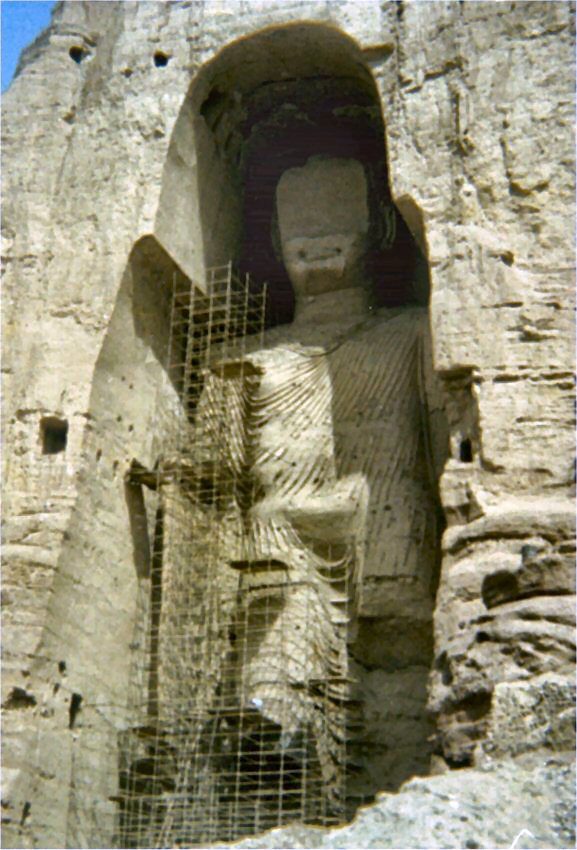
When Russian archaeologist Viktor Sarianidi excavated Tilya Tepe in 1978, 21,000 bejeweled, gold artifacts created during the Greco-Bactrian era known as The Golden Hoard of Bactria were reported as inventoried, photographed, and catalogued. But in consideration of the time (1978), and the fact that the Kremlin was considering military intervention in Afghanistan in support of the Communist regime, it seems prudent to challenge the veracity of Professor Sarianidi’s findings.
Delivering on the Commitments of Afghanistan Conferences
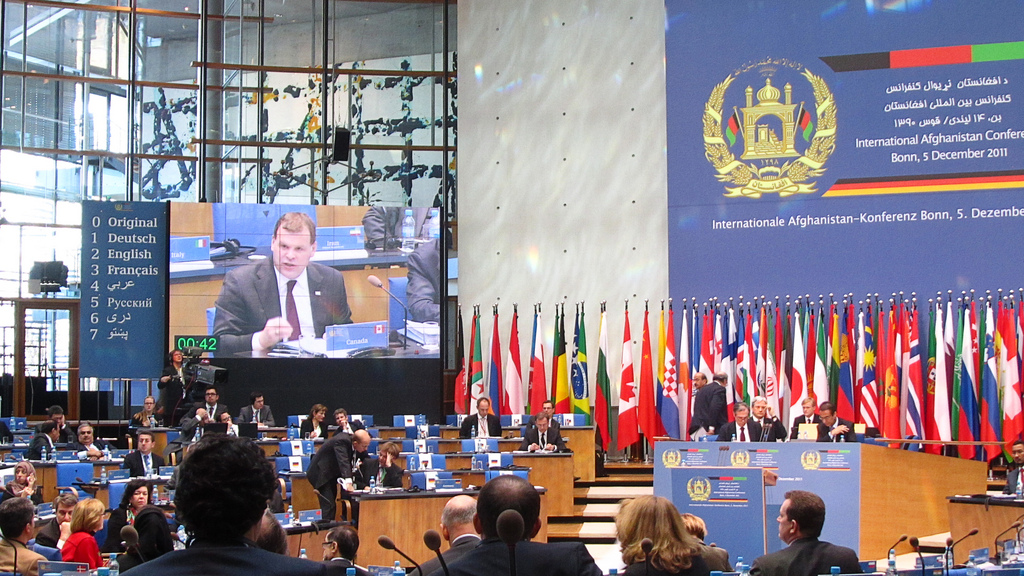
Last December in Bonn, Germany hosted and Afghanistan chaired an international conference on “Afghanistan and the International Community: From Transition to the Transformation Decade.” Eighty-five countries and 15 international organizations participated in the Conference to celebrate their shared 10-year achievements, and to recommit to consolidating and sustaining these achievements beyond 2014 into a decade of transformation until 2024.
Civil Society and Community Mobilization in Afghanistan
Originally posted December 2009
Civil Society (CS) consists of various kinds of community-based, non-governmental movements that, without waiting for or requesting government orders or assistance, come together mainly to solve problems and effect change. CS actors in Afghanistan exist at the local, district, and national levels. They are engaged in resolving problems and in calling upon people to contribute to, or participate in, community-based activities.