Virtuoso French-Swiss qanun player Julien “Jalal Eddine” Weiss, who tirelessly promoted classical Arab and Syrian music to international audiences from his home in Aleppo, Syria, died this month in Paris. Forced to flee Syria’s brutal civil war like millions of other Syrians, Weiss’s death is a sad reminder of the ongoing threat to Aleppo’s rich cultural traditions, as well as an occasion to remember the city’s heritage, which played such an important role in inspiring his unique Middle Eastern compositions.
There and Back Again: Indonesian Fighters in Syria
In July of 2014, I met with a former member of Tanah Runtuh, Jemaah Islamiyah’s onetime affiliate in Poso, Central Sulawesi. As he was newly released from prison, I wanted to inquire as to his future plans. Would he go to the hills and fight with Mujahidin Indonesia Timor (MIT)? Would he follow in the footsteps of many of his former comrades and become a contractor? When he walked into the room, I was surprised to see that he sported an Islamic State (ISIS) t-shirt. “Do you want to join ISIS?” I asked. “If I can raise the money,” he answered. A week later, I met with a former affiliate of Noordin M. Top who was running several small businesses in Solo, Central Java. I had interviewed him in 2012 when he was due to open the Solo branch of Dapur Bistek, a restaurant-cum-job training program for former fighters run by the Institute for International Peace Building. With his son next to him eating ice cream, he told me that he hoped to fight with Jabhat al-Nusra (the Nusra Front); he simply needed to raise the money. Whether or not these two individuals ever make it to Syria, their responses raise important questions.
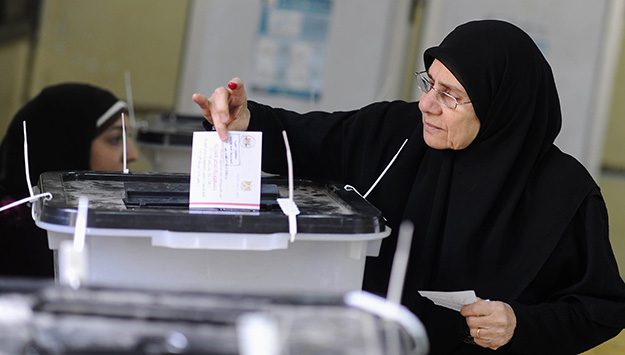
Long-awaited elections for Egypt’s parliament, which has been dissolved since 2012 as the result of a court order, have been scheduled in a two-phase process beginning this March. What will the process involve? Why are these elections important? Ahmed Morsy answers essential questions.
I ran into some Anbaris in Washington this week. All of them have lost friends or relatives in the fight against Islamist extremism in one form or another. They had interesting things to say.
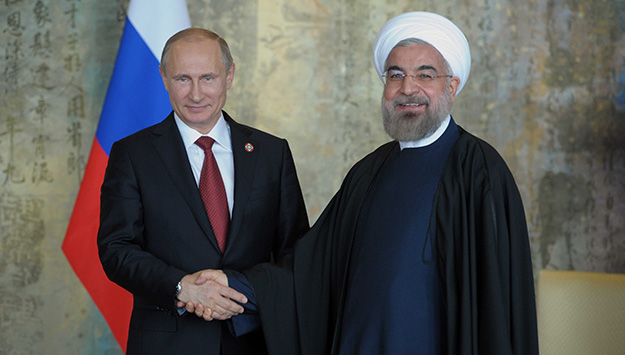
Thanks to the unending American-Russian standoff over Ukraine, there are voices in Tehran that seem to believe that the road to international rehabilitation goes through Moscow.
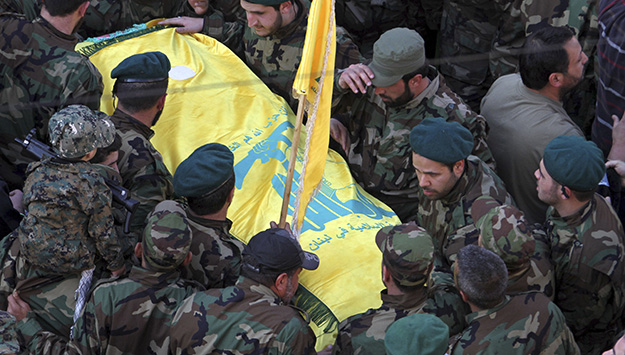
An Israeli helicopter fired rockets on a convoy in the Golan Heights on January 18, killing six members of Hezbollah and an Iranian general. MEI’s Randa Slim explains the context surrounding the attack and the likely repercussions.
Why did Israel choose this time to attack Hezbollah and Iranian targets in the Golan Heights?
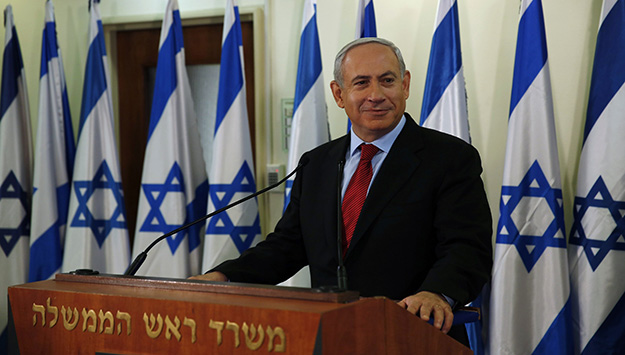
Israel’s politics are always full of paradoxes. In the upcoming March 17 election, the central one is that the likely winner is perhaps the most disliked man in the country’s politics, namely the current prime minister, Benjamin (Bibi) Netanyahu. Even many who will vote for him don’t like him. This is partly a function of his longevity in the top ranks; he first became PM in 1996, but others held the office from 1999 until he regained it in 2009, and he has made a lot of enemies over the years.
Militant Islam in Malaysia: Synergy between Regional and Global Jihadi Groups
The militant jihadi movement has been growing steadily in Malaysia since the early 1970s. The origins of Jemaah Islamiyah (JI) can be traced to Seremban, Malaysia, where Abu Bakar Ba‘asyir began laying the groundwork for the organization in the early 1980s. When he spearheaded the formal establishment of JI a decade later, Ba‘asyir created four mantiqis (bases) covering Malaysia and Singapore, Thailand and the Philippines, Indonesia and Sulawesi, and Australia and the Papuas. JI went on to serve as a platform for international terrorist groups. Al-Qa‘ida and, more recently, the Islamic State (ISIS) have tapped into JI’s organizational structure in order to increase their influence in Southeast Asia. This essay explores this ongoing synergy between regional and international militant groups in Malaysia, and examines the government’s continued failure to contain the spread of extremism.
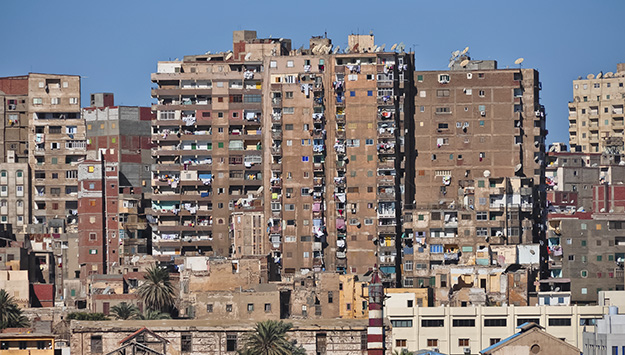
In March 2014, before resigning as Egypt’s minister of defense and pursuing his campaign for the presidency, General Abdul-Fattah el-Sisi announced an agreement with the UAE construction firm Arabtec to build a million affordable homes for “Egyptian youth.” The Egyptian Army facilitated the deal by pledging to donate 160 million square meters of land in 18 locations nationwide. Although Arabtec had never handled a project of this scale or value ($40 billion), one of its largest stakeholders (22 percent) is the Abu Dhabi state fund Aabar.
The electoral campaign in Israel is still unfolding, and with about two months to go anything might happen to upend predictions about the outcome. But there are straws in the wind.
The Contemporary Islamic State of Indonesia: Threats and Challenges
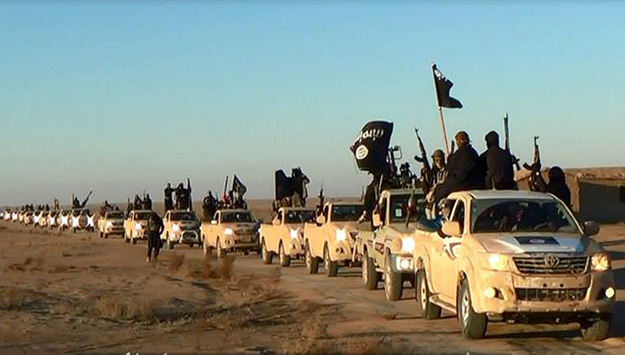
The Islamic State (ISIS) currently poses a serious security threat to Indonesia. The group has already recruited hundreds of young fighters and jihadi volunteers from various parts of the country. Its battlefield successes and its call for the establishment of a caliphate in Indonesia have resonated with, mobilized, and united jihadi groups that had previously been fractured and weakened. This essay examines past efforts to establish an Islamic state in Indonesia and discusses how veterans of past conflicts―from the war in Afghanistan in the 1980s to the religious conflicts in Poso and Maluku―seeded Indonesia’s jihadi movement, spawning new networks and organizations. The current global jihad battlefield in Syria and Iraq is the training ground for the next generation of jihadi returnees to Indonesia and the Southeast Asian region.
This article, co-written by James P. Farwell, was first published byThe National Interest.
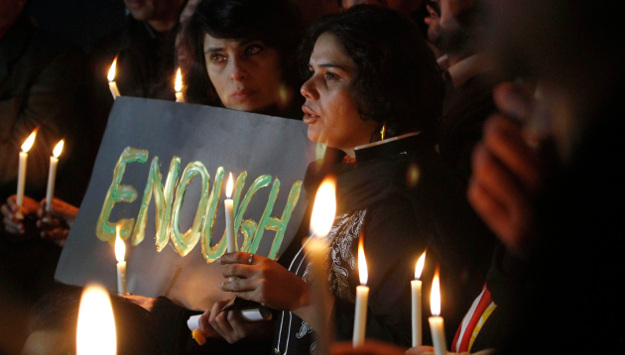
Shot in both legs, Shahruh Khan survived the Taliban attack on the Army Public School in Peshawar, Pakistan. “The man with big boots,” Al Jazeera quoted Khan as saying, “kept on looking for students and pumping bullets into their bodies.”
Vulnerabilities and Resistance to Islamist Radicalization in India
India has long remained an enigma within the discourse on the Islamist extremism and terrorism that have afflicted widening areas of the world. The emergence of the Islamic State (ISIS) and its appeal to significant numbers of radicalized Muslims have highlighted ambiguities surrounding the role of these ideologies in India. Fighters from at least 82 countries are said to have joined ISIS. Western countries with tiny Muslim populations and long-standing programs intended to counter the trends toward radicalization of Muslims have found that scores—even hundreds—of their citizens are involved in the fighting in Iraq and Syria. By comparison, India, with a Muslim population of about 176 million (well over twice the total population of Europe), has seen an estimated 18 radicalized Muslims join ISIS in Iraq-Syria.