Skip to Content

Research & Commentary Results

Filter by
1244 Results
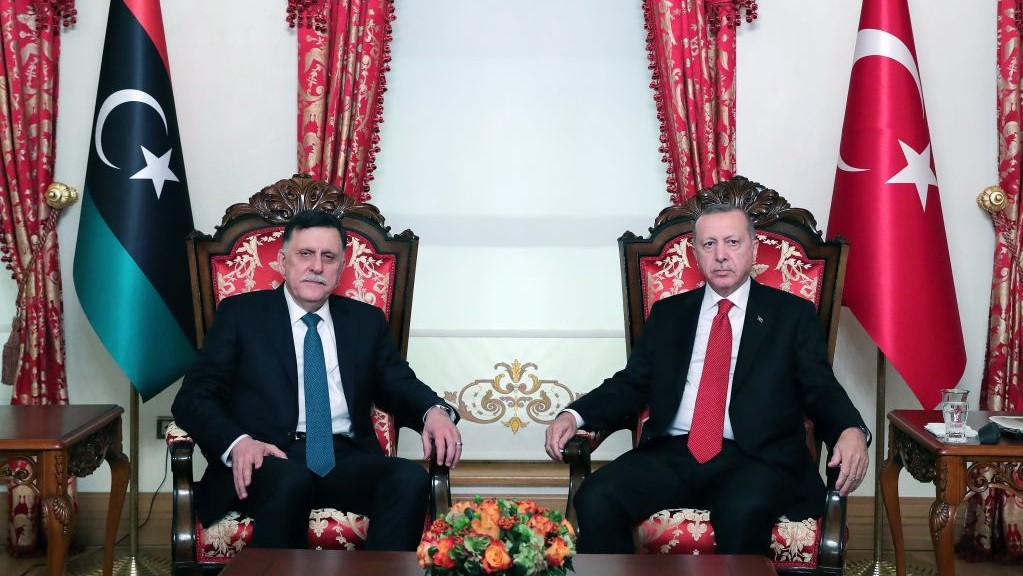
Turkey doubles down on Libya
President of Turkey, Recep Tayyip Erdogan (R) meets chairman of the Presidential Council of Libya, Fayez Al-Sarraj (L) at Dolmabahce Office in Istanbul, Turkey on November 27, 2019.
  • Analysis
  • Turkey doubles down on Libya

    On Nov. 27 the GNA signed an MoU with Turkey seeking to create a shared maritime boundary in the Mediterranean Sea between southwestern Turkey and northeastern Libya. In an overt quid pro quo, this maritime agreement was signed along with a separate MoU to expand security and military cooperation. Thus, it seems clear that Turkey was only able to persuade the GNA to agree to the maritime deal in exchange for increased security support for the GNA-aligned forces fighting the self-styled LNA in Tripoli.

    December 10, 2019

    An Israel-US defense treaty will ruin relations with Arab states
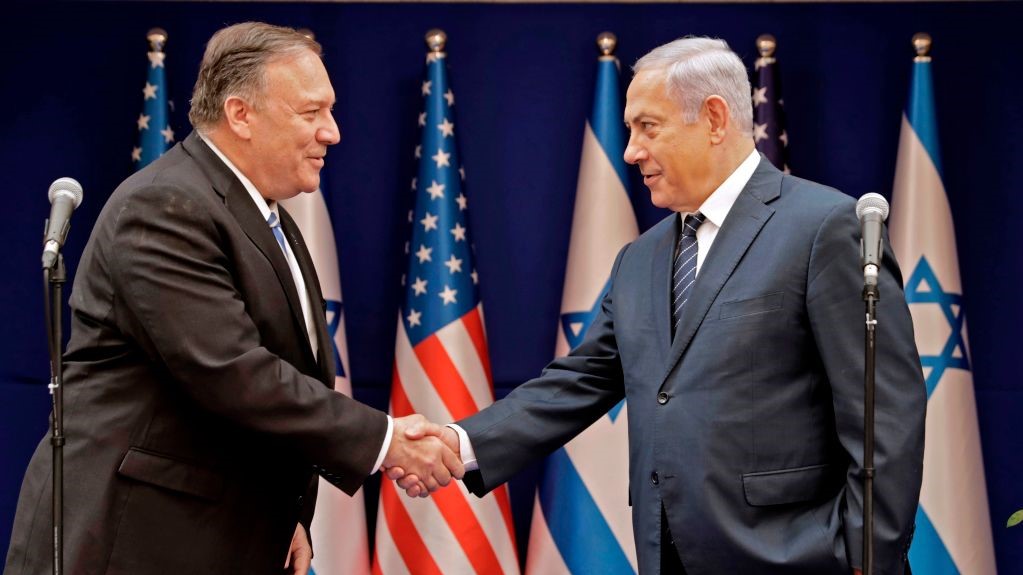
    Israeli Prime Minister Benjamin Netanyahu (R) shakes the hand of US Secretary of State Mike Pompeo following their meeting in Jerusalem on October 18, 2019.
  • Analysis
  • An Israel-US defense treaty will ruin relations with Arab states

    Attempts by the indicted Israeli leader to railroad through a joint U.S.-Israel defense treaty in opposition to the Palestinians and other Arabs will be disastrous for America’s national interest.

    December 9, 2019

    Will Israeli politicians prove their responsibility and flexibility?
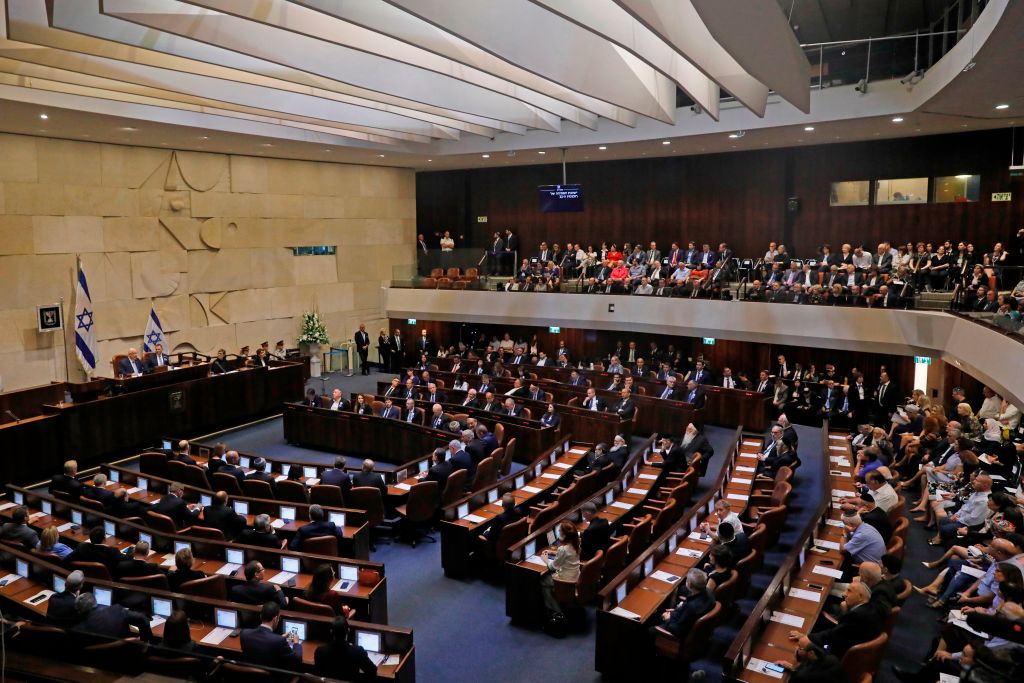
    A picture taken on October 3, 2019 shows a general view of the plenum during the swearing-in ceremony at the Knesset in Jerusalem. - Israel's parliament was sworn in today without a new government formed as a deadlocked general election left Netanyahu scrambling to find a path to extend his long tenure in power.
  • Commentary
  • Will Israeli politicians prove their responsibility and flexibility?

    It is clear that the Israeli political system has reached a peak in terms of the challenges it faces: two elections campaigns to date this year have not led to conclusive results and a third round may be right around the corner.

    November 25, 2019

    Pompeo’s audience: The Trumpian base
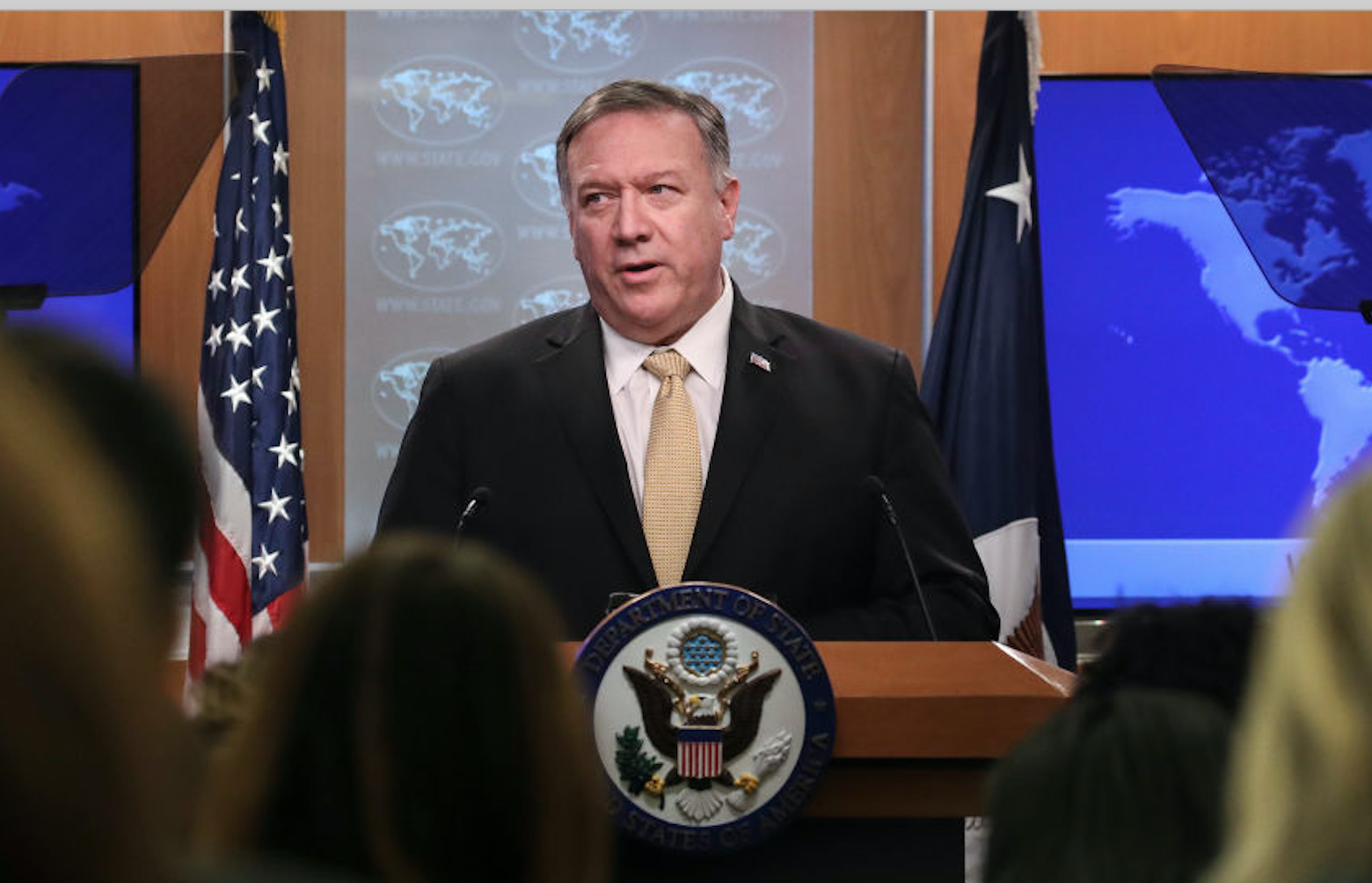
    U.S. Secretary of State Mike Pompeo speaks during a press conference at the U.S. Department of State on November 18, 2019 in Washington, DC
  • Analysis
  • Pompeo’s audience: The Trumpian base

    It is not always recognized that Secretary of State Mike Pompeo’s Nov. 18 declaration that Israeli “settlements are not inconsistent with international law” was primarily political, not diplomatic, designed for domestic American consumption as part of the president’s reelection campaign. Secondarily, it was intended to strengthen Israeli Prime Minister Benjamin Netanyahu’s hand in the current coalition negotiations and/or the likely upcoming Knesset election, if coalition negotiations fail. Third on the list, almost an afterthought, is the effect on the Palestinians, whose future state’s boundaries it purports to impact.
    November 21, 2019

    Escalation in Gaza tests Israel-Hamas détente
    Palestinian Islamic Jihad militants attend the funeral of a comrade in Khan Yunis in the southern Gaza Strip November 14, 2019.
  • Commentary
  • Escalation in Gaza tests Israel-Hamas détente

    A Nov. 12 Israeli airstrike on the Gaza Strip killed Baha Abu al-Ata, a commander with the Palestinian Islamic Jihad (PIJ) militant group. Over the ensuring 48 hours, the PIJ launched some 450 rockets from Gaza into southern and central Israel. Hamas, the Palestinian political party/militant group that acts as the de facto government of Gaza, stayed out of the fighting — despite relatively high civilian casualties and the killing of one of its fighters.

    November 18, 2019

    Punching above their weight: Cyber lessons for small states
    The NATO Cooperative Cyber Defence Centre of Excellence (CoE) in Tallinn, Estonia, 14 April 2015.
  • Analysis
  • Punching above their weight: Cyber lessons for small states

    The role of cybersecurity in the future of geopolitics in the Middle East and the surrounding regions will have much to do with individual state and enterprise preparedness. With cyber threats a growing source of interstate tension, governments must take measures to increase national cyber preparedness that are tailored to their vulnerabilities and cyber ecosystems. Israel and Estonia are examples of states that prove this rule. Despite their relatively small size, both have demonstrated an exceptional capacity to deter or defend against cyber aggression from their much larger, more aggressive neighbors.

    November 18, 2019

    Seized Russian-printed dinars highlight an opportunity to reform Libya’s civil war economy
     Libyans gather during the funeral of fighters loyal to the Government of National Accord (GNA) in the capital Tripoli, on April 24, 2019, after they were reportedly killed during clashes with forces loyal to strongman Khalifa Haftar in al-Hira region, about 70 kilometres south of Tripoli.
  • Analysis
  • Seized Russian-printed dinars highlight an opportunity to reform Libya’s civil war economy

    The Nov. 1 seizure by Malta of two 2000-cubic-foot containers full of Libyan currency printed by the Russian state printer, Goznak, that was intended for delivery to Libya’s non-internationally recognized eastern government, highlights the continuing importance of the economic aspects of Libya’s ongoing civil war.

    Facebook’s lawsuit against Israeli tech firm: The private sector and new cyber tension in the Middle East
    An Israeli woman uses her iPhone in front of the building housing the Israeli NSO group, on August 28, 2016, in Herzliya, near Tel Aviv.
  • Commentary
  • Facebook’s lawsuit against Israeli tech firm: The private sector and new cyber tension in the Middle East

    Recent legal action by tech giant Facebook has critical implications for the rise of private sector actors in the fight for dominance and security in the Middle East cyber domain. On Oct. 29, Facebook filed a lawsuit against the Israel-based company NSO Group for allegedly breaching users of the Facebook-owned communications platform WhatsApp.

    October 30, 2019

    There may not be any celebrations, but the Israeli-Jordanian peace agreement has endured for 25 years
    The Israel-Jordan peace treaty being signed in 1994. US President Bill Clinton watches Jordan's King Hussein and Israeli Prime Minister Yitzhak Rabin sign the treaty on the White house lawn
  • Analysis
  • There may not be any celebrations, but the Israeli-Jordanian peace agreement has endured for 25 years

    Oct. 26, 2019 marked the 25th anniversary of the signing of the peace treaty between the Hashemite Kingdom of Jordan and the State of Israel. A quarter-century on, relations between the two countries remain mired in disputes and difficulties, and no special celebrations were planned despite the significance of the event. While the challenges facing the two states are complex, both sides benefit from the agreement. The fact that the peace treaty has endured for two and a half decades amid the chaos and unrest afflicting the region is certainly a cause for celebration and gives grounds for optimism.

    October 28, 2019

    Resolving the Lebanese-Israeli border dispute: What’s in it for Washington?
    Lebanese President Michel Aoun (L) meets U.S. Ambassador to Lebanon Elizabeth Richard (R) at Baabda Palace in Beirut, Lebanon on May 9, 2019.
  • Analysis
  • Resolving the Lebanese-Israeli border dispute: What’s in it for Washington?

    On Sept. 25, Lebanese President Michel Aoun told the UN General Assembly that Lebanon is prepared to welcome any country’s help in demarcating its land and maritime borders. He was referring to Lebanon’s decades-old border dispute with Israel, the resolution of which has become increasingly important as the country inches closer toward its first oil and gas drilling operations later this year.

    October 24, 2019

    Disrupting a delicate status quo: The Hamas crackdown on Salafi-jihadists
    Security forces loyal to Palestinian Islamist movement Hamas stop a vehicle at a checkpoint in Khan Yunis in the southern Gaza Strip on August 28, 2019.
  • Analysis
  • Disrupting a delicate status quo: The Hamas crackdown on Salafi-jihadists

    Reports of a secret war being waged by Hamas against Salafi-jihadist groups in the Gaza Strip are indicative of increasing challenges to the former’s security control within the enclave. Hamas’ current approach to violent Salafist cells in Gaza is equally demonstrative of an ongoing warming of relations between Cairo and Hamas, and one that has afforded Hamas international legitimacy and an ease in border restrictions.

    October 22, 2019

    Divide and Conquer: The Growing Hezbollah Threat to the Druze
    Cover photo: Druze men in the Israeli-annexed Golan Heights look out across the southwestern Syrian province of Quneitra, visible across the border on July 7, 2018. (Photo by JALAA MAREY/AFP/Getty Images)
  • Analysis
  • Divide and Conquer: The Growing Hezbollah Threat to the Druze

    Deep political, familial, and religious ties have allowed Druze communities across the Levant to remain largely unified against external threats, but eight years of violence in Syria and a coordinated campaign by the regime and its allies now threaten to destabilize regional Druze politics and erode the sect’s political and military power. An Iranian-backed campaign by Hezbollah to incite inter-Druze violence in Lebanon has curtailed this unity, laying the groundwork for Hezbollah to expand into Syria’s Suwayda province with impunity.

    October 21, 2019

    “Ana Kurdi” — suddenly Israelis are feeling Kurdish
    sraelis demonstrate against the Turkish military offensive in northeastern Syria on October 17, 2019 in front of the Turkish embassy in the Israeli coastal city of Tel Aviv.
  • Commentary
  • “Ana Kurdi” — suddenly Israelis are feeling Kurdish

    The news of Donald Trump’s sellout to Turkey’s Recep Tayyip Erdogan hit Israel like a lightning storm. Trump has managed to do the unthinkable: unite all Israelis around a geopolitical cause.

    A political lifeline for Netanyahu as coalition talks continue
    Israeli Prime Minister Benjamin Netanyahu (L), President Reuven Rivlin (C) and Benny Gantz, leader of Blue and White party, attend a memorial ceremony for late Israeli president Shimon Peres, at Mount Herzl in Jerusalem on September 19, 2019.
  • Commentary
  • A political lifeline for Netanyahu as coalition talks continue

    Last Wednesday, Prime Minister Benjamin Netanyahu was cast another political lifeline. Reuven Rivlin, the Israeli president, gave Netanyahu the first chance to form a coalition government; formally, he has 28 days to do so. Netanyahu’s task will prove difficult.

    September 30, 2019

    The UN deliberately (albeit mistakenly) accorded sovereignty to post-Gadhafi Libya’s economic institutions
    Libya's General National Congress (GNC) deputy president Saleh al-Makhzoum (C-R), the new national government head, Prime Minister, Fayez al-Sarraj (C) and the head of the Tobruk-based House of Representatives Mohammed Ali Shoeb (C-L) celebrate after signing a deal on a unity government on December 17, 2015, in the Moroccan city of Skhirat.
  • Analysis
  • The UN deliberately (albeit mistakenly) accorded sovereignty to post-Gadhafi Libya’s economic institutions

    The crux of today’s Libya problem in international foreign policy lies in an underappreciated UN misstep in the most important international treaty concerning Libya, the 2015 Skhirat Agreement, and the decision to vest sovereignty in the heads of independent and semi-independent sub-state institutions like the Central Bank of Libya. The negative implications of this decision must now be addressed and it is time to move onto something new, after Skhirat.

    September 26, 2019