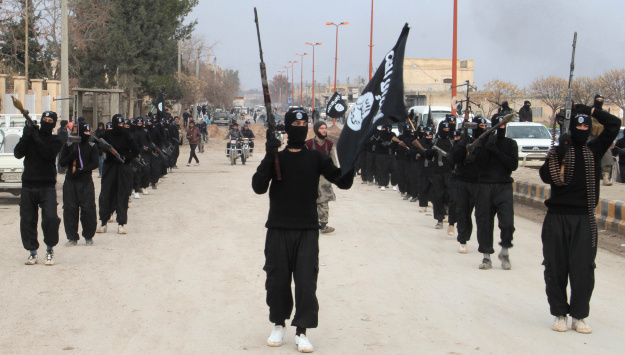
The Islamic State of Iraq and Syria (ISIS), a Sunni militant group controlling territory spanning the border between the two country’s northern regions, made a rapid advance toward Baghdad this week, seizing control of Mosul, Iraq’s second largest city, and Tikrit, and attacking the refinery town of Baiji. Forces from Iraqi Kurdistan have since moved to secure Kirkuk as the Iraqi central government’s military has fled in disarray. Robert Ford, former U.S.
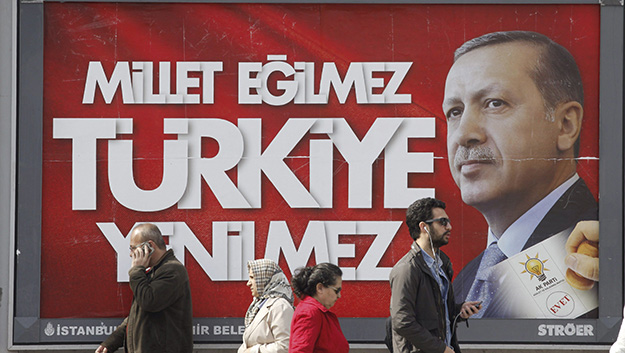
Turkish Prime Minister Recep Tayyip Erdogan secured his eighth big win in 14 years when his ruling AK Party won over 45 percent of the vote in local elections on March 30. After facing down corruption charges, mass protests, and accusations of authoritarianism, Erdogan may feel emboldened to run for president in Turkey’s first direct presidential election in August.
Closing the Channels of the Military's Economic Influence in Turkey
After a decade of working to subordinate Turkey’s military establishment so that it cannot influence the trajectory of Turkish politics, closing the channels of the military’s economic influence has been part of this process. Despite early expectations, the AKP has not forged a more democratic and liberal Turkey, but there is no denying the critical importance of its successful effort to institutionalize civilian control of the armed forces.
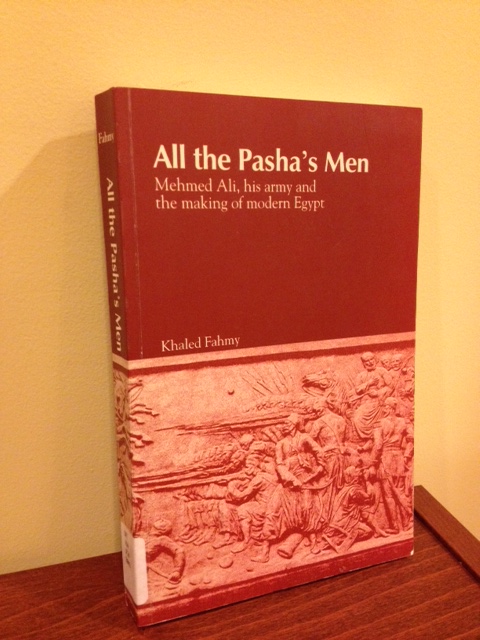
From the standpoint of Turkish civil-military experts, the concern has never been whether Turkey should civilianize but rather what civilianization would lead to when it was finally achieved. Following the 2013 Gezi protests and the government’s harsh response to the protesters, Turkey’s success in the civilianization of its politics is quickly snowballing into uncertainty.
The political crisis in Ukraine and subsequent annexation of Crimea by Russia have sent reverberations throughout the Middle East, where Western and Russian influences continue to weave a complex geopolitical web. MEI interviewed four of its scholars to produce this detailed account of the challenges the conflict poses to the region’s political, security, and economic conditions.
The Clash of Former Allies: The AKP versus the Gulen Movement
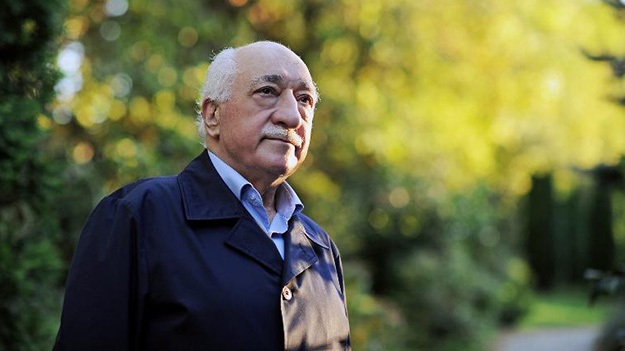
A major political row between Turkish Prime Minister Recep Tayyip Erdogan’s Justice and Development Party (AKP) and preacher Fethullah Gulen’s Islamic movement has been simmering in Turkey. The clash between the two former allies will have important implications at a time when Turkey appears increasingly vulnerable, with a war raging in Syria and the government facing fierce challenges from within. The rift will have an effect on a gamut of issues, from the “Kurdish opening” to upcoming local and presidential elections.
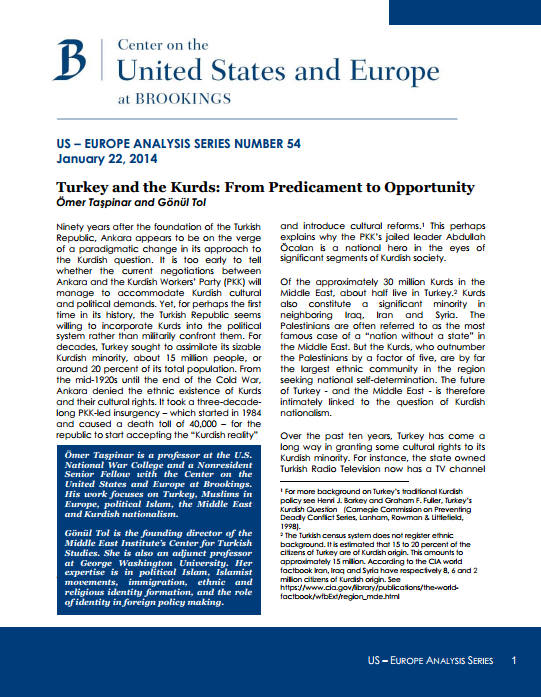
Turkey and the Kurds: From Predicament to Opportunity
This report was co-authored by Ömer Taşpınar and was published by the Center on the United States and Europe at the Brookings Institution on Jan. 22, 2014. Click here to download the full report as a PDF.
Turkish Prime Minister Recep Tayyip Erdogan is in Tehran January 28 and 29 for his first meeting with Iranian President Hassan Rouhani. Foreign Minister Ahmet Davutoglu, Energy Minister Taner Yildiz, and Economy Minister Nihat Zeybekci are accompanying him. MEI spoke to Gonul Tol, Director of the Institute’s Center for Turkish Studies, about the meeting.
This article was first published on Al Jazeera on December 24, 2013.
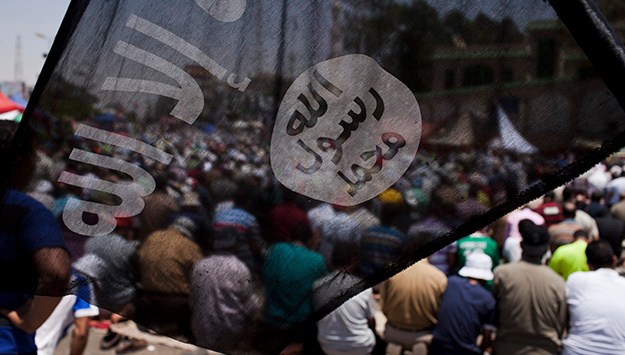
The downfall of Egypt’s Muslim Brotherhood (MB) has put political Islam at a crossroads. Not only has it shown that ideology per se is not a guarantor of political success, but also that Islamists need to rethink their strategy and tactics in order to deal with the new environment following the Arab Spring.
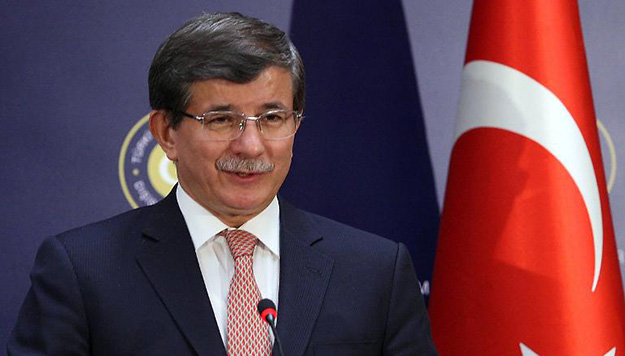
Turkish Foreign Minister Ahmet Davutoglu’s visit to Washington, D.C. last week came on the heels of a year of soul searching for Turkish foreign policy. After the Arab uprisings shook Turkey’s guiding principle of “zero problems with neighbors,” the country now seems intent on resuming the leadership role it enjoyed in the pre-Arab Spring Middle East.
Turkey-Pakistan Security Relations since the 1950s
The initial impulse for Pakistan and Turkey to pursue security cooperation stemmed from their common opposition to Communism in the 1950s. Over the past decade, Pakistan and Turkey have once again sought to cooperate in the security sphere, this time in countering terrorism and ensuring stability in Afghanistan.
Malaysia and Turkey lie nearly 5,000 miles and seven time zones apart. They have different historical experiences and state structures. The role that religion plays in their public life also differs markedly. Yet Malaysia and Turkey have more in common than is widely acknowledged. Both are newly industrialized, middle-income, predominantly Muslim countries and mid-sized powers in their respective regions. Both are also expected to assume a greater regional and global role in the coming years.

 Caught by Surprise: Letter Found in Rare Book Collection