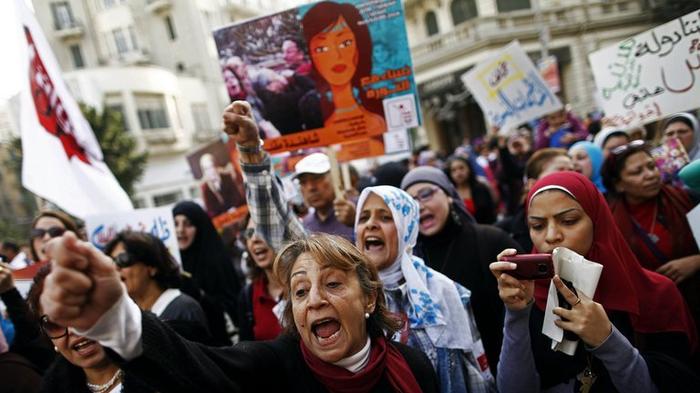
When I moved to Cairo in 1981 I discovered a courtly and safe city. The streets were alive with playful banter, expressions of the renowned Egyptian joie de vivre. Men who wished to attract the attention of lady passers-by sang bits of love songs or called them things like “minaret” and “gazelle.”
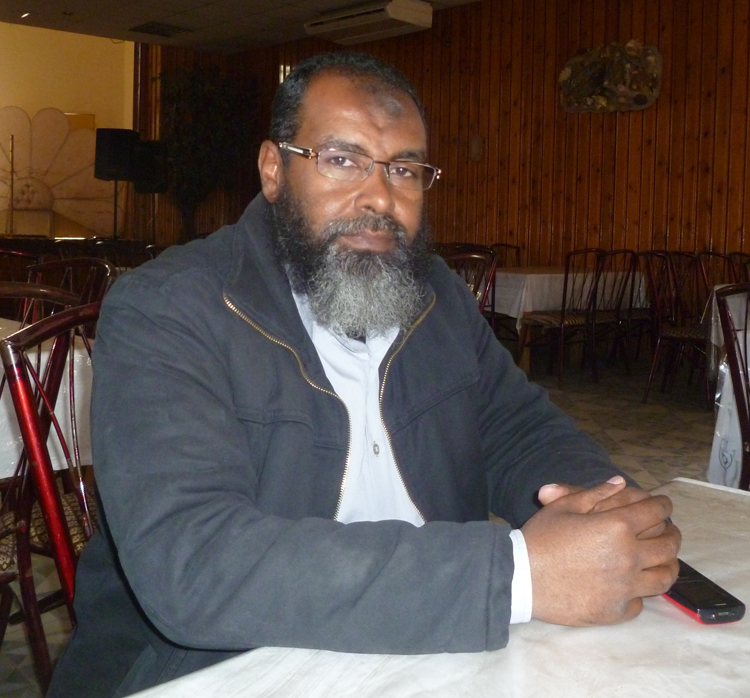
A Conversation with al-Gama`a al-Islamiya’s Hani Nour Eldin
Hani Nour Eldin is a member of the Egyptian Islamist group al-Gama`a al-Islamiya and an administrative employee of the Suez Canal Authority. In 2011 he was elected to parliament as part of the group’s political arm, the Building and Development Party. In June 2012 he caused considerable controversy when he traveled to Washington, D.C. as part of a parliamentary delegation.
Ten months have passed since the election of the Muslim Brotherhood’s Mohamed Morsi as Egypt’s first post-uprising president. During his election campaign, Morsi repeatedly promised “change.” So far, however, it appears that Egypt’s bureaucracy has been more successful at changing Morsi’s plans and discourse than he has been at changing the state’s structures.
Interview with Ambassador Dr. Mohamed Noman Galal: Reflections of a Scholar-Diplomat on Arab-Asia Relations
To be sure, Asia is the home of great civilizations. It is also the continent of rising powers, dynamic economies, and nearly half of the world’s population. For these reasons, it only makes sense that Egypt continues seeking ways to expand its ties with Asian countries. It will take imaginative Egyptian leadership to accomplish this objective and, more broadly, to capitalize on the country’s location and to help unleash its people’s creative energy.
Economic Effects of the Arab Spring: Policy Failures and Mounting Challenges
Thu, 2/28/2013 12:00 pm to 1:00 pm The Middle East Institute is proud to host economists Andreas Bauer and Dr. Zubair Iqbal for an examination of the economic impact of the upheavals affecting Arab Spring countries, including Egypt and Tunisia. Since the 2011 uprisings, growth in the MENA region has slowed, inequality worsened, and unemployment increased, thus weakening the popular support needed for new governments to introduce difficult, but necessary, economic reforms.
Economic Effects of the Arab Spring: Policy Failures and Mounting Challenges
Thu, 2/28/2013 12:00 pm to 1:00 pm The Middle East Institute is proud to host economists Andreas Bauer and Dr. Zubair Iqbal for an examination of the economic impact of the upheavals affecting Arab Spring countries, including Egypt and Tunisia. Since the 2011 uprisings, growth in the MENA region has slowed, inequality worsened, and unemployment increased, thus weakening the popular support needed for new governments to introduce difficult, but necessary, economic reforms.
Economic Effects of the Arab Spring: Policy Failures and Mounting Challenges
Thu, 2/28/2013 12:00 pm to 1:00 pm The Middle East Institute is proud to host economists Andreas Bauer and Dr. Zubair Iqbal for an examination of the economic impact of the upheavals affecting Arab Spring countries, including Egypt and Tunisia. Since the 2011 uprisings, growth in the MENA region has slowed, inequality worsened, and unemployment increased, thus weakening the popular support needed for new governments to introduce difficult, but necessary, economic reforms.
Economic Effects of the Arab Spring: Policy Failures and Mounting Challenges
Thu, 2/28/2013 12:00 pm to 1:00 pm The Middle East Institute is proud to host economists Andreas Bauer and Dr. Zubair Iqbal for an examination of the economic impact of the upheavals affecting Arab Spring countries, including Egypt and Tunisia. Since the 2011 uprisings, growth in the MENA region has slowed, inequality worsened, and unemployment increased, thus weakening the popular support needed for new governments to introduce difficult, but necessary, economic reforms.
Interview with Indian Ambassador (ret.) Ranjit Gupta: Cairo, Egypt — The First Posting (1965-1968)
Even before I left India for Cairo, I had the impression that there was a special relationship between India and Egypt. Indeed, within a few weeks of my arrival in Cairo, I found tangible manifestations that it was indeed so and discovered many more in due course.
Beneath the din and clamor of political clashes and violent street protests, Egypt has been quietly turning to Asia in the form of a flurry of diplomatic activity. In addition to having far-reaching ramifications for Egyptian politics and society, the political ascendancy of the Muslim Brotherhood has also raised important questions regarding the evolution of Egyptian foreign policy.
Migration Agreements between Italy and North Africa: Domestic Imperatives versus International Norms
The upheavals which spread across North Africa in 2011 changed the political map of the region. With the downfall of longstanding rulers, the European Union has sought to re-launch a policy dialogue informed by an awareness of human rights issues and to support the process of democratic transition in its Mediterranean neighbors.
Whither Mohammed Morsi and His Muslim Brotherhood?
This article was first published by The Huffington Post on December 10, 2012
Assertions and opinions in this publication are solely those of the above-mentioned author(s) and do not necessarily reflect the views of the Middle East Institute, which expressly does not take positions on Middle East policy