Rouhani and Erdogan Pledge to Boost Bilateral Ties, Cooperate on Regional Problems
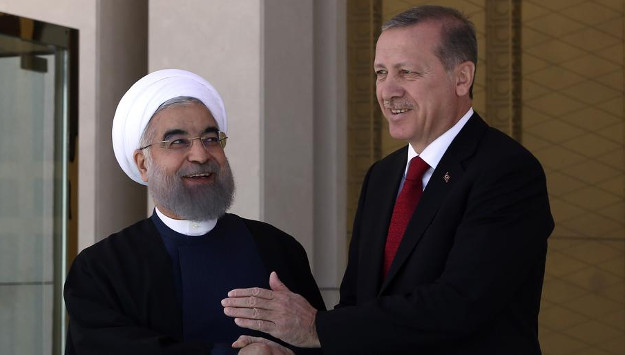
Iran wants to cooperate more closely with Turkey to resolve regional problems, Iranian President Hassan Rouhani told his Turkish counterpart Recep Tayyip Erdogan in a telephone conversation earlier today. Rouhani offered his congratulations to Erdogan on the occasion of Eid al-Adha and stressed that he will do more during his second term in office to expand Tehran’s ties with Ankara in all fields.
A Return to Ambiguity in U.S.-Egyptian Relations | Monday Briefing
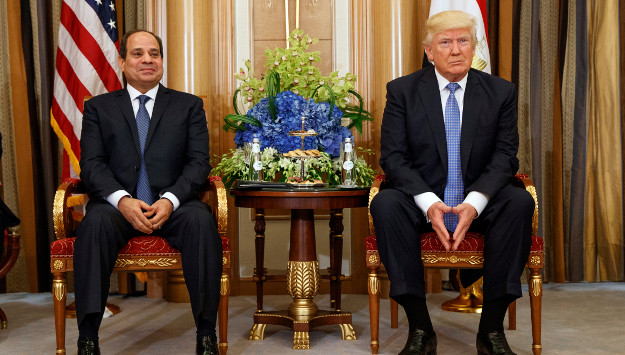
In this week’s Monday Briefing, MEI experts Paul Salem, Gerald Feierstein, Randa Slim, Bilal Y. Saab, and Jean-François Seznec provide analysis on recent and upcoming events including tensions between Washington and Cairo over Egypt’s excessive authoritarian crackdown, Russia’s attempt to help mediate the G.C.C. crisis, the likely postponement of the Kurdish independence referendum, the performance of the Lebanese Army in anti-ISIS operations, and the Iraqi oil minister’s trip to Moscow to discuss oil production cuts.
The Real Reasons behind the Current Turkish-German Row
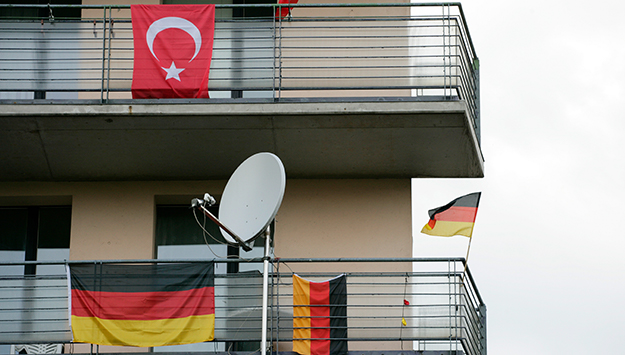
Relations between Turkey and Germany have become increasingly fraught over the past few months. They hit a new low following the August 19 arrest of Turkish-born German writer Dogan Akhanli in Spain. Akhanli, a frequent critic of Turkish President Recep Tayyip Erdogan, was held by Spanish authorities in connection with criminal proceedings in Turkey. Germany’s foreign minister has urged Spanish officials not to extradite the writer.
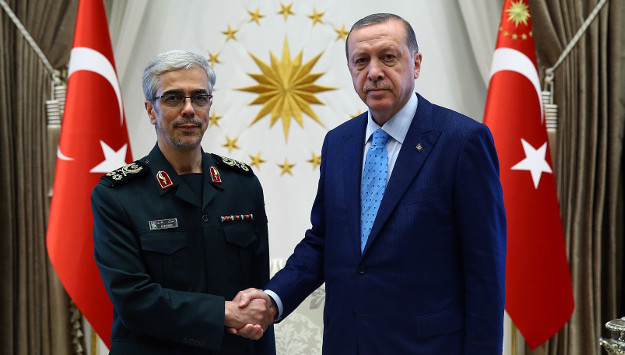
A series of high level diplomatic visits have signaled a surprising rapprochement between Iran and Turkey in recent weeks. What’s driving this warming in relations, and how has Russia been involved? What are the potential consequences in the region and for U.S. policy there? MEI’s Gonul Tol and Alex Vatanka join Paul Salem to discuss.
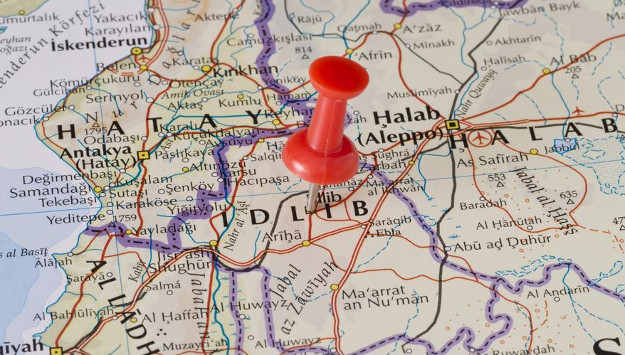
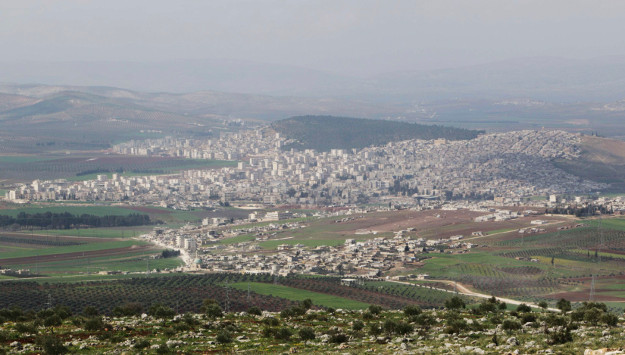
Turkey’s “Three Options” in Idlib amid Growing Tehran-Ankara Cooperation
Turkey has three options to tackle a looming threat to its national security emanating from the situation in Syria’s Idlib Province, according to an an
Monday Briefing | Abbas Hoping for a Commitment from Kushner on MidEast Peace
In this week’s Monday Briefing, MEI experts Yousef Munayyer, Paul Salem, Ahmad Majidyar, Alex Vatanka, and Gonul Tol provide analysis on recent and upcoming events including the upcoming trip by the U.S. delegation headed by Jared Kushner to Israel/Palestine, Iraq’s anti-ISIS operation in Tal Afar, President Trump’s upcoming announcement on U.S. military strategy in Afghanistan, Iran’s efforts to find a role in China’s One Belt, One Road project, and Turkey’s rocky relations with Germany.
Egypt’s modern leaders may lack the means of their forebears when it comes to raising awe-inspiring monuments, but they still find impressive ways to promote the image of a confident nation. Widely touted “mega-projects,” like the Biblioteca Alexandrina, the “new” Suez Canal, and “New Cairo,” a skyscraper-studded capital city slated to replace the embattled 1400-year-old one, all come adorned with hyperbolic attributes and historic implications for all mankind.
Monday Briefing | Is the Middle East Tilting toward De-Escalation?
In this week’s Monday Briefing, MEI experts Paul Salem, Gonul Tol, Alex Vatanka, and Jonathan M. Winer provide analysis on recent and upcoming events including Saudi Arabia’s diplomatic engagements in the region, Turkey’s consideration of military operations in northern Syria, Iranian President Rouhani’s centrist cabinet nominations, and Libyan leaders’ decision between greater cooperation or renewed confrontation.
One of the most revealing moments of the recently concluded Ramadan TV season occurred in the new Egyptian series, Don’t Turn Off the Sun. A newly-wedded young wife finds out that her husband is having an affair with his male friend; a liaison that ultimately leads to the dissolution of their marriage. The most telling aspect of what was potentially perceived as a provocative move from the series’ makers was the fact that it didn’t stir any controversy at all.
Astana Experts Meet in Tehran and Turkey Holds Naval Exercises with Qatar | Monday Briefing
In this week’s Monday Briefing, MEI experts Randa Slim, Gerald Feierstein, Gonul Tol, and Jean-François Seznec provide analysis on recent and upcoming events including next steps in the Syrian conflict de-escalation process, General Zinni’s mission to the Gulf, Qatari-Turkish relations, and crude oil informal cooperation.
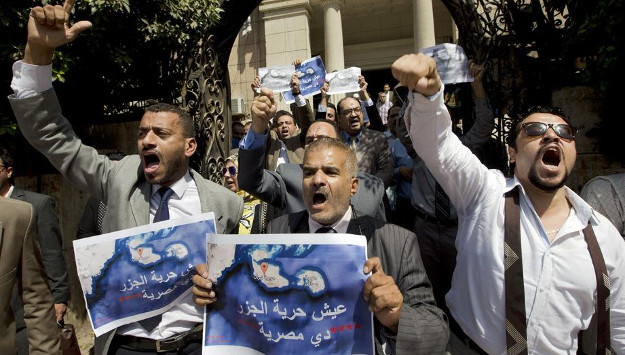
Red Sea Islands Deal Undermines Arab Peace Initiative
The Saudi-led Arab Peace Initiative is losing its value in the wake of Egypt’s decision to return the Red Sea islands of Tiran and Sanafir to Saudi Arabia, and the latter’s participation as a security guarantor of the Egypt-Israel peace treaty.
Last month, the Egyptian parliament, bucking widespread public and institutional opposition, acknowledged Saudi sovereignty over the islands.
Most attention has focused on the dispute over sovereignty, which has been under Egyptian administration for more than half a century. But the real significance of the deal lies elsewhere.
U.S. Absent as Israel-Palestine Violence Escalates | Monday Briefing
In this week’s Monday Briefing, MEI experts Eran Etzion, W. Robert Pearson, Charles Lister, Alex Vatanka, and Randa Slim weigh in on the implications of Israel-Palestinian violence for U.S. foreign policy, Turkish involvement in the Gulf crisis, al-Qaeda’s response to the U.S. decision to terminate support for a program arming anti-Assad Syrian rebels, confrontational U.S. policy towards the Iran nuclear deal, and a former Iraqi Prime Minister’s power play.
Egyptian Copts Under Attack: The Frailty of a National Unity Discourse
This essay discusses the recent spate of attacks upon and heightened sense of insecurity felt by Egyptian Coptic Christians. The essay focuses on Copts’ growing frustration with state authorities’ responses to their grievances.
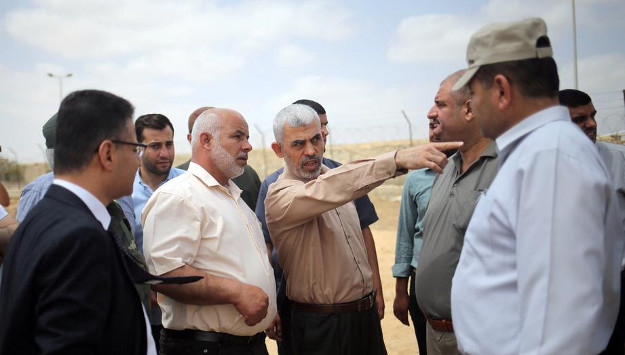
Jordan’s conspicuous silence over the unexpected trilateral rapprochement involving Hamas, Egypt, and former Fatah strongman Mohammad Dahlan does not mean that Amman is not keeping a close eye on recent developments. It is an unusual partnership that brings together once bitter foes, especially in the case of Dahlan and Hamas.
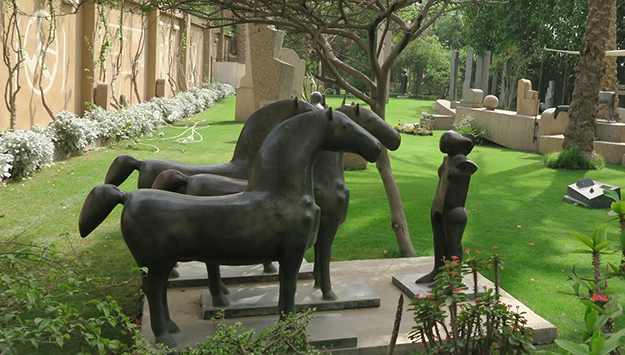
The road to Haraniyya, a formerly rural area just beyond the Giza pyramids, is now an eight-lane highway flanked by red-brick buildings packed and stacked as if designed by some demented cubist. But take the exit, cross a canal and tucked behind a wall of residential towers, the Museum of Adam Henein exists in magical contrast, a verdant stronghold of living art, and one of Cairo’s hidden treasures.