Palestinian Peace Strategy in a Changing Middle East: Prospects for Fatah-Hamas Reconciliation, and US-Palestinian Relations
The Middle East Institute and the Foundation for Middle East Peace are proud to host Ziad Abu Zayyad a veteran journalist and the co-founder and editor of the Palestine/Israel Journal. In his talk, Mr.Abu Zayyad will address whether a rapprochement between Fatah and Hamas is possible, and will also discuss the main challenges facing the US-Palestinian bilateral relationship.
American policy toward conflict in Libya is bearing disappointing fruit. The conflict there seems to be settling in to a stalemate with the likely prospect of becoming an extended civil war. In the face of this prospect, John McCain and other Senators are calling for greater US involvement. That goes against the grain of American public opinion. It raises in sharp relief the question: Will our current limited engagement policy work? And if so, when?
This Burning Land: Lessons from the Front Lines of the Transformed Israeli-Palestinian Conflict
The Middle East Institute is proud to host Greg Myre and Jennifer Griffin for a discussion about the ongoing challenges in the Israeli-Palestinian conflict based on their knowledge and experiences recounted in their new book, This Burning Land: Lessons from the Front Lines of the Transformed Israeli-Palestinian Conflict. Myre and Griffin, journalists who are husband and wife, traveled to Jerusalem in 1999 in hopes of finally seeing Middle East peace. Instead, the pair watched as violence in the area escalated and the peace process disintegrated.
Libyan Intervention: Justified By the Circumstances
It was absolutely predictable that Republicans would attack President Obama whatever he did in Libya, though Newt Gingrich, in his overeagerness, overreached by criticizing him for too explicitly opposite reasons. It was also likely that the anti-interventionist left, which sees (almost?) any use of American military power as imperialistic and unwarranted would likewise be opposed.
Rahm Emanuel famously quipped that a crisis should never go to waste. In his absence, the Administration seems determined not to take sufficient advantage of the ongoing and huge crisis in the Arab world. Its hesitant, uncertain, and (to date) completely ineffectual response to events in Libya sadly make this all too clear.
It now appears that the US finally has gotten serious about doing something meaningful to assist opposition forces in Libya. Exaggerated fears and an insufficient grasp of the adverse consequences of not taking such action previously paralyzed US (and most European) policymakers with respect to even an eastern no-fly zone, let alone more robust measures. Meanwhile, what is left of the organized Libyan opposition is increasingly hard-pressed.
US-Syrian Relations: Changing Priorities After Egypt
The Middle East Institute is proud to host Joshua Landis and Andrew Tabler for a discussion about the current state of US-Syrian relations and the impact the changing regional dynamic will have on the relationship's priorities. How might the revolutionary wave crossing the Middle East effect Washington's discussions with Damascus? Should there be a greater emphasis on reform? Where does the Syrian-Israeli peace track stand and is it more urgent than ever?
The greatest threat to U.S. national security is Congress’s abdication of its constitutional responsibilities. Nothing could make this point more clear than the current discussion of whether Washington should bear the lion’s share of the costs and risks of a no-fly zone over Libya.
*This Policy Insight first appeared as a feature article in the Majalla on February 9, 2011.
Half a century after independence and two decades since the liberation from Iraqi occupation, Kuwait’s bitter experience with pan-Arabism and ongoing regional power plays have affected its growth. However, since the downfall of Saddam Hussein in 2003, and thanks to robust oil revenues, Kuwait has witnessed an unprecedented boom, albeit amidst raging internal disputes over the need for reform and the future direction of the country.
The shock waves of Hosni Mubarak’s resignation have just started to roll across the Middle East, but in Egypt the upheaval has barely begun. The country now embarks on what the protesters in Tahrir square hope will be a transition to a true, civilian-led democracy. In the meantime, Egypt is headed for a period of military rule in some form, with the ultimate intentions of the armed forces leadership still in doubt. Will the military act to effect the “genuine transition” now demanded by the Obama Administration and the protesters themselves?
US-Libya Relations: Surviving the Wikileaks Controversy?
US-Libya Business Association Honorary Chairman Amb. David Mack and Executive Director Charles Dittrich traveled to Libya for five days in mid-December. They met with Libyan government officials, Libyan private business leaders and representatives of American companies working in the country. They will share impressions regarding the political and economic climate in Libya and the implications for both overall US-Libyan relations and the prospects for American business interests.
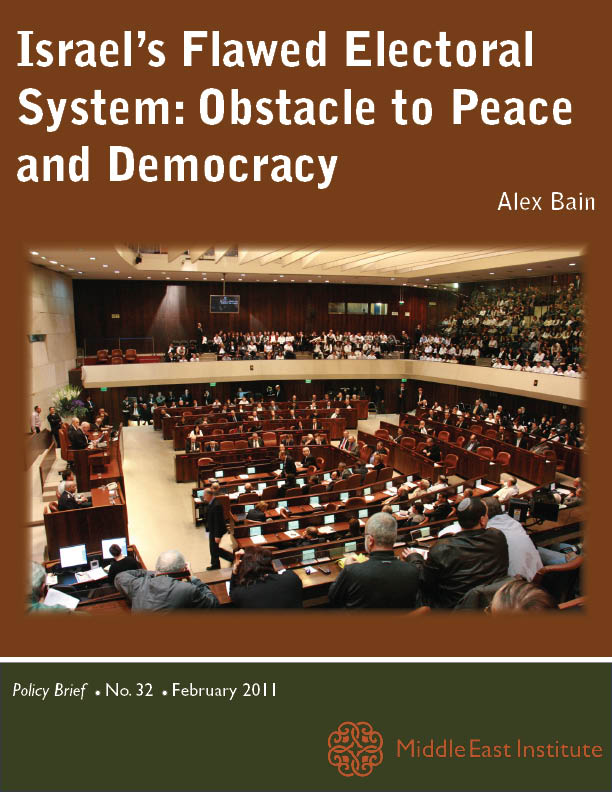
Israel's Flawed Electoral System: Obstacle to Peace and Democracy
Israeli politics is notable for its wide array of parties and unstable coalition governments. The main institutional cause of this chronic instability is the system of nationwide proportional representation, which gives disproportionate influence to minor parties. This instability limits the ability of Israeli governments to pursue coherent long-term strategies and leads to policies that address the concerns of minority groups at the expense of the national interest.
This Commentary first appeared in the American Interest's Middle East Blog on January 31, 2011.
The end is now at hand for the government of Hosni Mubarak, ruler of Egypt for the last thirty years. Two outstanding questions face us now: What will the army do? And how should the United States react?