Skip to Content

Research & Commentary Results

Filter by
1204 Results
Monday Briefing: Bracing for Bolton
  • Analysis
  • Monday Briefing: Bracing for Bolton

    In this week’s Monday Briefing, MEI experts Paul Salem, Bilal Y. Saab, Gerald Feierstein, Gonul Tol, and Ibrahim al-Assil provide analysis on recent and upcoming events including the appointment of John Bolton to national security advisor, the Houthi missile attack on Riyadh, Egypt’s regressive referendum, the Yemeni war’s third anniversary, EU-Turkey diplomacy, and the worsening crisis in Ghouta.

    March 26, 2018

    Mohammed bin Salman in Washington: Impact on U.S.-Saudi relations
    Middle East Institute
  • Podcast
  • Mohammed bin Salman in Washington: Impact on U.S.-Saudi relations

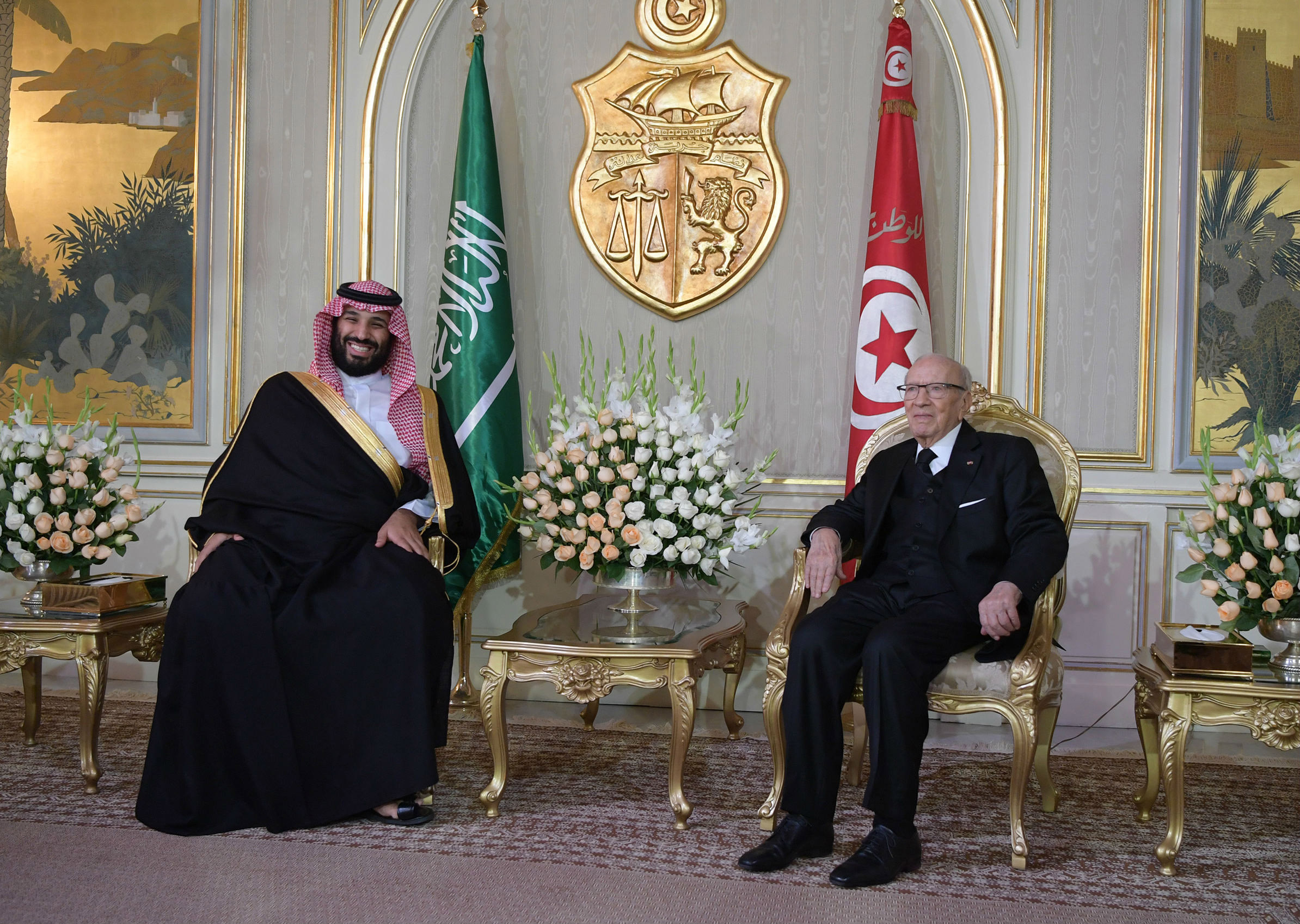
    Saudi Crown Prince Mohammed bin Salman passed through D.C. this week to sell his Vision 2030 roadmap for transforming the Saudi economy. Karen Young, senior resident scholar Arab Gulf States Institute in Washington, and Gerald Feierstein join host Paul Salem to discuss this, as well as other key policy issues affecting U.S.-Saudi relations, from the war in Yemen to the Kingdom’s internal crackdown on corruption.

    March 22, 2018

    Monday Briefing: Mohammed bin Salman’s American charm offensive
  • Analysis
  • Monday Briefing: Mohammed bin Salman’s American charm offensive

    In this week’s Monday Briefing, MEI experts Gerald Feierstein, Paul Salem, Charles Lister, Jean-François Seznec, and Jonathan M. Winer provide analysis on recent and upcoming events including the shaping of U.S.-Saudi relations, Pompeo’s appointment to secretary of state, Turkey’s capture of Afrin, the future of Saudi energy, and Egypt’s efforts to unite the Libyan military.

    March 19, 2018

    Saudi crown prince's upcoming US visit: what to expect
    Middle East Institute
  • Analysis
  • Saudi crown prince's upcoming US visit: what to expect

    Read the full article on The Hill

    Saudi Arabia’s Crown Prince Mohammed bin Salman will land in the U.S. on March 19 as part of a three week, multi-city tour. It’s his first extended foreign travel, which has already taken him to London, since being named Saudi heir apparent in June 2017.

    March 14, 2018

    Tillerson's departure and the future of US policy in the Middle East
  • Analysis
  • Tillerson's departure and the future of US policy in the Middle East

    Rex Tillerson’s unhappy tenure at State Department ends with a whimper – Gerald Feierstein        

    Rex Tillerson was never an easy fit for the Trump administration. His management of the State Department was a source of constant frustration for the career staff as well as Capitol Hill. On policy issues, Tillerson hewed more closely than Trump to establishment Republican positions. Allied with Secretary of Defense Mattis and National Security Advisor McMaster, Tillerson often acted as an anchor against the president’s more aggressive impulses.

    What happens when Yemen collapses?
  • Analysis
  • What happens when Yemen collapses?

    Read the full article on The National Interest

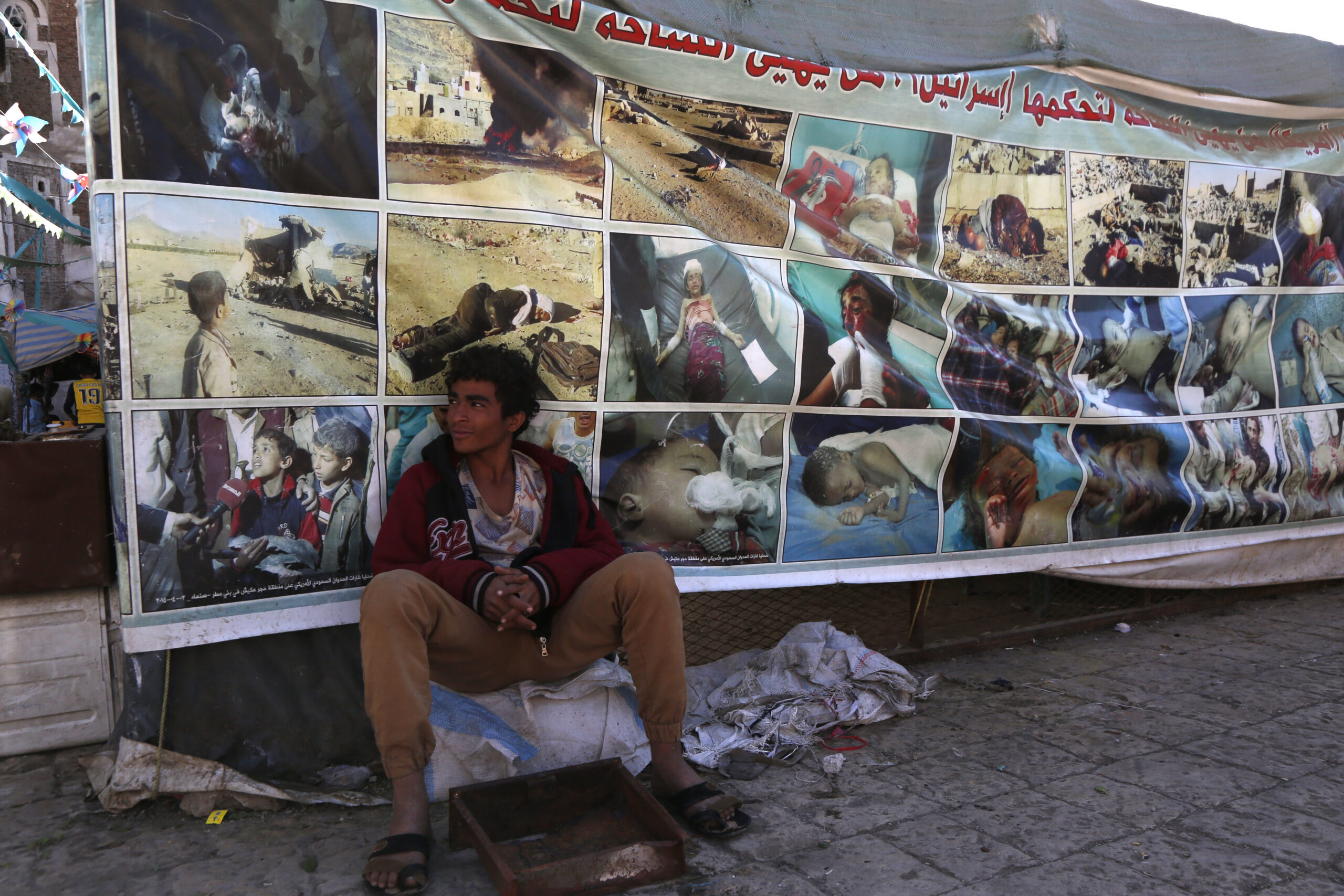
    Turmoil in Aden over the past few weeks has underlined the existential crisis confronting Yemen. The alliances that have been at the center of the three-year-old civil war—the Hadi government and its Saudi-led coalition of supporters versus the Houthi alliance with former President Ali Abdullah Saleh—have fractured.

    March 7, 2018

    Monday Briefing: Trump and Netanyahu's ultimate deal
  • Analysis
  • Monday Briefing: Trump and Netanyahu's ultimate deal

    In this week’s Monday Briefing, MEI experts Eran Etzion, Gerald Feierstein, Marvin G. Weinbaum, and Gonul Tol provide analysis on recent and upcoming events including Netanyahu’s meeting with Trump, the Saudi Crown Prince’s first extended travel abroad, the Taliban’s call for peace negotiations with the U.S., and Turkey’s pivot to Africa.

    Saudi Arabia positively reverses Lebanon policy
  • Analysis
  • Saudi Arabia positively reverses Lebanon policy

    Reversing months of troubled relations, Saudi royal envoy Nizar al-Aloula arrived in Lebanon on Monday with messages of strong support for the country. He emphasized that Saudi Arabia sought strong and supportive relations with the Lebanese state and people, saying, “You will see a new approach from Saudi Arabia.” Aloula also extended an official invitation to Prime Minister Saad Hariri to visit Riyadh. Today Hariri is in Riyadh, where he met with King Salman and is due to meet with the crown prince.

    February 28, 2018

    Back channel diplomacy in the Middle East
    Middle East Institute
  • Podcast
  • Back channel diplomacy in the Middle East

    With the absence of multilateral diplomatic forums in the Middle East and the Trump administration scaling back on U.S. diplomatic outreach, the role of backdoor diplomatic channels, known as “Track II” dialogues, has seldom been more important. Randa Slim, director of MEI’s program on conflict management and Track II dialogues, and Robert Ford, former US ambassador to Syria, join Paul Salem to discuss the role of these dialogues in addressing issues ranging from the Syrian civil war to the conflict in Yemen and regional tensions between Iran and Saudi Arabia.

    February 8, 2018

    Women's Rights in the Arab World
    Middle East Institute
  • Podcast
  • Women's Rights in the Arab World

    Nowhere in the world are women more unequal than in the Middle East and North Africa, but there have been signs of progress in the region and several key reforms took place in 2017, such as Saudi Arabia’s decision to lift the ban on women driving. Manal Omar, founder of Across Red Lines, and Hala Aldosari, a fellow at the Radcliffe Institute for Advanced Study at Harvard University, join guest host Kate Seelye to discuss these reforms and whether they signal real change in attitudes toward women’s rights in the region.

    February 1, 2018

    Political Protests, Global Islam and National Activism: Deciphering the Motivations behind Indonesia’s “Conservative Turn”
    Middle East Institute
  • Analysis
  • Political Protests, Global Islam and National Activism: Deciphering the Motivations behind Indonesia’s “Conservative Turn”

    This article shows through the examination of the Majelis Intelektual dan Ulama Muda Indonesia (Council for Young and Intellectual Ulama of Indonesia, MIUMI) that the success of Middle Eastern Islamic doctrines has less to do with undermining an “Indonesian” Islam, than adapting their basic tenets to the democratic environment and building bridges to established Indonesian religious institutions. Accordingly, “Indonesian” and “Middle Eastern” Islam are distinctions that are more malleable than they may first appear.

    January 23, 2018

    India-Gulf Counterterrorism Cooperation
    Middle East Institute
  • Analysis
  • India-Gulf Counterterrorism Cooperation

    India’s burgeoning economic relations with the Gulf Cooperation Council (GCC) countries have been accompanied by heightened security risks, including in the domain of terrorism. In light of these developments, this article addresses three questions: What is the nature and gravity of the transnational terrorist linkages that exist between India and Gulf Arab countries? What steps has India taken, in concert with its Gulf Arab partners, to counter the terrorist threat? And what more could be done to strengthen India-Gulf Arab counterterrorism (CT) cooperation?

    December 21, 2017

    Global LNG Markets in a State of Flux: Qatar in the Crosshairs?
    Middle East Institute
  • Analysis
  • Global LNG Markets in a State of Flux: Qatar in the Crosshairs?

    International markets for natural gas — fragmented regionally and with differing price-setting mechanisms — are undergoing profound changes. The foundation is being laid for the emergence of a more globally integrated gas market, and the rapid expansion of the seaborne liquified natural gas (LNG) trade, which has forged links between distant markets, is a major reason why. Qatar — an LNG powerhouse — has dominated the Asia Pacific market, the world’s largest LNG-importing region. However, the Asian market is in a state of flux, as is the entire global LNG sector. This article explores the major changes taking place in international LNG markets, with particular attention to how Qatar is being affected by, and is adapting to them.

    Yemen After the Death of Ali Abdullah Saleh
    Middle East Institute
  • Podcast
  • Yemen After the Death of Ali Abdullah Saleh

    The killing of former Yemeni president Ali Abdullah Saleh marks a major turning point in Yemen’s ongoing civil war. Nadwa Al-Dawsari (POMED) and Gerald Feierstein (MEI) join Paul Salem to discuss the immediate fallout and what lies ahead.

    December 7, 2017