Iran’s soft power: Islamic Azad University opening branches in major Syrian and Iraqi cities
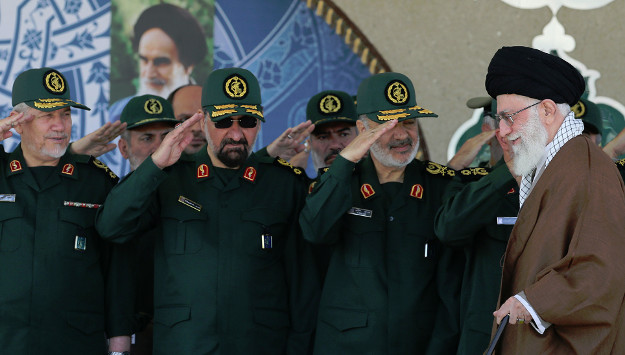
While Iran’s military involvement in regional conflicts and support for militant groups often make headlines, Tehran’s sophisticated soft power strategies aimed at promoting the Islamic Republic’s ideological and political goals in the region are largely overlooked. The establishment of Islamic Azad Universities in major Syrian and Iraqi cities and the expansion of its main branch in Lebanon is one example of how Tehran uses soft power tools to expand its sphere of influence across the region.
Trump will no longer waive U.S. nuclear sanctions on Iran | Weekly Briefing
In this week’s Monday Briefing, MEI experts Alex Vatanka, Charles Lister, Marvin G. Weinbaum, and Eran Etzion provide analysis on recent and upcoming events including President Trump’s statement that he will no longer waive U.S. nuclear sanctions on Iran, new developments in northern Syria, Pakistan’s response to the withdrawal of U.S. security assistance, and Benjamin Netanyahu’s trip to India.
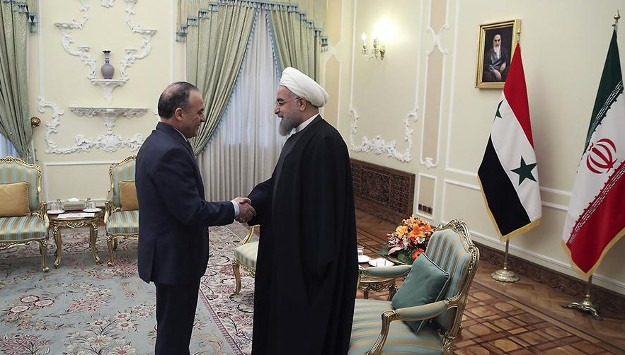
An Iranian parliamentary delegation visited Syria to seek ways of boosting bilateral ties between the two countries, particularly in the economic and trade sectors.
More than 10,000 Afghans sent by Iran to Syria reported killed and injured
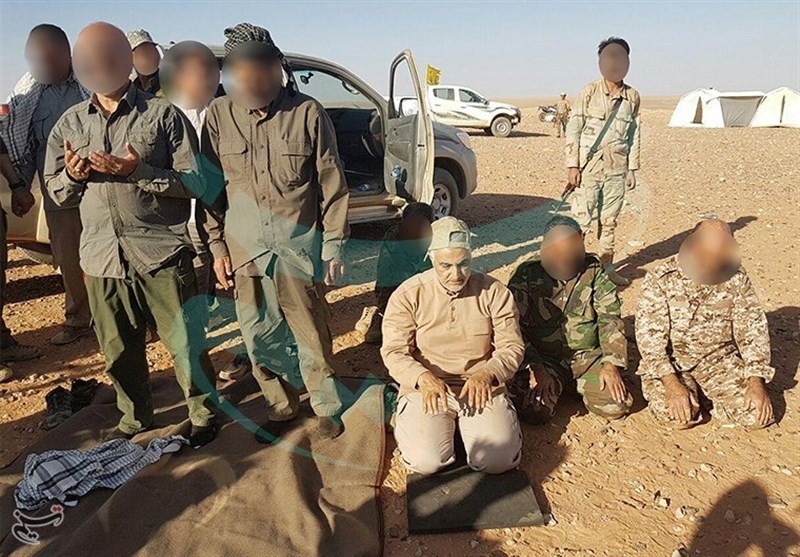
An official of the Fatemiyoun Division has revealed that at least 2,000 Afghan Shiites have been killed and 8,000 more injured in the Syrian conflict – more than twice the number previously reported. The Fatemiyoun Division is a predominantly Afghan militia unit that has been fighting under the leadership of Iran’s elite Quds Force in Syria to prop up the embattled regime of Bashar al-Assad.
Iran Plans to Keep Long-Term Military Presence in Syria
A senior Iranian officials has said that Tehran will keep its military presence in Syria for the long haul, the Iranian media reported. “Based on the request of the legitimate government of Syria, we will continue our presence and advisory assistance until all terrorist groups in this country are destroyed,” said Ali Shamkhani, the secretary of Iran’s Supreme National Security Council.
All the President’s Militias: Assad’s Militiafication of Syria
After nearly seven years of war, the military balance of power in Syria appears to have shifted in favor of President Bashar al-Assad and his allies, Russia and Iran. Since Russia’s military intervention in September 2015, Assad has managed to either retain or recapture most major population centers in the country encompassing so-called ‘Useful Syria’—including Damascus, Homs, Hama, Aleppo and Latakia. It most recently broke the ISIS siege on Deir Ezzor, paving the way for further gains in the city and its surrounding areas, leading to the Iraqi border town of Al-Bukamal.
I.R.G.C.'s Khatam al-Anbia Eyes Leading Role in Syria’s Reconstruction
The head of Khatam al-Anbia Construction Base, the main engineering and construction arm of the Islamic Revolution Guards Corps (I.R.G.C.), has said that the conglomerate is ready to play a leading role in Syria’s reconstruction process, Tasnim News Agency reported.
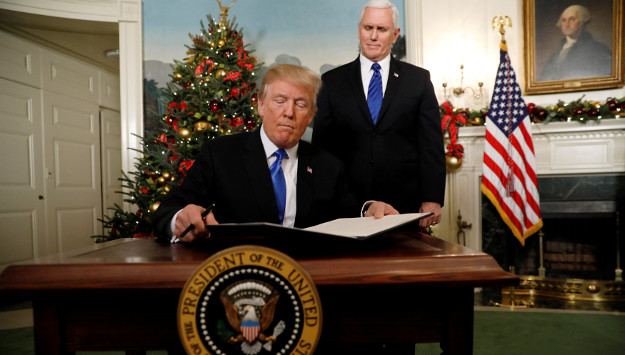
The Multiple Sorrows of Trump’s Jerusalem Announcement | Monday Briefing
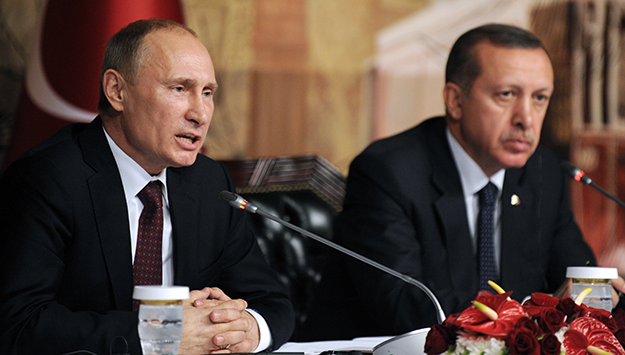
In this week’s Monday Briefing, MEI experts Paul Salem, Charles Lister, and Gonul Tol provide analysis on the international fallout from President Trump’s Jerusalem announcement and Russian President Vladimir Putin’s visit to Syria and then to Turkey to discuss Syria, Jerusalem, and energy matters.
Iran to Keep Its Forces in Syria in Defiance of International Pressure
Iranian Parliamentary Speaker Ali Larijani has said that Iranian forces will remain in Syria “as long as necessary” to continue to assist the embattled regime of Bashar al-Assad, Fars News Agency reported. “Iran will continue to help Syria to fight terrorism as long as it is needed,” the top Iranian lawmaker said in an interview with a state-run Russian outlet during his trip to Moscow. “The fight against terrorism has not ended.
Rouhani Government Tasks I.R.G.C. to Spearhead Reconstruction Projects in Syria
The chief commander of Iran’s Islamic Revolution Guards corps (I.R.G.C.) has revealed that the Guards, rather than the Iranian private sector or other state-run companies, will spearhead Syria’s reconstruction efforts, Tasnim News Agency reported.
November 29, 2017- Syrian protest art served as a critical form of non-violent expression during the uprisings against the Assad government starting in 2011. Recognizing the work’s historic significance, the British Museum recently acquired a collection of posters, prints drawings and photographs produced during the conflict, and turned them into a unique exhibit, “Living Histories.”
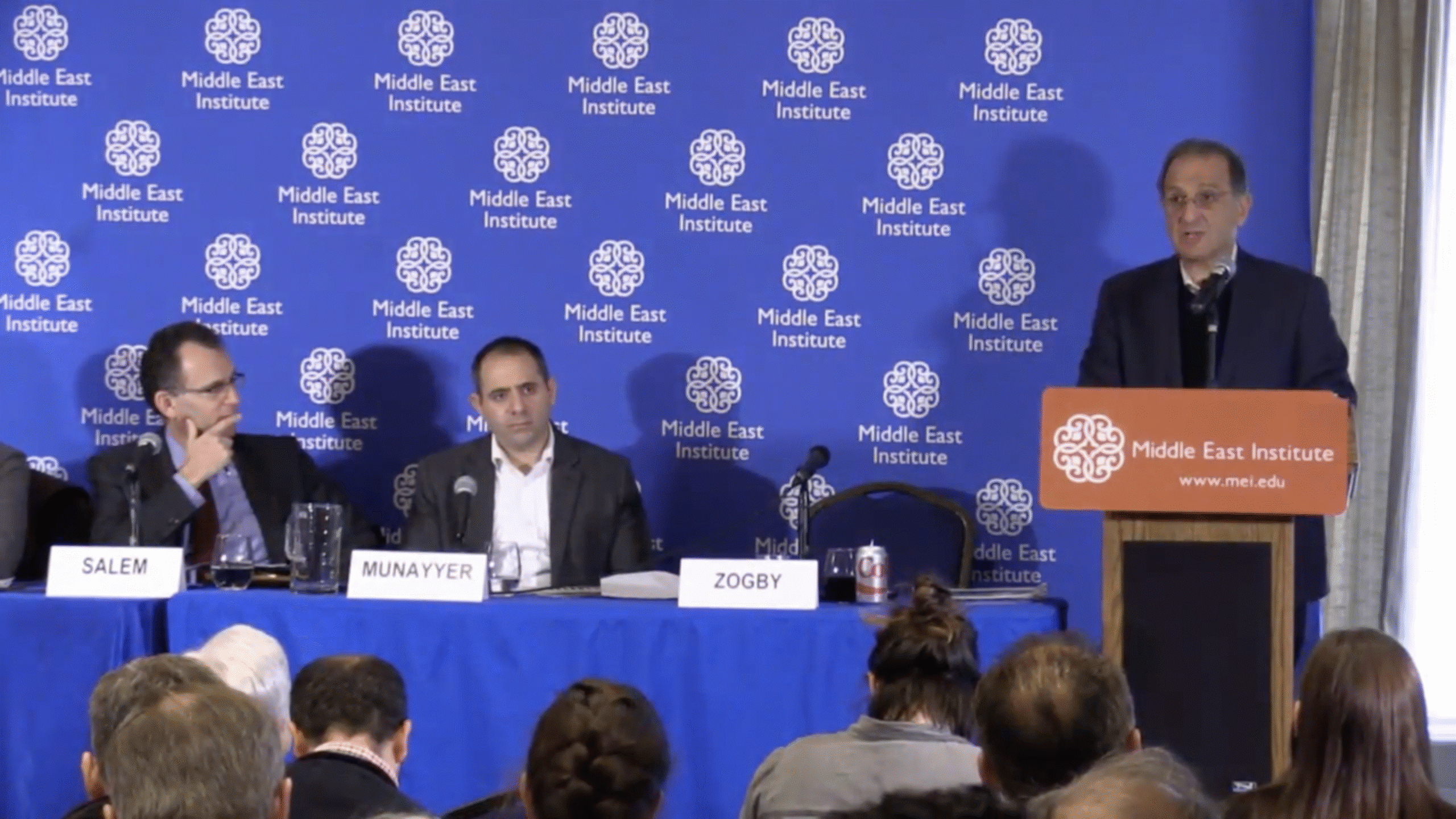
Public Opinion in a Conflicted Middle East (Livestream)
The Middle East Institute (MEI) and the Arab American Institute (AAI) are pleased to host James Zogby (AAI and Zogby Research Services) for the presentation of fresh polling results from across Egypt, Lebanon, Jordan, Palestine, Iraq, Saudi Arabia, the UAE, Iran, and Turkey. The report examines opinions from 7,800 respondents about the U.S. and other regional states’ roles in Syria, Iraq, and Yemen. It also looks at Trump Administration policy, political Islam, prospects for Israeli-Palestinian peace, the Iran nuclear deal, and the region’s refugee crisis.
Iran Appears Unwilling to Withdraw Its Forces from Southern Syria
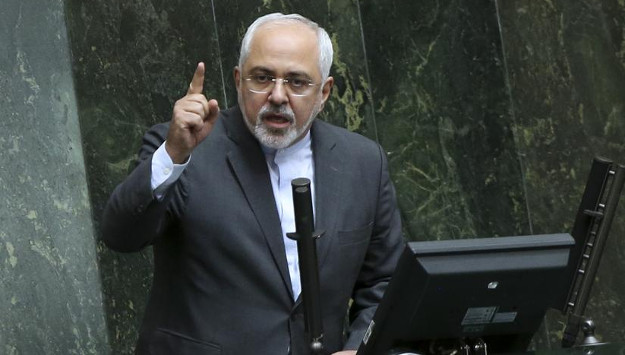
Iran’s Foreign Minister Javad Zarif said today that Iran is not obliged to abide by any agreement between the United States and Russia about southwestern Syria. “America and Russia cannot make a decision for Iran. We are present in Syria based on a request from the Syrian government and will act upon that request. However, Russia has not requested us to do anything (to pull out Iranian and Iran-led forces from southwestern Syria),” the top Iranian diplomat explained.