As the US Plans Its Exit, the Iraqis Find Reason to Worry
This Commentary was originally published as an op-ed in The National May 31, 2010.
‘What does the US want from Iraq?” This was the question of a university educator during a large gathering of Iraqi politicians, students, journalists and activists we met during a 10-day trip to Baghdad and Kurdistan sponsored by Washington’s Stimson Center earlier this month.
The Middle East Institute is proud to host Dr. Hanan Mikhail Ashrawi, Member of the PLO Executive Committee and the Palestinian Legislative Council, or a discussion about Palestinian-Israeli proximity talks and other issues related to the peace process and the situation in the West Bank and Gaza.
In Search of a Voice: Arab Soccer Players in the Israeli Media
Soccer is the most popular sport in Israel. As such, it is also a strategic research site in which to study Israeli society and its complex social and ethnic relations.
Walls and Goals: The Israeli-Palestinian Encounter in Football
Dedicated to the memory of Israel Tzvi Raab Z”L, a true lover of the game
The long, complex encounter between the Israeli and Palestinian people has been examined in many cinematic and literary creations. In this essay, I will explore several that use football as a lens to read opposing political agendas and as a means to resolve conflict.
A Step on the Path to Peace: How Basketball is Uniting Arab and Jewish Youth in Jerusalem
Basketball is a game where all five players need to share the ball. If it is played with great teamwork, the sum of the parts is greater than the individual. It’s a great forum for building trust. A lot of the game happens with things you can’t see. Communication and trust with teammates is the key. It seems to me that the same can be said of peacemaking.
–R.C. Buford, General Manager of the NBA’s San Antonio Spurs[1]
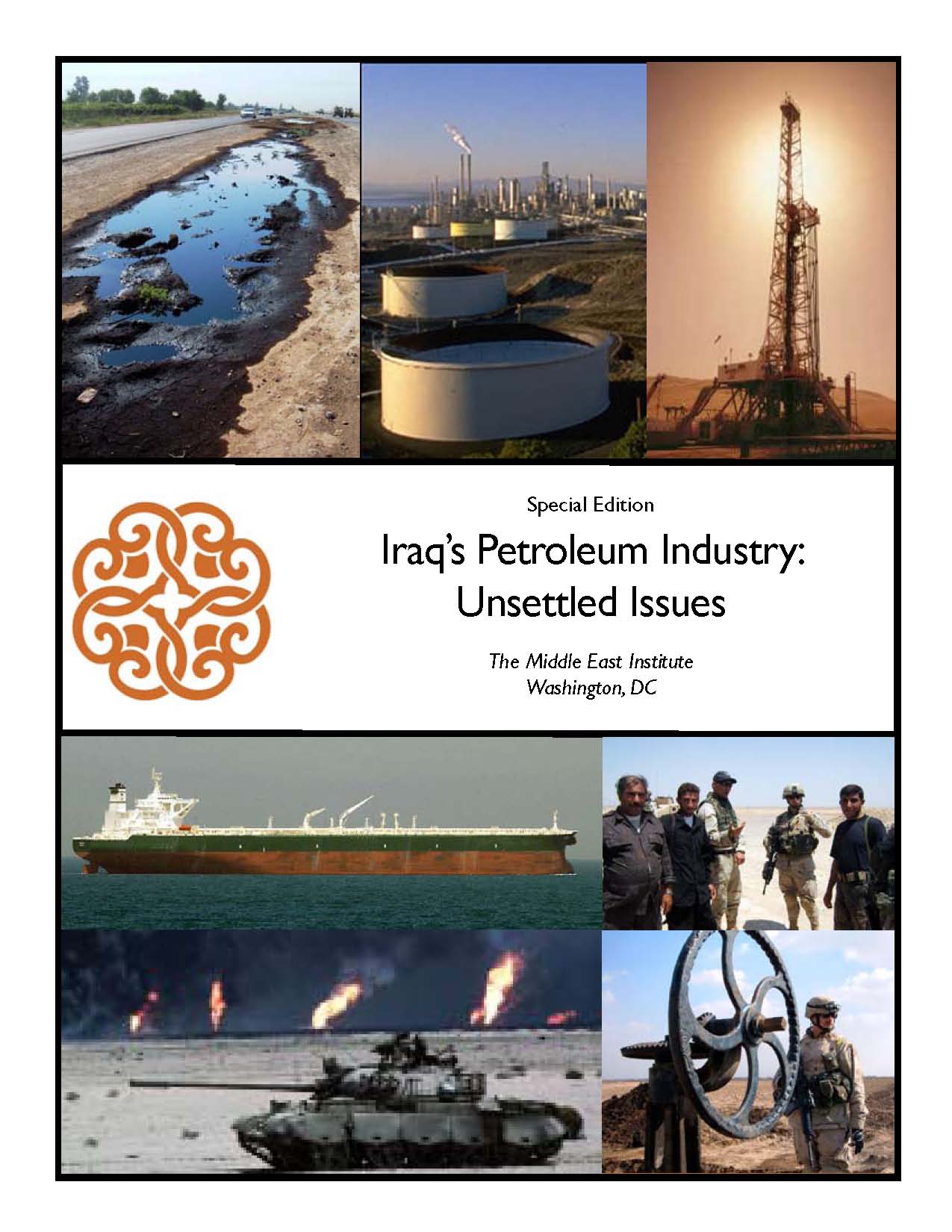
Iraq has the world’s third-largest oil reserves. However, the development of Iraq’s petroleum sector has been severely hampered by decades of war, sanctions, underinvestment, the exodus of scores of technocrats, and sabotage. Repairing Iraq’s oil infrastructure and expanding exploration, development, and production is of paramount importance to the country’s future. In June 2009, the Iraqi Oil Ministry embarked on an effort to help meet this challenge by offering service contracts to international oil companies (IOCs) in two rounds of tenders.
The Israel-Palestine Conflict: Views of a Palestinian-Israeli member of the Israeli Knesset
Dr. Ahmad Tibi is a member of the Arab Movement for Change and was first elected to the Israeli Knesset in 1999. He currently serves as Deputy Speaker of the Knesset and head of the parliamentary committee of inquiry, which seeks to accommodate Palestinians through integration into jobs in the public sector. He has played a key role in the politics of the Palestinian-Israeli community, which constitutes approximately one fifth of Israel's population. He has also played a key role in relations between Palestinian-Israelis and Palestinians in the occupied territories and Dr.
This Commentary first appeared as an op-ed in the The National, March 14, 2010.
Iraq’s parliamentary elections have just concluded, but the major political battles are about to begin. At stake is what kind of country Iraq will become. Will Iraq’s progress toward greater stability continue? Will it look east towards Tehran for support and encouragement, or to the United States and its fellow Arabs? The stakes are high, and no one can afford to remain uninterested while Iraq continues its dramatic political evolution.
Beyond Iraq’s National Elections: Planning a New Phase in American Policy
This Commentary is an adaptation of a longer piece published by the Institute for the Theory and Practice of International Relations at the College of William and Mary on February 25, 2010.
Introduction to The State of the Arts in the Middle East: Volume IV
Literature, visual art, and photography not only serve an aesthetic purpose, but often act as mediums through which their creators explore deeply personal experiences and their broader social implications. In this, the fourth volume of MEI’s “The State of the Arts in the Middle East,” Najat Rahman considers the works of the Palestinian artists Emily Jacir and Eman Haram, and W. Scott Chahanovich (with Pauline Pannier) discusses the memoirs of the Moroccan-born writer Abdellah Taïa.
This Op/Ed was published first on February 3, 2010 by McClatchy Tribune.
The bipartisan Kerry Lugar Bill provides a multi-year, super-sized economic aid program to the people of Pakistan. This is the right approach to improved US-Pakistan relations. The majority of Pakistanis distrust the US because they believe we favor military dictators over civilian democrats and are quick to abandon promised economic aid programs once we have achieved our security goals.
Migrant Workers in Kuwait: The Role of State Institutions
The treatment of migrant domestic workers is one of the defining stories told about the Arab Gulf states. Every year hundreds of news media and human rights reports detailing migrant domestic workers’ experiences of exploitation and abuse circulate globally. The narratives of these accounts are remarkably consistent. They often begin with the story of an impoverished woman from the global South, who, in order to improve the situation of her family, migrates to the oil-rich Gulf states in search of work and a more prosperous future.