After deadly Beirut explosion, Lebanese army must maintain neutrality
Soldiers refuse to stand with protesters amid growing criticism from Hezbollah.
This week’s briefing on recent news and upcoming events in the region featuring Charles Lister, Randa Slim, Jonathan M. Winer, Alex Vatanka, Marvin G. Weinbaum, Robert S. Ford, Mirette F. Mabrouk, and Syed Mohammad Ali.
Tom de Waal, Nicole Grajewski, and Theodore Karasik join host Alistair Taylor to discuss the recent border hostilities between Azerbaijan and Armenia and the role that Russia, Turkey, and Iran are playing in the geostrategically important South Caucasus.
The catastrophic explosion in Beirut on Aug. 4 left 200 dead and thousands more injured. This included at least 43 Syrian and Palestinian refugees and dozens of foreign migrant workers that were killed or injured. The Beirut port explosion will place a great burden on Lebanese society and it will have short- and long-term impacts on marginalized communities.
As the people of Iran and the region rise up against the regime in Tehran, it is time to prepare for what comes next and imagine what could lead to the region’s next renaissance: a Middle Eastern cooperative organization.
The relationship between the Middle East and the Horn of Africa is centuries-old and complex. While the world’s attention is focused mainly on the “great power competition” in the region, primarily between the U.S. and China, the Horn of Africa has also become a central battleground for influence among competing regional players, principally Saudi Arabia, the UAE, Turkey, Qatar, Iran, and Egypt. As they pursue their interests in the region, from Ethiopia and Sudan to Somalia and Djibouti, these competing states are the main drivers of tension and instability in the Horn of Africa.
Iran’s high leadership has come to a consensus on an eastward shift in its foreign policy, and Russia is a salient part of that. Recent indications suggest that, at least for now, the Russians do not want to enlarge their footprint in Iran. Yet Iran wants a more proactive Russia.
In recent weeks, reports of a potential 25-year, $400-billion deal between Iran and China have dominated the conversation about Tehran’s options for freeing itself from the punishing U.S.-imposed sanctions regime on the country. But China is not alone in seeing an embattled Iran as a major geopolitical and commercial opportunity — Russia too has ambitions of strengthening ties with Iran.
This week’s briefing on recent news and upcoming events in the region featuring Robert S. Ford, Paul Salem, Yesar Al-Maleki, and Marvin G. Weinbaum.
MEI’s Paul Salem and Ross Harrison join host Alistair Taylor to discuss the complexity and limitations of US diplomacy with Iran, and how the upcoming US presidential election impacts the state of play. Salem and Harrison examine the issue in depth in their recent article for The National Interest, “The Layers and Limits of Diplomacy With Iran.”
This week’s briefing on recent news and upcoming events in the region featuring Randa Slim, Alex Vatanka, Mirette F. Mabrouk, Marvin G. Weinbaum, W. Robert Pearson, and Rauf Mammadov.
يتعرض استقرار لبنان حاليا لتهديد أكبر مما كان عليه في أي وقت منذ نهاية الحرب الأهلية عام 1990. الانفجار الهائل الذي شهده مرفأ بيروت في الرابع من آب/أغسطس الجاري الذي أودى بحياة المئات وجرح الآلاف وتسبب بأضرار مادية تقدر بمليارات الدولارات، لم يترك أثرا عميقا على أجساد ومعنويات اللبنانيين فحسب، بل غيّر أيضًا الأطر المرجعية للقوى السياسية المعارضة في البلاد. لقد اتخذ الصراع السياسي الآن بعدا وجوديا.
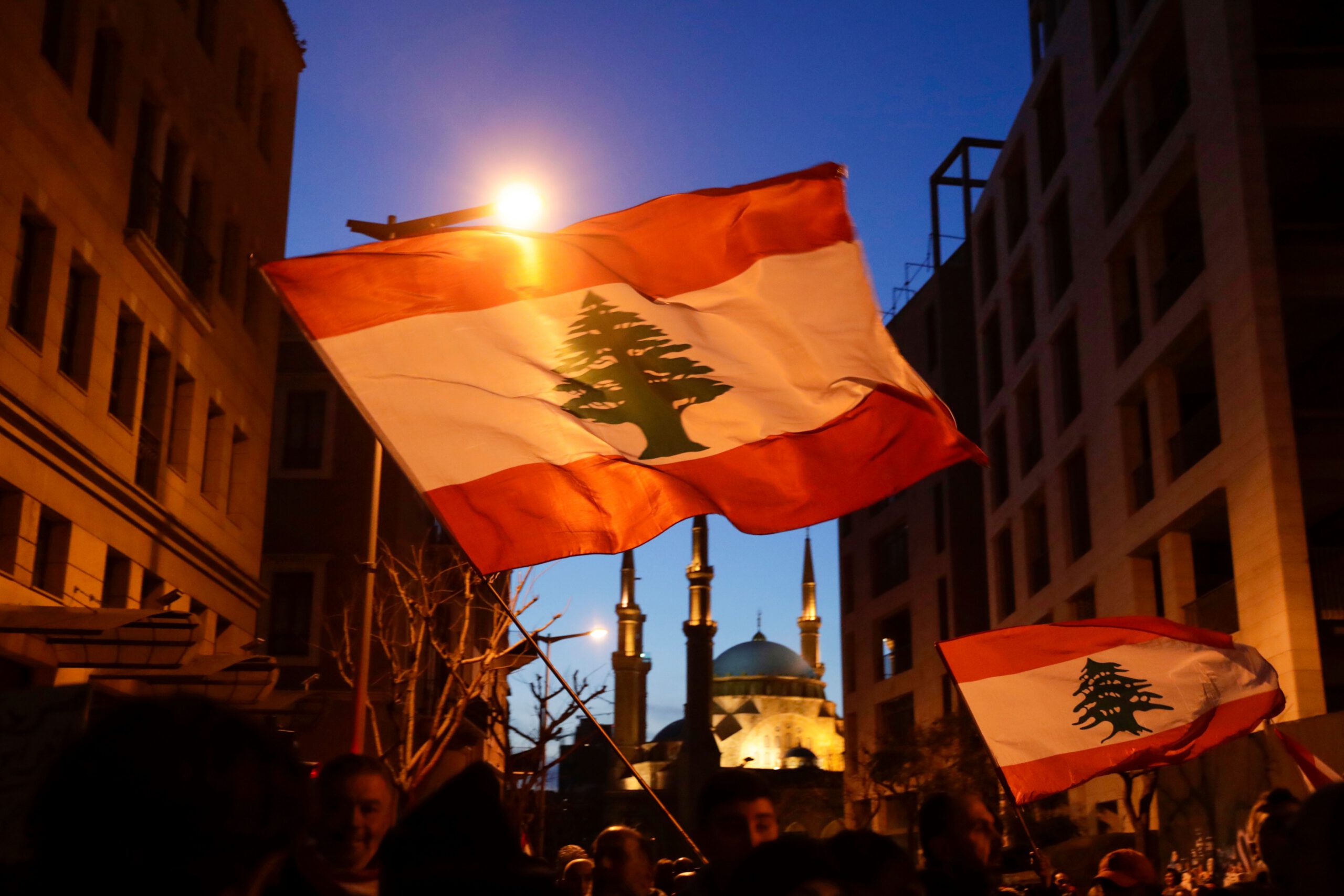
Beirut will rise again from the ashes, like it always has. But the real rebuilding that must occur is not physical in nature. It is political. Nothing will truly change in Lebanon unless the country’s corrupt and incompetent leaders, who have been in power for decades, are unseated.
Paul Salem and Randa Slim join host Alistair Taylor to discuss the immediate aftermath of Tuesday’s massive explosion in Beirut, which killed over 150 people and left as many as 300,000 homeless. The blast caused extensive damage across the city, and compounds the stress of Lebanon’s preexisting political, economic, and health crises.
Beirut-based art and documentary photographers Chantale Fahmi, Vicky Mokbel, and Marwan Tahtah join guest host Kate Seelye to discuss their efforts to capture the aftermath of Lebanon’s long civil war as well as the street protests that erupted on October 17, 2019 in response to the corruption and political mismanagement that triggered Lebanon’s financial collapse. Their’s are among works on display in “Lebanon Then and Now: Photography from 2006 to 2020,” an interactive virtual exhibit hosted by the MEI Art Gallery now through September 25. Visit the show now at www.mei.edu/art-gallery