F. Stephen Larrabee, Distinguished Chair in European Security at the RAND Corporation, and Gonul Tol, Executive Director of the Middle East Institute’s Center for Turkish Studies, highlight the importance of drafting a new civilian constitution to solve Turkey’s Kurdish issue.
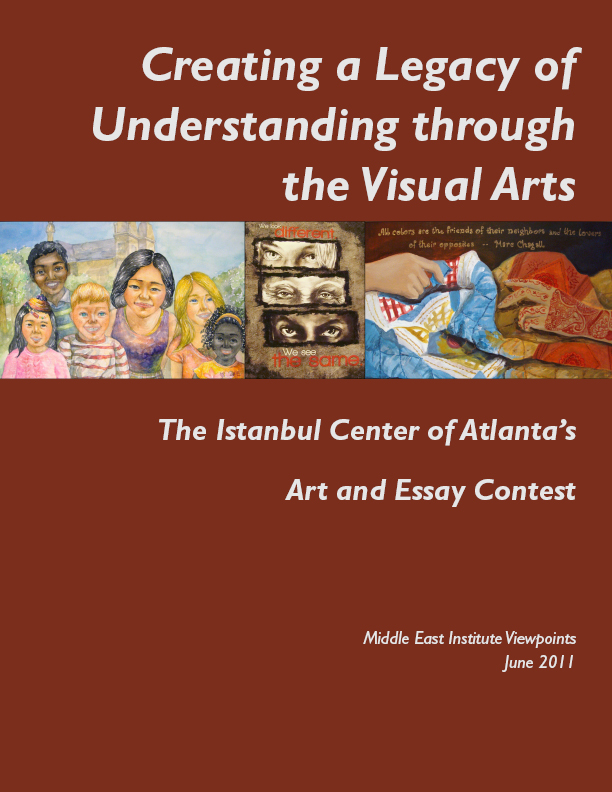
Creating a Legacy of Understanding through the Visual Arts: The Istanbul Center of Atlanta's Art and Essay Contest
This volume has been prepared for the Middle East Institute’s Viewpoints collection. Several stakeholders in the Istanbul Center of Atlanta’s Annual Art and Essay Contest have been involved in the composition of this text. Our goal is to provide a history of this successful program, as well as to define a model for the recreation of such an outreach project for other regions.
In the early 1970s, I taught art classes in three elementary schools in Phoenix, New York. After enduring long snowy and cold winters for ten years, I moved to the Atlanta, Georgia area where the sun shines almost every day. There, I re-entered the field of education, teaching art for Cobb County Schools for 17. During this time, I shared original programs and curriculum in workshops and lectures held at international, national, and state conferences.
Cultural Body Maps, Schemata, and the Art & Essay Contest
Originally posted June 2011
If there is a Horizontal Line that runs from the MAP off your body straight through the Land shooting up right through my heart Will this Horizontal Line when asked know how to find Where you end where I begin
In the wake of the recent Nuclear Security Summit in Washington DC, Turkish-Iranian relations once again came under scrutiny. As the US and the EU have intensified their efforts to impose sanctions on Iran through the UN Security Council, Turkey’s role in this issue has come into question. Notwithstanding Turkish temporary membership in the Security Council, the Turkish position will be critical for any effective implementation of sanctions.
*This article originally appeared in the Project Syndicate online on May 23, 2011.
As the Arab Spring enters its fourth month, it faces challenges but also presents opportunities. Despite setbacks in Libya, Yemen, and Syria, the democratic wave has already begun to change the Middle East’s political landscape.