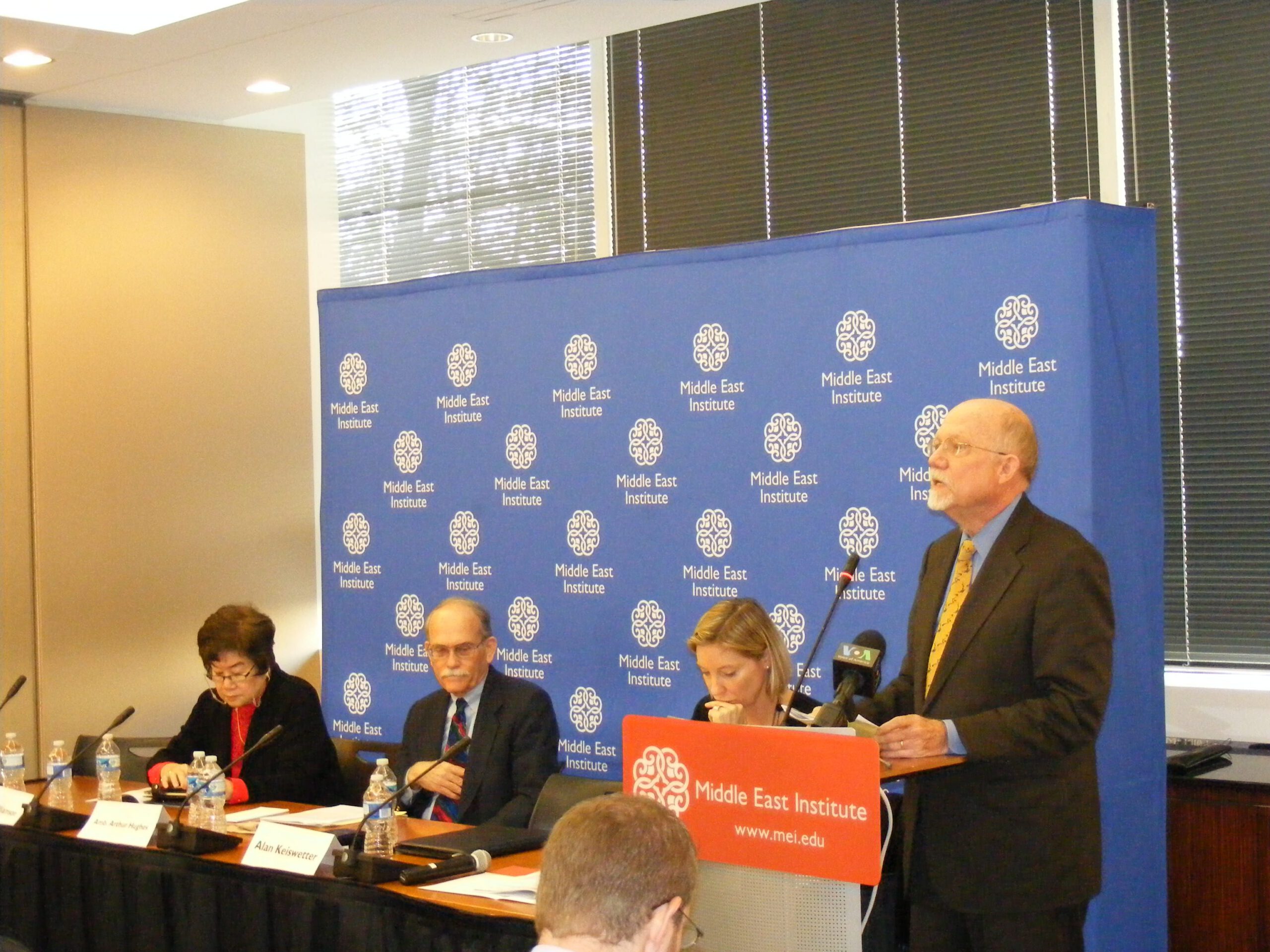
Comparing the Politics of GCC Oil Booms and Busts
Audio recording from Comparing the Politics of GCC Oil Booms and Busts
Audio recording from Gulf Security and the Procurement Future
Audio recording from Gulf Capital and Islamic Finance
Audio recording from The Middle East Economy in 2010
Audio recording from The Arab Gulf States: Beyond Oil and Islam
How Yemen can use their most valuable resource of human labor to respond to their economic difficulties through increased institution-building.
Dedicated to the memory of our friend and colleague Chris Boucek
The Arab Spring: Implications for US Policy and Interests
Amidst ongoing violence against protestors in Syria, Hande Ayan of the Center for Turkish Studies discusses the uneasy diplomatic relationship between Turkey and Syria and Turkey’s role in the political situation there. The September 2011 Bulletin also introduces MEI scholars Philip Frayne, who speaks on his Foreign Service career and offers his insights on how the US can support democratic transitions in the Middle East, and Randa Slim, who is interviewed on her experience in post-conflict reconciliation.
Dr. Abdelaziz Sager, Dr. Mustafa Alani, and Dr. Christian Koch of the Gulf Research Center share their perspectives on regional events and the Arab Spring.
In the wake of the recent Nuclear Security Summit in Washington DC, Turkish-Iranian relations once again came under scrutiny. As the US and the EU have intensified their efforts to impose sanctions on Iran through the UN Security Council, Turkey’s role in this issue has come into question. Notwithstanding Turkish temporary membership in the Security Council, the Turkish position will be critical for any effective implementation of sanctions.