Skip to Content

Research & Commentary Results

Filter by
3012 Results
The role of women in building Iran’s future
A woman walks past a mural with the Iranian national flag in Tehran, on February 20, 2020 on the eve of parliamentary election.
  • Analysis
  • The role of women in building Iran’s future

    For more than a century, Iranian women have worked for change and fought for their freedom. Under the system in place in the Islamic Republic, however, they continue to face systematic, widespread legal discrimination. Despite the hurdles they currently face, with organization, unity, and common purpose, Iranian women are capable of changing history and building a new future for their country.

    March 24, 2020

    How the Democrats can reclaim Syria policy
    American soldiers patrol on the M4 highway in the town of Tal Tamr in the northeastern Syrian Hasakeh province on the border with Turkey on January 24, 2020.
  • Analysis
  • How the Democrats can reclaim Syria policy

    Democrats ought to build a moral firewall around Syria policy, establishing a framework for understanding the Syrian conflict and debating policy options.

    March 18, 2020

    Iran and Russia: A tale of unfulfilled economic potential
    Iran's Minister of Economic Affairs and Finance, Masoud Karbasian (L) and Russias Energy Minister Alexander Novak shake hands at a signing ceremony following a meeting of the Russian-Iranian intergovernmental commission for trade and economic cooperation at Moscow's President Hotel
  • Analysis
  • Iran and Russia: A tale of unfulfilled economic potential

    The outbreak of a Russian-Saudi oil price war earlier this month might offer some comfort to Iran, a country which has in recent years become unnerved by the increasingly close ties between Moscow and Riyadh. However, it is premature to see an Iranian geopolitical win emerging from the Russian-Saudi spat, and history should give Tehran plenty of reservations about Moscow’s ability to deliver on its economic promises to Iran. While Iran and Russia will likely continue to pay lip-service to the idea of an economic partnership, each side will remain preoccupied with larger concerns. This is a tale of unfulfilled economic potential.  

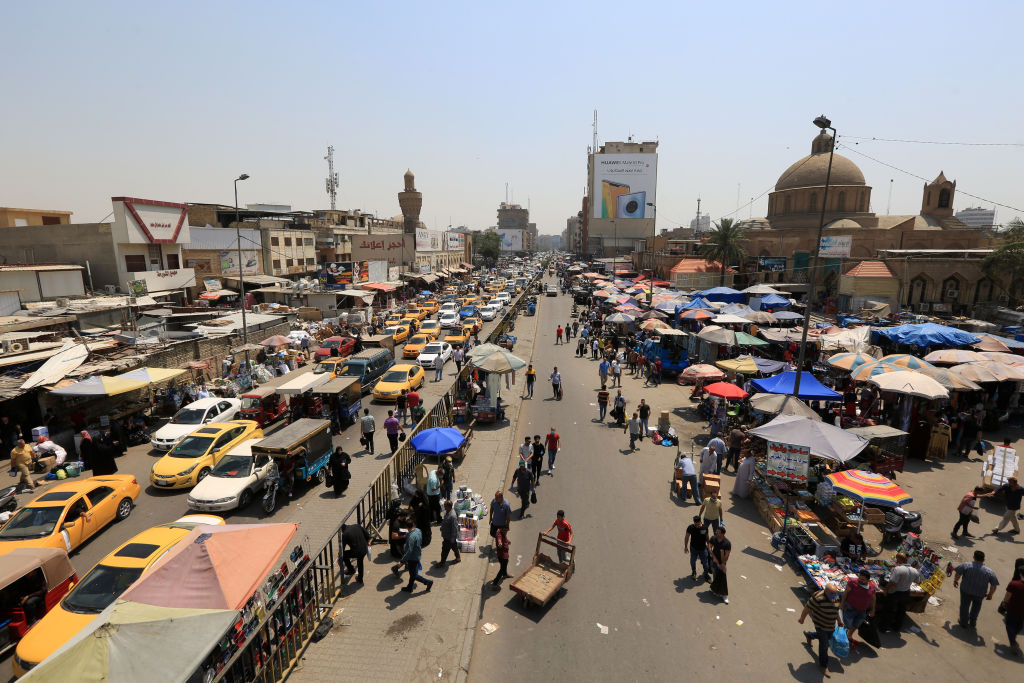
    A perfect storm has hit Iraq
    An Iraqi man, wearing a protective mask, stands inside a coffee shop with a sign in Arabic which reads
  • Commentary
  • A perfect storm has hit Iraq

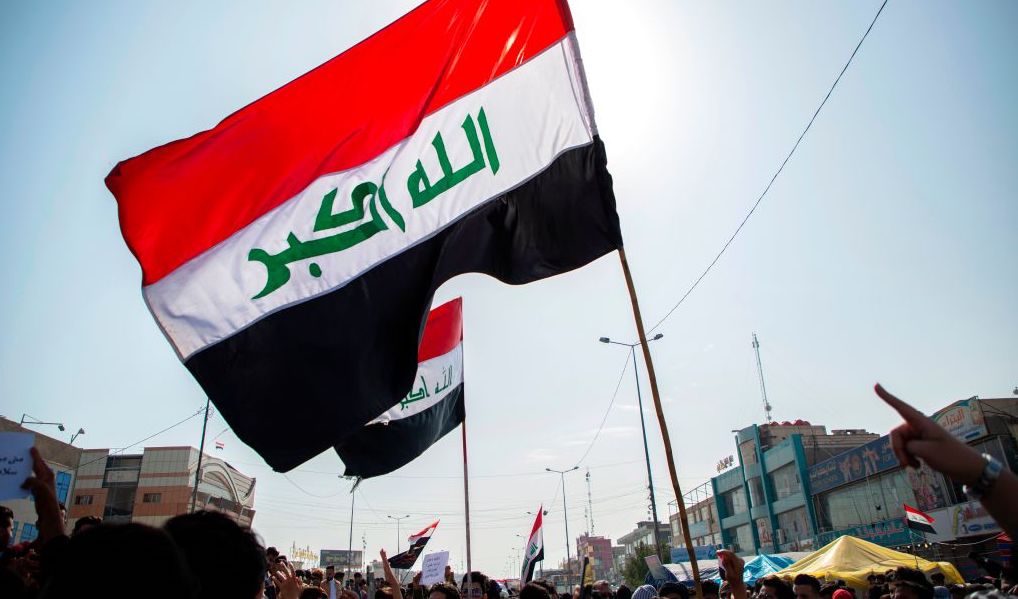
    Recent developments are making it increasingly difficult for the months-old protest movement to sustain its momentum.

    March 16, 2020

    The Forgotten Iraq
     Iraqi civilians, who fled from Daesh controlled Hawija district of Kirkuk, are seen at Daqouq tent city southern Kirkuk, Iraq on November 12, 2017. (Photo by Ali Mukarrem Garip/Anadolu Agency/Getty Images)
  • Analysis
  • The Forgotten Iraq

    The story from Iraq since last October has been mainly one of uplifting hope, as mass protests sweep across the country in a fight against corruption, nepotism, and bad governance. But what of the places left behind and ignored? For most of its modern history, Iraq has been embroiled in sectarianism and conflict, most recently with the rise of ISIS. The country has celebrated its ability to fight ISIS and take back the areas the group controlled between 2013 and 2017, but for those that remain in the most vulnerable liberated areas, life is precarious and dangerous, with underserviced communities living in the most dire of conditions.

    March 16, 2020

    Missing the long game: Washington’s high-risk energy diplomacy in Iraq
    An employee walks at the Hammar Mushrif new Degassing Station Facilities site inside the Zubair oil and gas field, north of the southern Iraqi province of Basra on May 9, 2018. (Photo by HAIDAR MOHAMMED ALI / AFP) (Photo credit should read HAIDAR MOHAMMED ALI/AFP via Getty Images)
  • Analysis
  • Missing the long game: Washington’s high-risk energy diplomacy in Iraq

    Washington’s foreign relations in the Middle East are often characterized by ebb and flow, tracking the region’s dynamic politics. But when it comes to Iraq, this ebb and flow is especially turbulent, and the country’s energy sector has been thrown under the spotlight as Washington presses Baghdad to take swift action to ensure its “energy independence” from Iran.

    March 13, 2020

    Shifting US strategy in Iraq
    A partial view of the Iraqi capital Baghdad is reflected in the visor of a US Army helicopter crew member as he looks out of a Chinook helicopter flying from the US Embassy to Baghdad International airport, following the helicopter of US secretary of State Mike Pompeo, on January 9, 2019.
  • Analysis
  • Shifting US strategy in Iraq

    The United States has missed a valuable opportunity to use its influence in Iraq to encourage the government to implement the reforms Iraqi protesters have been demanding over the past six months and push back on Iran.

    March 12, 2020

    The difficult ordeal of forming a new Iraqi government
    Iraqis stand outside parliament building, or Council of Representatives, in Baghdad's Green Zone on February 27, 2020. (Photo by SABAH ARAR / AFP) (Photo by SABAH ARAR/AFP via Getty Images)
  • Analysis
  • The difficult ordeal of forming a new Iraqi government

    On March 1, Iraqi PM designate Mohammed Tawfiq Allawi announced that he had failed to form a new government to replace the current caretaker one headed by PM Adel Abdul-Mahdi. In the post-Saddam era, government formation in Iraq has always been a complicated process, but this is the first time since 2003 that a PM designate failed to form a government and the episode has revealed fundamental deficiencies in the Iraqi political process.

    March 12, 2020

    What’s next for coalition forces in Iraq?
    U.S. Army Paratroopers assigned to the 2nd Battalion, 504th Parachute Infantry Regiment, 1st Brigade Combat Team, 82nd Airborne Division, deploy from Pope Army Airfield, North Carolina on January 1, 2020.
  • Analysis
  • What’s next for coalition forces in Iraq?

    The U.S. killing of Qassem Soleimani, the Islamic Revolutionary Guard Corps’ (IRGC) Quds Force commander, along with the deputy chair of the Iraqi Popular Mobilization Forces (PMF), Abu Mahdi al-Muhandis, altered the political balance in Iraq. But the killings took place against a wider backdrop of political unrest and protests that forced the resignation of Prime Minister Adel Abdul-Mahdi at the end of 2019. With Iraq potentially headed for early elections,the country is set for significant changes as political actors vie for a seat at the table. U.S. and coalition forces in the region will inevitably be affected, and the coming months will determine the future of both Iranian proxies and the coalition presence in Iraq.

    March 10, 2020

    The president’s time: How US-Iran relations are out of sync
     President Donald Trump speaks from the White House on January 08, 2020 in Washington, DC. During his remarks, Trump addressed the Iranian missile attacks that took place last night in Iraq and said, “As long as I am president of the United States, Iran will never be allowed to have a nuclear weapon.”
  • Analysis
  • The president’s time: How US-Iran relations are out of sync

    The Islamic Revolution of 1979 fundamentally transformed U.S.-Iran relations from a special relationship into an adversarial one. However, this has not prevented American presidents of both parties, from Ronald Reagan to Barack Obama, from reaching out to Tehran in the hope of a potential détente. There are many ideological, political, and economic factors behind the inability of Washington and Tehran to normalize their relations over the past four decades. One that has received little attention, however, is the cycle of U.S.

    March 4, 2020