The Middle East Institute’s 66th Annual Conference
The Middle East Institute’s 66th Annual Conference
November 13-14, 2012
The Grand Hyatt Hotel
1000 H Street, NW
Washington, DC 20001
Banquet:
Tuesday November 13
Keynote Speaker: Ambassador (Ret.) Ryan C. Crocker
Ryan C. Crocker recently left his post as U.S. ambassador to Afghanistan.
He has also served as U.S. ambassador in Iraq, Pakistan, Syria, Kuwait, and Lebanon.
The Middle East Institute’s 66th Annual Conference
The Middle East Institute’s 66th Annual Conference
November 13-14, 2012
The Grand Hyatt Hotel
1000 H Street, NW
Washington, DC 20001
Banquet:
Tuesday November 13
Keynote Speaker: Ambassador (Ret.) Ryan C. Crocker
Ryan C. Crocker recently left his post as U.S. ambassador to Afghanistan.
He has also served as U.S. ambassador in Iraq, Pakistan, Syria, Kuwait, and Lebanon.
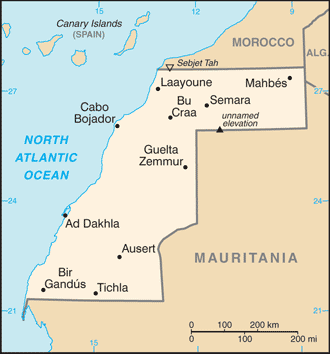
What more can be done to resolve the problem in Western Sahara?
Mr. (Carne) Ross, Undersecretary General Miyet, and I have be trading opinions for six months and it is clear that Mr. Ross has no intention to propose or agree on any kind of political settlement or compromise, regardless of arguments to the contrary. It is time to quit deluding ourselves and allowing the refugees to be used as hostages in an effort to advance the cause of a few thousand Polisario rebels. Rather, we should reach out together for a common middle-ground solution.
This Opinion was first published on Reuters.com on October 11, 2012
Assertions and opinions in this policy paper are solely those of the above-mentioned author(s) and do not necessarily reflect the views of the Middle East Institute, which expressly does not take positions on Middle East policy.
Stabilizing the Sinai Peninsula – An Agenda For Action
MEI Podcast, 7 September, 2012 Foundation for Middle East Peace, Middle East Institute, Churches for Middle East Peace, and Americans for Peace Now invite you to a program Stabilizing the Sinai Peninsula – An Agenda For Action with Ambassador (ret.) Arthur Hughes Former Director General of the Sinai Multinational Forces and Observers (MFO) and Geoffrey Aronson Director for Research and Publications Foundation for Middle East Peace Friday September 7, 12:00-1:30 PM Carnegie Endowment for International Peace 1779 Massachusetts Ave., NW Washington, DC Rising lawlessness and violence and an inc
The first volume of the migration and the Arab World series dealt primarily with the trends in, consequences of, and policy responses to labor migration in the Gulf Cooperation Council (GCC) states since the “oil boom” period of the 1970s. This volume focuses on the countries of the Mashreq (i.e., Egypt and the Levant) as source and destination countries for various migrant groups, dating from the late 19th century up to the present day.