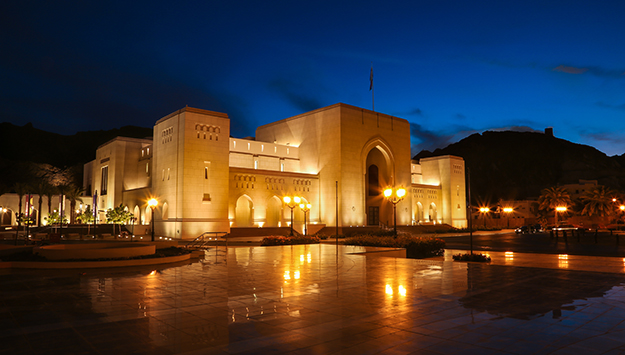
Director Jamal al-Moosawai wanted the new National Museum of Oman to be a space that grows and expands with its knowledge base, and is in tune with ongoing archaeological discoveries in the Arab country.
The result of a ten year collaboration between the Ministry of Heritage and Culture, the Royal Estate Affairs of Oman, Jasper Jacob Associates (J.J.A.), and Arts Architecture International Ltd (A.A.I.), the museum’s blend of the traditional and the contemporary, as well as its high-tech research facilities, make it unique in the region.
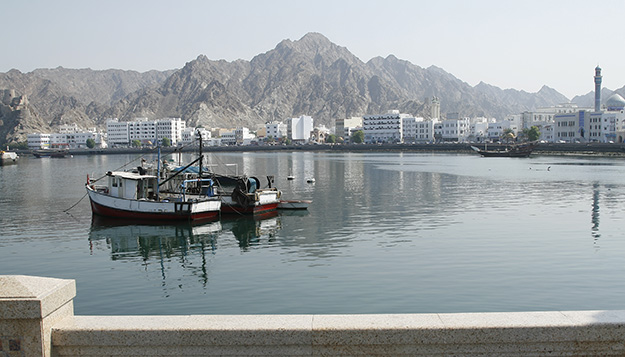
In the face of economic challenges and geopolitical shifts, Oman is investing in its strategic partnership with India to diversify Muscat’s web of international allies. This relationship—which dates back to the Indus Valley Civilization when the Arabian Sea’s monsoon winds began facilitating 5,000 years of maritime trade between the two countries—has matured substantially in recent years.[1]
G.C.C., Iran Look to Sea Trade to Reduce Dependence on Oil
Continuing low oil prices have prompted Persian Gulf states to diversify their heavily petro-dependent economies. This issue is forcing the oil-rich states to invest and expand their potential as international trade hubs as a pathway away from the time bomb of single commodity exports. As many Gulf states have outlined in economic plans, as well as developed on the ground, maritime trade is an increasingly essential link connecting the Middle East to the global economy.
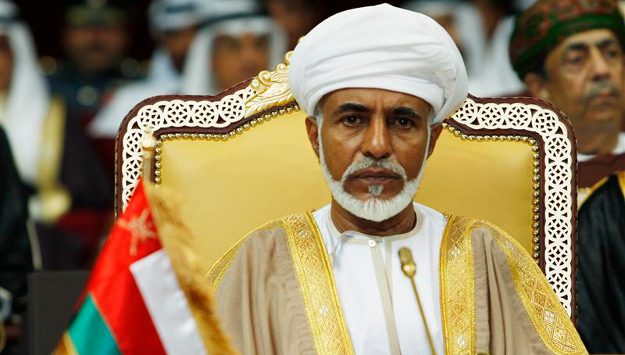
As political and humanitarian crises destabilize many Arab states, the Sultanate of Oman is a beacon of tranquility in a tumultuous region. The nation’s unique cohesion and stability is largely attributable to the legitimacy of Sultan Qaboos bin Said Al Busaidi, the longest serving Arab ruler still in power. Since ascending to the throne in 1970, Qaboos has transformed Oman from an impoverished state into a wealthy country with first-world infrastructure, a vibrant tourism industry and a military alliance with the United States and Britain.
A Look at Oman and South Korea’s Strategic Partnership
Since Oman and South Korea established official diplomatic ties in 1974, trade has largely defined the Muscat-Seoul relationship. Oman’s oil and liquefied natural gas (L.N.G.) and South Korea’s automobiles, electronics, and large vessels have dominated bilateral trade. Yet as Seoul stakes out increasingly vital national interests in the volatile Middle East, a host of geopolitical and security trends will more meaningfully influence the future of Omani-Korean relations.
Gulf Decisionmakers' Perceptions of Security Ties with China
The essays featured here are the products of a workshop series analyzing China’s position in the context of Gulf security, organized by the Department of International Affairs and the Center for Humanities and Social Sciences of Qatar University under the direction of Dr. Imad Mansour.
Saudi-Iran Tensions Place Pressure on Smaller GCC States
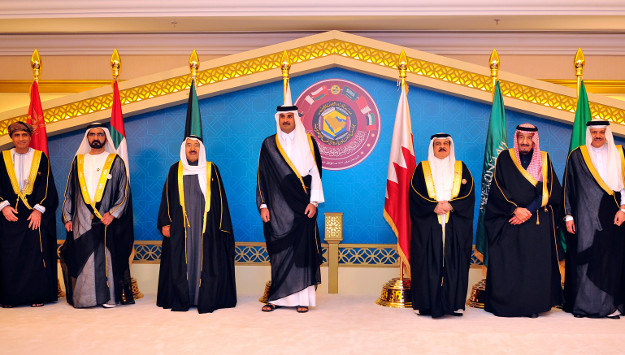
The recent escalation in tension between Saudi Arabia and Iran is throwing the GCC into a crisis of unity. Riyadh’s actions in particular are built on the frustration of the Yemen war and the perception of Iranian encroachment in Arab lands that the Saudi kingdom believes is its domain. King Salman and his son, Deputy Crown Prince Mohammad bin Salman, feel the kingdom is being ignored by the international community in other hot zones, namely Syria, where the outcome of the war is being determined by Washington and Moscow.
Immunizing Against Sectarian “Sickness”: The Case of Oman
The political culture in Oman seems to foster a pluralist intermeshing of national and sub-national identities that other diverse Arab states like Syria and Iraq were at pains to eliminate. This essay examines the Omani case to explore whether there are any lessons to be learned about sectarianism and how it can be confronted in the wider Middle East.
Oman’s government has declined to participate in the current Saudi-led military effort in Yemen. Instead, the country’s ruler, Sultan Qaboos, has called for “non-interference.” This position is an argument for internal political compromise that will eliminate the perceived need for Arab military intervention. To that end, Oman is offering a venue for talks with the hope of moving the political discussion forward.
Since the 1970s oil boom, the Gulf region has been one of the principal destinations for workers from South Asia, with the result that today Indians constitute a large percentage of the non-nationals living in the region. Indeed, at five million out of an estimated 15 million people, the Indian community forms the largest expatriate group in each of the Gulf countries. Most Indian immigrants are from the south Indian state of Kerala, while many of the rest originate from Tamil Nadu, Punjab, Uttar Pradesh, and Bihar.
When the young Shaykh Tamim bin Hamad al-Thani became ruler of Qatar last month after his father stepped aside in a seamless transition, one of his first official acts was to seal the generational shift by appointing a new prime minister.
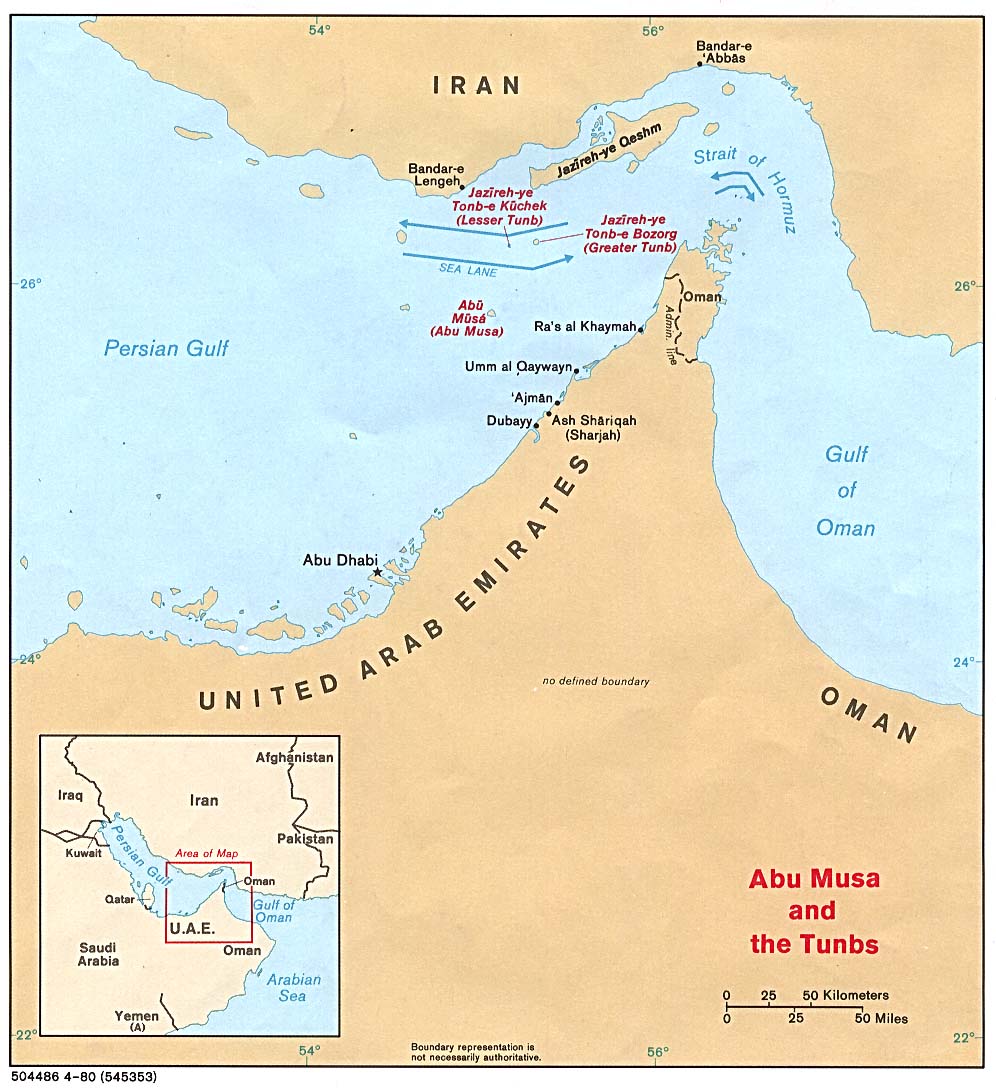
Oman is strategically positioned across the Gulf of Oman from Iran, north of Yemen, and east of Saudi Arabia. It has arguably been able to secure its rapid economic growth—spurred by oil riches—by maintaining neutral, if not friendly, relations with these neighbors, including Iran. Yet while Oman has successfully kept itself neutral, it still inhabits a precarious location. It shares with Iran the Strait of Hormuz, a waterway that Iran has threatened to close due to its charged relations with the GCC countries and the United States, who rely on the Strait to transport oil to world markets.