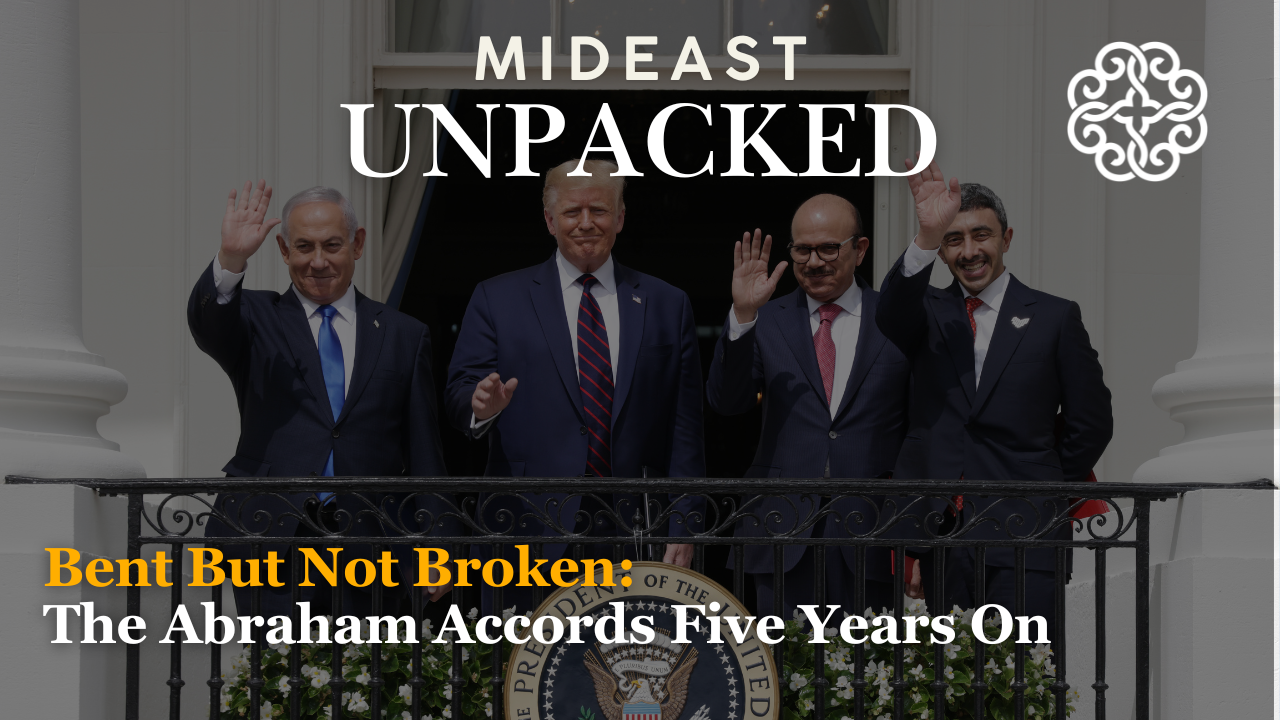
Bent But Not Broken: The Abraham Accords Five Years On
On the fifth anniversary of the Abraham Accords, MEI’s Brian Katulis reflects on their durability and future: “These Abraham Accords will not be broken. They’ll be bent, but I think they’ll stay in place. But they won’t expand in any way until there’s progress on the Palestinian question.” He unpacks the origins of the agreements, their strengths and limitations, and the key challenges that must be addressed for them to grow stronger.
Trump desperate for progress in his sound and fury foreign policy
The most striking thing about Donald Trump’s foreign policy at the seven-month mark of his second administration is how it has failed to improve America’s overall strategic position in the world. It is still early days, but the Trump team’s frenetic flurry of actions, coupled with attention-seeking and often incendiary rhetoric, has served to obscure a poor record of scoring significant international wins for America.
Trump’s unpredictable diplomacy of distraction mostly comes up empty
All eyes this week are on Alaska, where US President Donald Trump will hold a pivotal meeting with Russian President Vladimir Putin to discuss ending the Ukraine war. But the United States remains consumed by several domestic issues, including continued strains over policing, immigration, and checks and balances inside America’s system of government. All of this comes at a time when Trump’s domestic political standing continues to slip lower, including among members of his own party.
As the Trump administration pushes to expand the Abraham Accords in the Middle East and into the Caucasus and Central Asia, it overlooks a dramatic shift in perception across the Arab and Muslim world. Where once Israel might have been viewed as David battling a Goliath-like Arab world, today the roles appear reversed. Israel, empowered by unchecked military might and unwavering US support, is increasingly seen not just as a regional power but as a US-backed regional hegemon. For Gulf Arab states, this transformation presents a dilemma: Can a Goliath be a partner in peace?
Post-Oct. 7 divergent paths: Israel’s military maximalism and Saudi Arabia’s strategic de-escalation
The Hamas attack on Oct. 7, 2023, shattered Israel’s long-standing security paradigm, replacing limited deterrence with an ambitious campaign aimed at dismantling Hamas, confronting Hizballah and other Iranian proxies, and directly targeting Iran’s nuclear program with the support of the United States. In stark contrast, Saudi Arabia has prioritized regional stability and de-escalation, restoring relations with Iran, and focusing on its Vision 2030 economic transformation.
President Masoud Pezeshkian’s first year in office has been defined by Iran’s familiar political structural constraints, external crises, and a moderate-reformist base forever frustrated with his cautious pragmatism and unfulfilled promises. His July 2024 election was undeniably a setback for hardliners. Yet one year later, the assessment is sobering: While Pezeshkian has in some ways perhaps helped in slowing the hardline march, he has not made any fundamental difference in how the Islamic Republic is run. Every decision requires second-guessing Supreme Leader Ali Khamenei’s next move, and even as a president boxed in by the system with limited powers, he is constantly under the sword of Damocles.
Egypt and Gaza: Conflict, Crisis, and the Path to a Ceasefire
With the dire humanitarian crisis in Gaza in the global spotlight, Egypt faces mounting pressure both at home and abroad. In this episode of Middle East Focus, hosts Alistair Taylor and Matthew Czekaj speak with MEI Senior Fellow Mirette Mabrouk about how Cairo is handling the crisis in the neighboring coastal strip. What are the Egyptian government’s main concerns as conditions there continue to deteriorate? How is Egypt responding to domestic outrage and changing international dynamics?
Inflection point or continuing spiral in the Middle East?
After almost two years of fighting in Gaza, and after the decimation of Hizballah, the fall of Bashar al-Assad’s regime in Syria, and the 12-day Israeli-American war on Iran, the Middle East is in new strategic and political territory. Two pathways lie ahead: the first is one in which the gains and changes brought about by war are turned, through intense diplomacy and negotiation, into new international and political arrangements that bring about a period of security and stability in the region; the second is one in which that corner is not turned, and the wars in Gaza, Iran, and potentially Yemen, Syria, and Lebanon, continue indefinitely. The trajectory will depend on the choices of key actors — above all Iran, Israel, and the United States.
Probably few if any Middle East analysts had Israeli airstrikes targeting key government installations of the Syrian state on their summer 2025 bingo cards. And yet that is precisely what happened on Wednesday, as Israeli jets hit Syria’s military headquarters and an area near the presidential palace in Damascus.
Deals, Diplomacy, and Day-After Plans: The Trump Administration's Middle East Strategy
As the Trump administration marks six months in office, it is pursuing a flurry of diplomatic initiatives across the Middle East — some publicly coordinated, others shaped behind closed doors. MEI Distinguished Diplomatic Fellow Mara Rudman joins hosts Alistair Taylor and Matthew Czekaj to assess the administration’s broader regional strategy and its handling of key issues.
The 12-day Israel-Iran war: China’s response and its implications
Last June’s Israel-Iran conflict became a revealing stress test for Beijing’s Middle East strategy, its role in global diplomacy, and the coherence of what some have described as an emergent “Axis of Upheaval” between China, Russia, and Iran.
Trump still looking for major wins on the global stage after budget battle victory at home
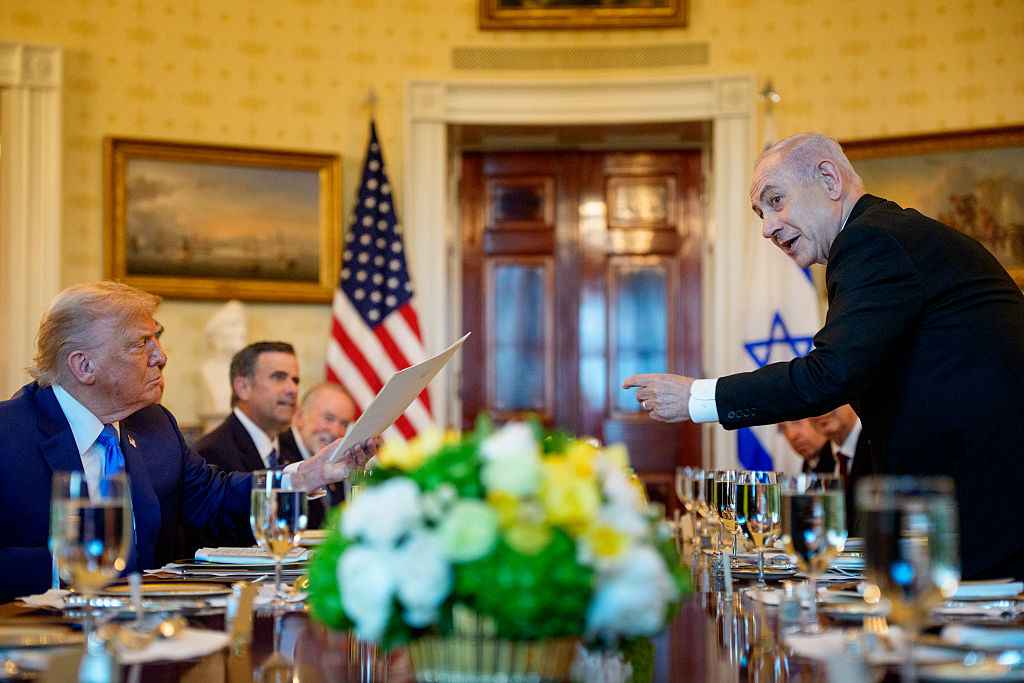
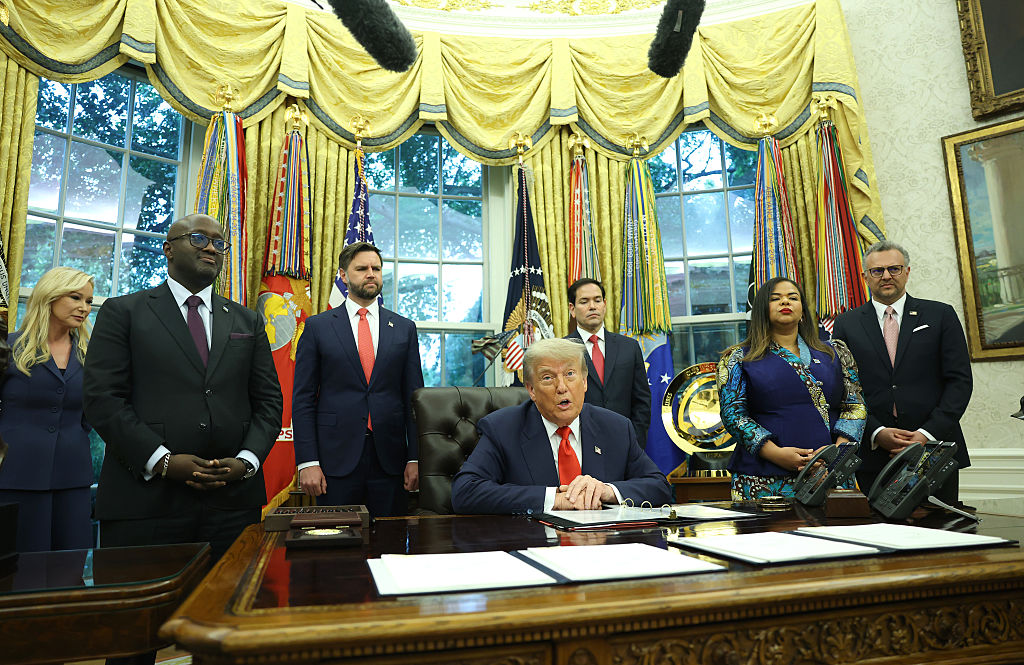
US President Donald Trump hosted Israeli Prime Minister Benjamin Netanyahu for the third time in his second term this week, shortly after securing a major victory for his domestic policy agenda in the budget bill passed by Congress.
Israel at War: Regional Reverberations and Political Fallout
Dr. Yoel Guzansky, associate fellow at MEI and senior research fellow at Israel’s Institute for National Security Studies, joins hosts Alistair Taylor and Matthew Czekaj to unpack the military and political implications of Israel’s 12-day war with Iran. In the lead-up to next week’s closely watched visit by Israeli Prime Minister Benjamin Netanyahu to the White House, they discuss Israel’s strategic gains and domestic reaction, the evolving US-Israel relationship, and the war’s ripple effects across Gaza, the Gulf, and beyond.
Trump’s Middle East policy arrives at a temporary and fragile limbo
Domestic politics has taken center stage in the United States as Congress struggles to pass President Donald Trump’s proposed budget plan. But July is also shaping up as a pivotal month for Trump’s foreign policy in the Middle East and beyond.
Russia’s military presence in post-Assad Syria: A growing security liability undermining stability
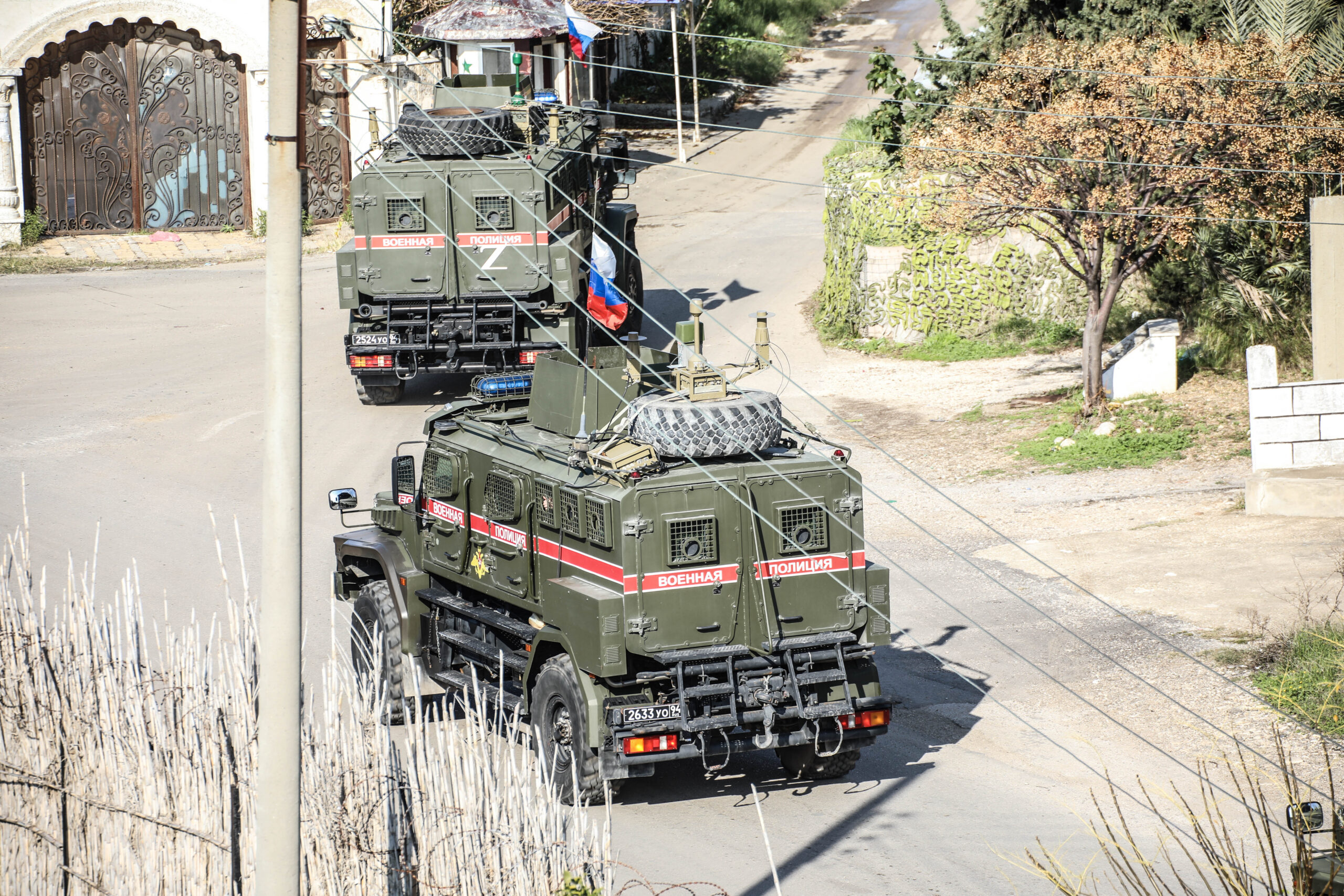
Six months since the collapse of the Assad regime, the Russian military presence in Syria has remained entrenched in strategic locations such as the Hmeimim airbase and Tartous port on the coast, as well as at Qamishli airport in the northeast. This persistence has reignited an increasingly pressing debate about Moscow’s role in the new Syria.