Read the full article in the September 2015 issue of The Ripon Forum.
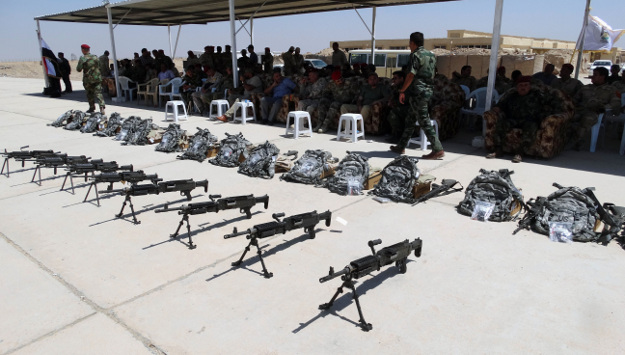
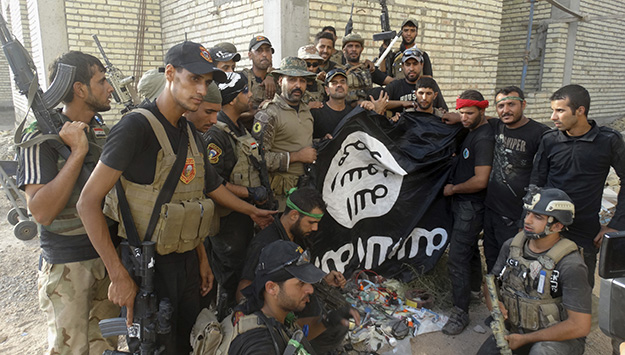
It will be one year this September since the U.S. president declared the formation of an international coalition to ‘degrade and destroy’ ISIS. After 6,000 air strikes, 9,000 targets struck, 10,000 fighters killed, and various battles undertaken in Iraq and Syria, the war is at a strategic stalemate.
Italian energy company Eni announced on August 30 that it had discovered a deep-water gas field 93 miles north of Egypt’s Mediterranean coast.[1] The field, named Zohr, holds an estimated 30 trillion cubic feet (cft)[2] of natural gas (NG) reserves, potentially making it the twentieth largest in the world and the largest in the Mediterranean.
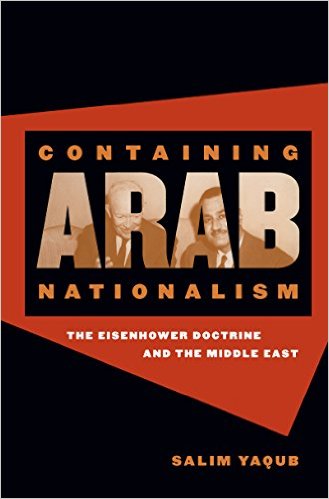
Collection Spotlight: Containing Arab nationalism: the Eisenhower doctrine and the Middle East
Under the threat of an increasingly influential Communist Soviet Union, in the mid-twentieth century the United States became more and more involved in Middle Eastern affairs. Struggling to reconcile its goals of containment, access to oil, and Israeli security, the U.S. government implemented a historic doctrine that pledged increased economic and military aid to the region in exchange for political allegiance.
The Multinational Force of Observers and the Sinai Storm
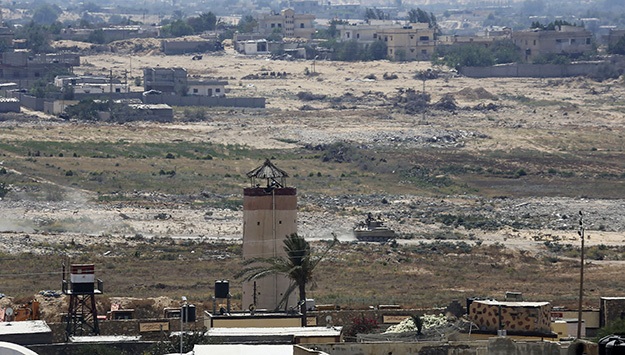
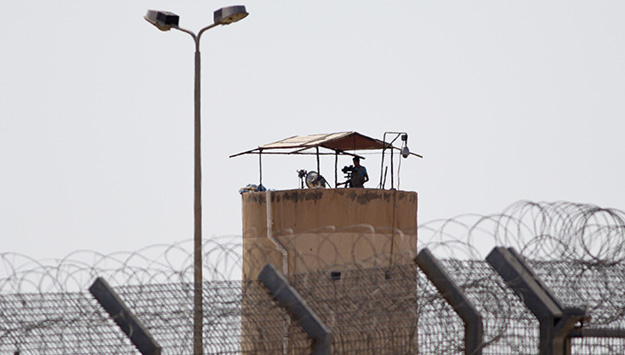
The 1,667-strong contingent of U.S. and international forces that make up the Multinational Force of Observers (MFO) in Egypt’s Sinai Peninsula is in a tough spot. The ongoing failure of the Egyptian government’s war against the ISIS-led rebellion there has shredded the MFO’s mandate to monitor Egyptian and Israeli adherence to their peace treaty. Sinai’s descent into anarchy also puts outnumbered and outgunned U.S. troops in the only location other than Iraq that confronts ISIS in an active theater of war.
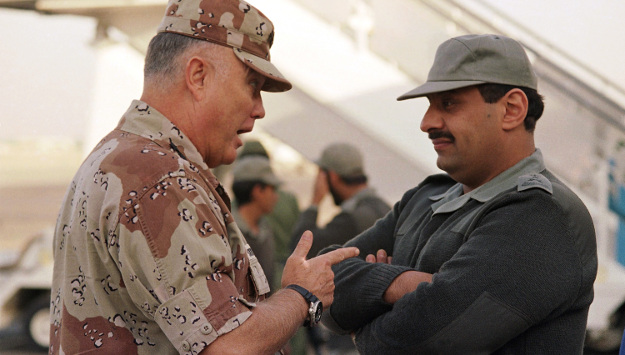
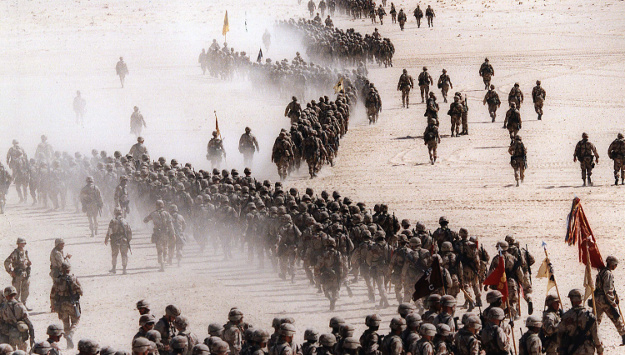
Twenty-five years ago, on August 7th 1990, an American interagency team walked into an urgent meeting with King Fahd of Saudi Arabia, not knowing what would happen. A week earlier Iraq had seized Kuwait. The Americans feared that the Iraqi Army might keep going, seizing the Saudi oil fields. As a result of decisions made at that August 7th meeting, Iraq and terrorism have dominated American foreign policy for three decades and continue to do so.
If the hallmark of al-Qa‘ida was to execute simultaneous spectacular attacks to advance its strategic momentum, the month of Ramadan in June and July showed that the Islamic State (ISIS) is taking this tactic to a new level. Yet the extreme amounts of blood shed during the holy month will likely ultimately weaken ISIS, as tribes and other groups in Syria and Iraq, even more appalled by the organization’s barbarism, unite against it.
This article was first published on NPR’s Parallels blog.
It started so well. When Saddam Hussein’s Iraq invaded Kuwait on Aug. 2, 1990, the United States swiftly cobbled together a broad coalition, unleashed a stunning new generation of air power and waged a lightning ground offensive that lasted all of four days. Iraqi troops were so desperate to quit that some surrendered to Western journalists armed only with notebooks.
Improved Egypt-Israel Relations through Sinai Crisis: Will They Last?
Egyptian diplomats rarely have a good word to say about U.S. policies these days. In contrast, they are enthusiastic in their praise of the close relations between Cairo and Jerusalem—centered on counterterror security and intelligence cooperation in Sinai—and effusive in their acknowledgement of Israel’s response to the bloody insurgency there, led by Egypt’s ISIS affiliate in the “Sinai Province,” Ansar Beit al-Maqdis.
“Relations with Israel are great,” observed an Egyptian official recently.[1]
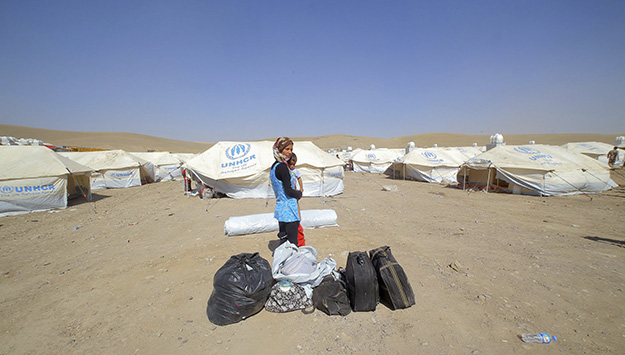
The Humanitarian Crisis in the Middle East: Highlights from the MEI Conference
For decades, most refugee crises followed a pattern: A war erupted, usually in a poor country, and beleaguered civilians staggered across the nearest border. The United Nations organized a response, rich nations footed the bill, and aid groups sent in workers to tend to the needy. Even in extreme cases, such as the mass exodus from Afghanistan during the Soviet invasion in the 1980s, the crisis was largely confined to the country at war and a few immediate neighbors.
For Egypt’s low-income majority, weddings are the prime source of group entertainment, celebrated like block parties in cramped streets decorated with arabesque tapestries and drenched in colored lights and sound. You won’t hear romantic crooning at these gatherings; in Cairo’s densely-inhabited popular quarters, wedding parties are more akin to raves. The music is raw synthetic beat embroidered with syncopated tabla (Egyptian drum) samples and queasy electronic loops.
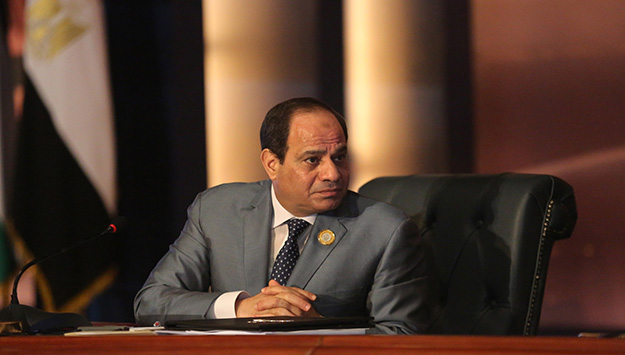
In the year since being elected to the presidency, Abdel Fattah el-Sisi has consolidated a ruling coalition, restored economic growth, and brought back considerable stability to the country after four years of turmoil. But this has come with a harsh crackdown on dissent, a decline in freedoms and human rights, and abuses by the police and judiciary. In the short term, the combination of nationalism, modest economic growth, and highlighting the war on terror is politically sustainable among a broad cross section of the population frustrated by years of uncertainty and economic decline.
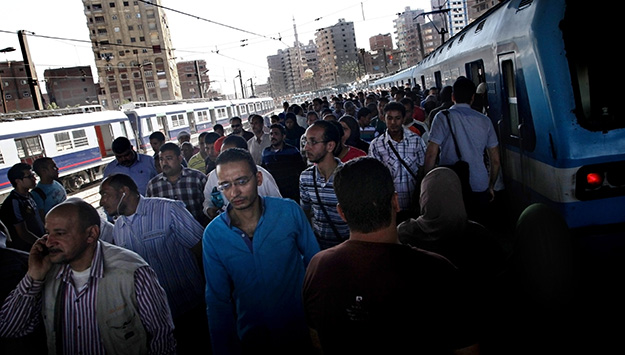
Cairo's Rough, Crowded, and Vital Underground Artery
Inaugurated in 1987, Cairo’s Metro was Africa’s first inner-city underground and the embodiment of Hosni Mubarak’s promise to modernize Egypt’s infrastructure. It is hard to think of a Mubarak-era project that was better planned, more efficiently executed, or has had such a functional impact on so many people’s lives. Serving four million passengers daily, the Metro is the fastest, cheapest means of navigating the traffic-congested urban behemoth.
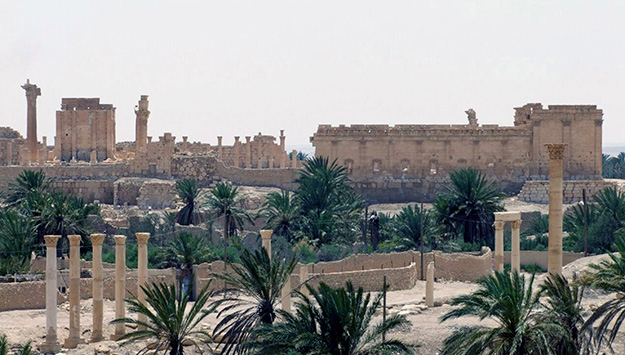
Since March 2011 Syria has gone through a traumatic process that has strained the ethnic, sectarian, and social fabric of the country—almost all that makes Syria a unified state with a people who share a common history, goals, and aspirations—to beyond the breaking point. Much of the country lies in ruins today, and its cultural heritage has been a deliberate casualty of the conflict from its earliest days.