Brazil’s Embrace of the Iranian Government Will Only Embolden the Regime Internationally
This Commentary first appeared as an op-ed in the America's Quarterly Policy Journal, Spring 2010
Can Brazil play a significant role in containing Iran's nuclear ambitions? No.
Brazil’s self-perceptions and aspirations as an emerging global power are a key to understanding why the government of President Luiz Inácio Lula da Silva has chosen this particular moment in time to deepen ties with an Iranian regime that is facing crisis, both at home and abroad.
The Republic of Yemen occupies the southwest corner of the Arabian Peninsula. Unlike its oil-rich neighbors, Yemen is the poorest country in the Arab world. Like other countries football (soccer) is Yemen’s most popular sport. Football has been played in parts of Yemen since before the turn of the 20th century, and since the 1970s, the game’s popularity has increased significantly.
The Middle East Institute is proud to host Sean Foley, author of The Arab States: Beyond Oil and Islam (Lynne Rienner, 2010), for a discussion about the politics of the Gulf states and their role in the global economy. In the book, Foley presents a fresh picture of these states as cosmopolitan and tolerant societies that face many of the same socio-economic problems that other states do – including those that lack oil.
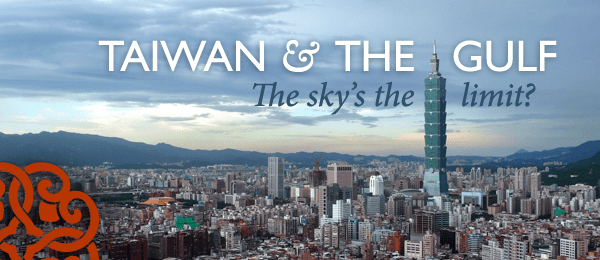
Dubai’s Burj Khalifa and Taiwan’s Taipei 101 tower, the world’s two tallest skyscrapers, differ in height by a stunning 1,076 feet, are separated by nearly 4,000 miles of ocean, and are situated in countries and regions which, linguistically and culturally, have little in common ― except business.
Sri Lankan Migration to the Gulf: Female Breadwinners – Domestic Workers
Several waves of Sri Lankan migration have taken place since the country gained independence in 1948. Beginning in the mid-1950s, wealthy, educated, English-speaking elites have migrated to Commonwealth countries such as Australia and the United Kingdom. In addition, since the upsurge in ethnic hostilities in the early 1980s, Tamil-speaking Hindu migrants have left the country, with many settling in Canada. In contrast with these permanent migrants, since 1976 a growing number of Sri Lankans have become migrant workers.
Millions of people around the world have left their home countries in search of employment. In 2005, there were 191 million migrants, or about 3% of the world’s population, living in other countries.[1]Today, that number has grown to about 200 million. An estimated one person in 35 is an international migrant. Almost all countries are affected by international migration. The Gulf countries are no exception.
How many Indians work abroad? We have no answer to this question even today. However, available evidence indicates that the state of Kerala in India has the highest number of emigrants in the Gulf countries.1
A Lexicon of Migrants in the United Arab Emirates (UAE)
The millions of foreign nationals working in the Gulf are often lumped together as “migrant workers,” but this is misleading. The population of foreign workers in the UAE, for example, is complex and heterogeneous. One layer of that complexity is manifested by the lexicon used by migrants to identify other migrants.
Migrant Workers in Kuwait: The Role of State Institutions
The treatment of migrant domestic workers is one of the defining stories told about the Arab Gulf states. Every year hundreds of news media and human rights reports detailing migrant domestic workers’ experiences of exploitation and abuse circulate globally. The narratives of these accounts are remarkably consistent. They often begin with the story of an impoverished woman from the global South, who, in order to improve the situation of her family, migrates to the oil-rich Gulf states in search of work and a more prosperous future.
Malayali Migrant Women's Perceptions of the Gulf States
Studies of Gulf women migrants focus on the most noticeable or “problematic” categories — domestic workers and the sex trade — and are generally policy-driven short surveys, using data collected in the Gulf itself.
The International Political Economy of Gulf Migration
Over the past three decades there has been much discussion about the impact of labor migration to the Gulf on the countries of origin. However, much less understood is the impact of this labor migration on the Gulf Cooperation Council (GCC) states — Bahrain, Kuwait, Oman, Qatar, Saudi Arabia, and the United Arab Emirates (UAE) and their citizens. There has been documentation that the patterns of migration have changed from Arab migrants to Southeast Asians.
Over the past decade, most of the Gulf Cooperation Council (GCC) countries (Bahrain, Kuwait, Oman, Qatar, Saudi Arabia, and the United Arab Emirates) experienced robust economic growth. The main force behind this growth is a strong labor force, composed mainly of expatriates. Largely due to its geographical proximity, the Gulf has been a preferred destination for workers from South Asia for years. More recently, however, the GCC has attracted foreign labor from all over the world.
The money that migrants send home is important not only to their families but also to their country’s balance of payments. In many developing countries, remittances represent a significant proportion of the Gross Domestic Product (GDP) as well as foreign exchange earning.