Skip to Content

Research & Commentary Results

Filter by
1974 Results
What does the Saudi oil facility attack mean for Russia?
Employees of Aramco oil company work in Saudi Arabia's Abqaiq oil processing plant on September 20, 2019
  • Analysis
  • What does the Saudi oil facility attack mean for Russia?

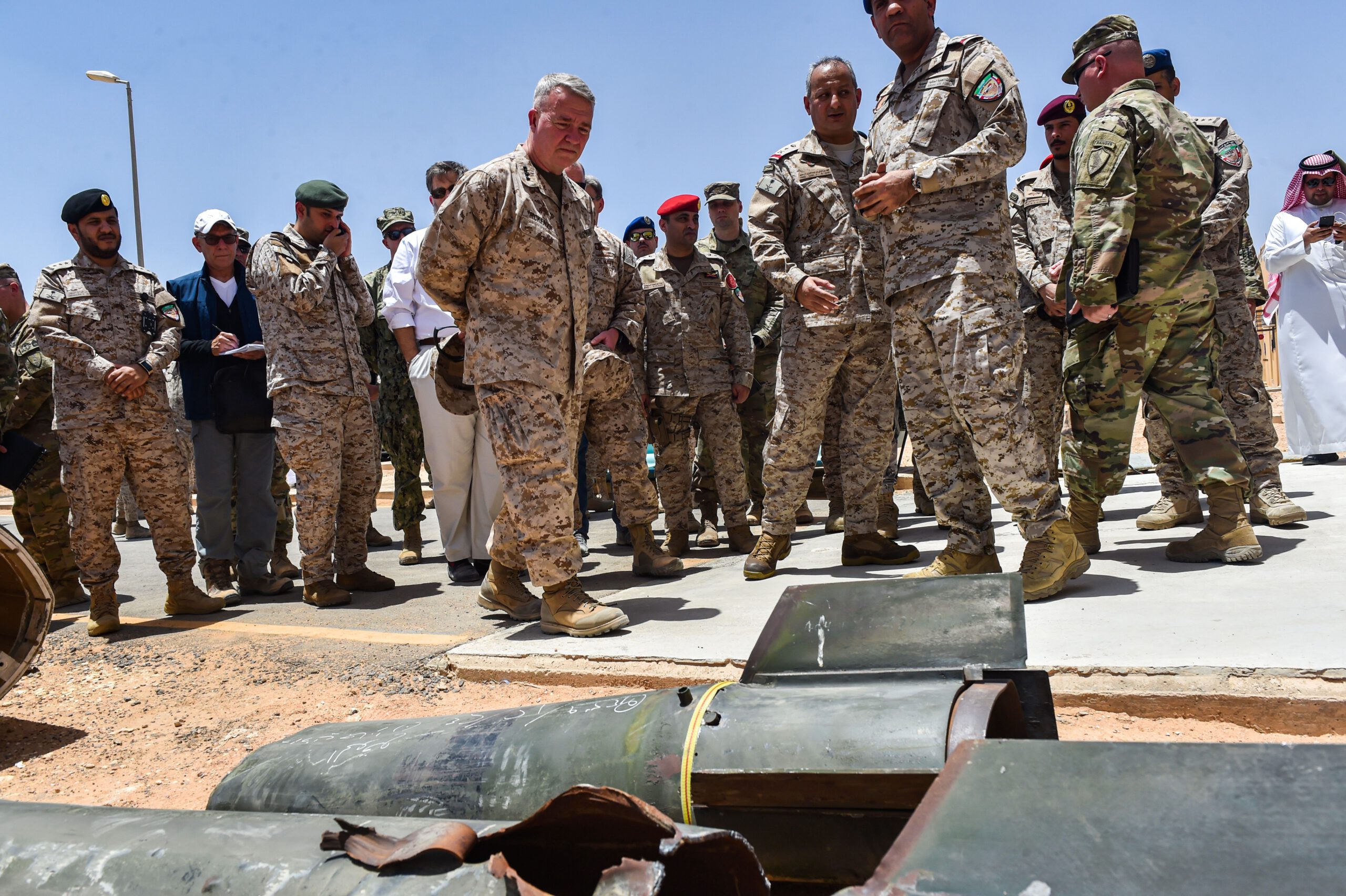
    The Sept. 14 attack on key Saudi oil facilities, which knocked out over half of the kingdom’s oil production, has signaled a significant change in approach toward regional and global security. It’s clear that things won’t be the same again. But what does it mean for Russia?

    The attack reduced Saudi oil production by 5.7 million barrels per day (bpd), leading to a sharp rise in global oil prices of nearly 20%. Although this was a very important development from an energy and economic perspective, we should not underestimate the political and security ramifications either. The entire paradigm of a secure Gulf under the protection of the U.S. military umbrella has been undermined.

    September 24, 2019

    From regime change to rapprochement? Turkey’s shifting Syria policy
    President of Turkey Recep Tayyip Erdogan (C), President of Russia Vladimir Putin (L) and President of Iran Hassan Rouhani (R) shake hands as they pose for a photo after a joint press conference following the Turkey-Russia-Iran trilateral summit at Cankaya Mansion in Ankara, Turkey on September 16, 2019.
  • Analysis
  • From regime change to rapprochement? Turkey’s shifting Syria policy

    At a trilateral summit in Ankara earlier this week, President Recep Tayyip Erdogan sat back and ate treats as Iranian President Hassan Rouhani told the world that efforts to topple the Assad regime have failed. The scene was a stark reminder of how far Turkey’s Syria policy has shifted.

    An attack against all in the Middle East
    Smoke billows from an Aramco oil facility in Abqaiq about 60km (37 miles) southwest of Dhahran in Saudi Arabia's eastern province on September 14, 2019.
  • Analysis
  • An attack against all in the Middle East

    Saudi Arabia is under direct assault, and America’s response is muted. Despite U.S. President Donald Trump’s verbal threats against Iran, which is behind the attack, he’s not seriously contemplating using force. What’s most urgent now for U.S. policymakers is how to prevent this from happening again and how to most effectively defend U.S. partners from aggression in this still vital part of the world.

    September 19, 2019

    New leadership and new challenges for Saudi Arabia's oil industry
    Saudi and Foreign investors stand in front of the logo of Saudi state oil giant Aramco during the 10th Global Competitiveness Forum on January 25, 2016, in the capital Riyadh. The an annual event brings together high-ranking Saudi officials and world business leaders. / AFP / Fayez Nureldine (Photo credit should read FAYEZ NURELDINE/AFP/Getty Images)
  • Analysis
  • New leadership and new challenges for Saudi Arabia's oil industry

    Saudi Arabia surprised the global oil and gas industry earlier this month by reshuffling its top two energy positions. Long-serving technocrat Khalid al-Falih was ousted as chair of Saudi Aramco one day and as head of the Ministry of Energy the next.

    September 17, 2019

    Yemen’s peace process: The Hodeida Agreement that never was?
    Retired Dutch General Patrick Cammaert (C), who is leading a joint committee, which includes both government and rebel representatives, tasked with overseeing a truce in the Red Sea port city and the withdrawal of both parties, speaks with an official in the port city of Hodeidah on January 13, 2019. - Yemeni rebels on January 13, 2019, boycotted a meeting chaired by the head of a UN-led ceasefire monitoring team in the flashpoint city of Hodeida, accusing him of pursuing
  • Analysis
  • Yemen’s peace process: The Hodeida Agreement that never was?

    In late July, Lt. Gen. Michael Anker Lollesgaard left Yemen after his six-month term as the second head of the UN Mission in support of the Hodeida Agreement (UNMHA) came to an end. Unlike his predecessor, Maj. Gen. Patrick Cammaert, who departed quietly, Lollesgaard was given a proper sendoff from Sana’a. A senior Houthi commander, Maj. Gen. Ali al-Musheki, even went so far as to describe Lollesgaard as “a conscientious military commander.”

    September 16, 2019

    Monday Briefing: Attack on Saudi oil facilities has an impact far beyond the kingdom
  • Analysis
  • Monday Briefing: Attack on Saudi oil facilities has an impact far beyond the kingdom

    This week’s briefing on recent news and upcoming events in the region featuring Ruba Husari, Paul Salem, Gerald Feierstein, Amal Kandeel, Grace Wermenbol, Robert S. Ford, Charles Lister, and Gonul Tol.

    September 16, 2019

    Russia, Iran, and the competition to shape Syria’s future
    Russian President Vladimir Putin (L) and Iranian President Hassan Rouhani (R) attend the trilateral summit to discuss progress on Syria, between the Presidents of Turkey, Russia and Iran on November 22, 2017 in Sochi, Russia.
  • Analysis
  • Russia, Iran, and the competition to shape Syria’s future

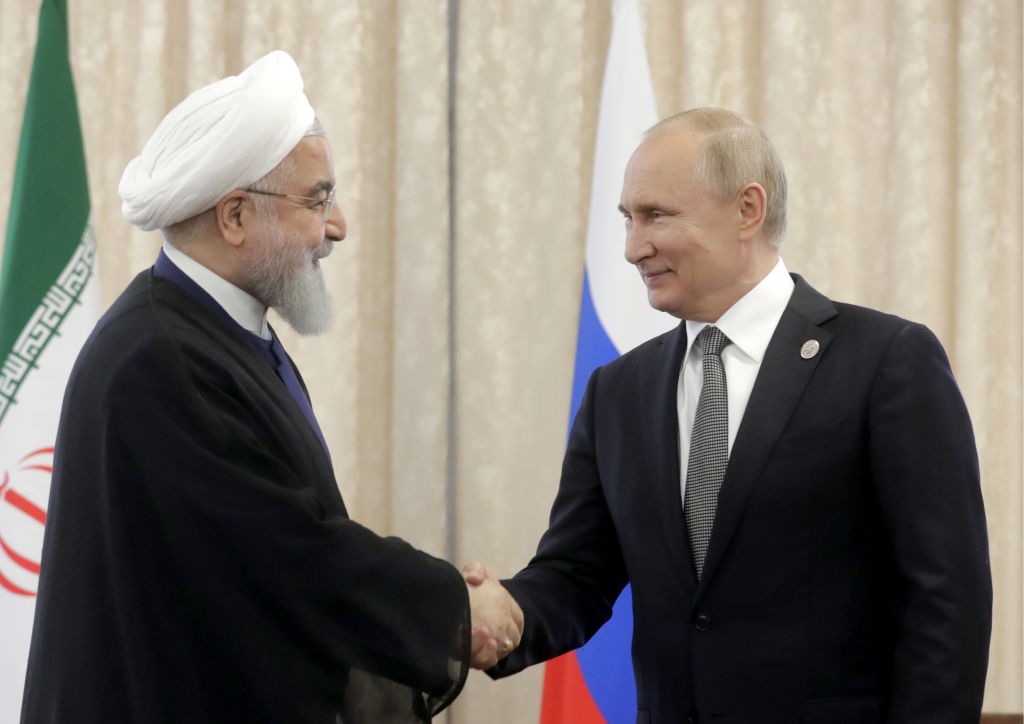
    One important dynamic that is not acknowledged enough is the intensifying competition between Russia and Iran to determine the future shape of Syria and their position in it. While the very real competitive dynamic between Moscow and Tehran will never transition to hostility, it is beginning to have a very real effect on the evolution of major aspects of the crisis — from active conflict theaters, to the structures of the state, control over resources, and the prospect of intra-state conflict on Syrian soil.

    The end of an era: Trump invites China to police the Gulf
    Cargo ships sail in the Gulf off the Iranian port city of Bandar Abbas, which is the main base of the Islamic republic's navy and has a strategic position on the Strait of Hormuz, on April 29, 2019. - Eight countries were initially given six-month reprieves after the United States reimposed sanctions on Iran in November, following President Donald Trump's decision to withdraw from a 2015 nuclear accord. Iran's Foreign Minister Mohammad Javad Zarif has said leaving the nuclear Non-Proliferation Treaty is one
  • Analysis
  • The end of an era: Trump invites China to police the Gulf

    What was President Donald Trump thinking when, on June 24, when he announced a historic revision of U.S. security policy in the Gulf?

    As Washington slept, Trump tweeted that “China gets 91% of its Oil from the Straight, Japan 62%, & many other countries likewise. So why are we protecting the shipping lanes for other countries (many years) for zero compensation. All of these countries should be protecting their own ships on what has always been a dangerous journey. We don’t even need to be there in that the U.S. has just become (by far) the largest producer of Energy anywhere in the world!”

    September 9, 2019

    Libya’s Hifter and the false narrative of authoritarian stability
    Self-proclaimed Libyan National Army (LNA) Chief of Staff, Khalifa Haftar arrives for a conference on Libya on November 12, 2018 at Villa Igiea in Palermo. - Libya's key political players meet with global leaders in Palermo on November 12 in the latest bid by major powers to kickstart a long-stalled political process and trigger elections. (Photo by Filippo MONTEFORTE / AFP) (Photo credit should read FILIPPO MONTEFORTE/AFP/Getty Images)
  • Analysis
  • Libya’s Hifter and the false narrative of authoritarian stability

    Khalifa Hifter has managed to garner outside support by appealing to foreign states’ desire for a stable Libya, but this rogue former general and would-be authoritarian has proven a troublesome proxy. In supporting his ongoing offensive on Tripoli, foreign states are undermining their own narrative of authoritarian stability.

    September 3, 2019

    Syria: Debates won’t change reality
    TOPSHOT - A convoy of US forces armoured vehicles drives near the village of Yalanli, on the western outskirts of the northern Syrian city of Manbij, on March 5, 2017. / AFP PHOTO / DELIL SOULEIMAN (Photo credit should read DELIL SOULEIMAN/AFP/Getty Images)
  • Analysis
  • Syria: Debates won’t change reality

    Over the past few weeks, my colleagues at MEI have debated whether the U.S. should stay in Syria or leave. Here I’d make a different argument: that it doesn’t really matter. The president has already made the decision to leave, and while his aides may have been able to slow roll the troop drawdown, the reality is that Donald Trump has made it clear the U.S. will not disburse any additional resources. Even within the 2020 Democratic field, not a single candidate has advocated increasing resources.

    August 29, 2019

    The Syrian Oil Crisis: Causes, Possible Responses, and Implications
    Iranian supertanker Grace 1 off the coast of Gibraltar on August 15, 2019.
  • Analysis
  • The Syrian Oil Crisis: Causes, Possible Responses, and Implications

    Unlike most other goods, the inflation-adjusted prices of oil and oil derivatives actually became cheaper in the years after the Syrian uprising and the loss of most of the country’s oil fields. Iran stepped in to fill the gap by shipping oil by sea through the Suez Canal. In recent months, however, these shipments seem to have ground to a halt, crippling regime-controlled areas. This paper examines several competing explanations for the slowdown in Iranian oil shipments, explores a range of possible responses for the Assad regime, and takes a closer look at the implications for the regime, its allies, and regular Syrians.

    August 28, 2019

    Countering and courting Iran: Israeli-Palestinian objectives in Iraq
    An Israeli F-15 I fighter jet launches anti-missile flares at it performs during a graduation ceremony of Israeli air force pilots at the Hatzerim Air Force base in Israel's Negev desert on December 26, 2018. (Photo by JACK GUEZ / AFP) (Photo credit should read JACK GUEZ/AFP/Getty Images)
  • Analysis
  • Countering and courting Iran: Israeli-Palestinian objectives in Iraq

    Israel has reportedly expanded its operations against Iran in the Middle East. In July, Israeli and foreign media attributed airstrikes on Iranian targets near Baghdad to Israel. Last week, U.S. officials confirmed that Israel was responsible for the attacks, which mark the first such air raids on Iraq since 1981, when Tel Aviv destroyed Saddam Hussein’s Osirak nuclear reactor.

    August 26, 2019

    Israel’s new front in the fight against Iran
    An Israeli F-35 fighter jet performs during an air show at the graduation ceremony of Israeli pilots in the Hatzerim Israeli Air Force base in the Negev desert, near the southern Israeli city of Beer Sheva, on June 27, 2019.
  • Analysis
  • Israel’s new front in the fight against Iran

    On Aug. 12, an explosion took place inside an ammunition warehouse in the al-Saqr military base in southern Baghdad, triggering hundreds of mortars and rockets to fire off in all directions throughout urban, populated areas. One person was killed and 29 wounded, as munitions and debris scattered as far as 5 kilometers away.