We are entering the era of water scarcity throughout the world. Water scarcity is different from mined resources that become scarce when the lode runs out. Water is almost always renewable. The scarcity applies to expansion. For thousands of years, supply has been expanded through engineering. Nowhere is that more obvious than in Egypt, where water demand has been met by increasing supply. Expansion accelerated during the 19th and 20th centuries, but has now ground to a halt as there is no more water to collect, store, and distribute.
If the current crisis in Egypt is to be resolved peacefully, the Egyptian military will play a central role. Few, if any outside the Egyptian armed forces, however, truly understand the Egyptian military. The following is an attempt to begin the process of better understanding this crucial institution.
The Middle East Institute is proud to host Amb. Alan Goulty and Amb. Edward Walker for an examination of the unrest roiling Tunisia and Egypt and its implications for the region at large. Between them, Goulty and Walker have more than 60 years of experience serving in the Arab world. They will draw upon their unique experience and understanding of the region to examine the evolving crises in Tunisia and Egypt, the impact of the street protests on regional governments and the role that Western governments can play during this period of transition.
This Commentary first appeared in the American Interest's Middle East Blog on January 31, 2011.
The end is now at hand for the government of Hosni Mubarak, ruler of Egypt for the last thirty years. Two outstanding questions face us now: What will the army do? And how should the United States react?
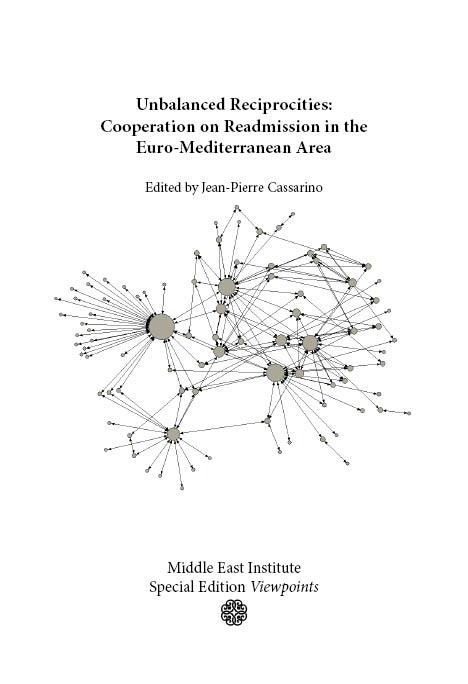
Unbalanced Reciprocities: Cooperation on Readmission in the Euro-Mediterranean Area
Readmission Agreements are a mechanism for countering illegal immigration. Such agreements involve reciprocal undertakings to return illegal residents (or irregular migrants) to their country of origin or transit. This special edition of MEI Viewpoints brings together extensive research on agreements between European and North African states. The following chapters explore what can be argued as the unbalanced costs and benefits for all parties.
This Commentary first appeared as an op-ed in McClatchy News, July 6, 2010.
The misuse and abuse of language is yet another obstacle to obtaining peace in the Middle East. In recent weeks the media, government officials and commentators have so garbled the use of the words “blockade” and “embargo” to describe events in Gaza that understanding what is occurring, the legal implications, and developing a reasonable policy are almost impossible.
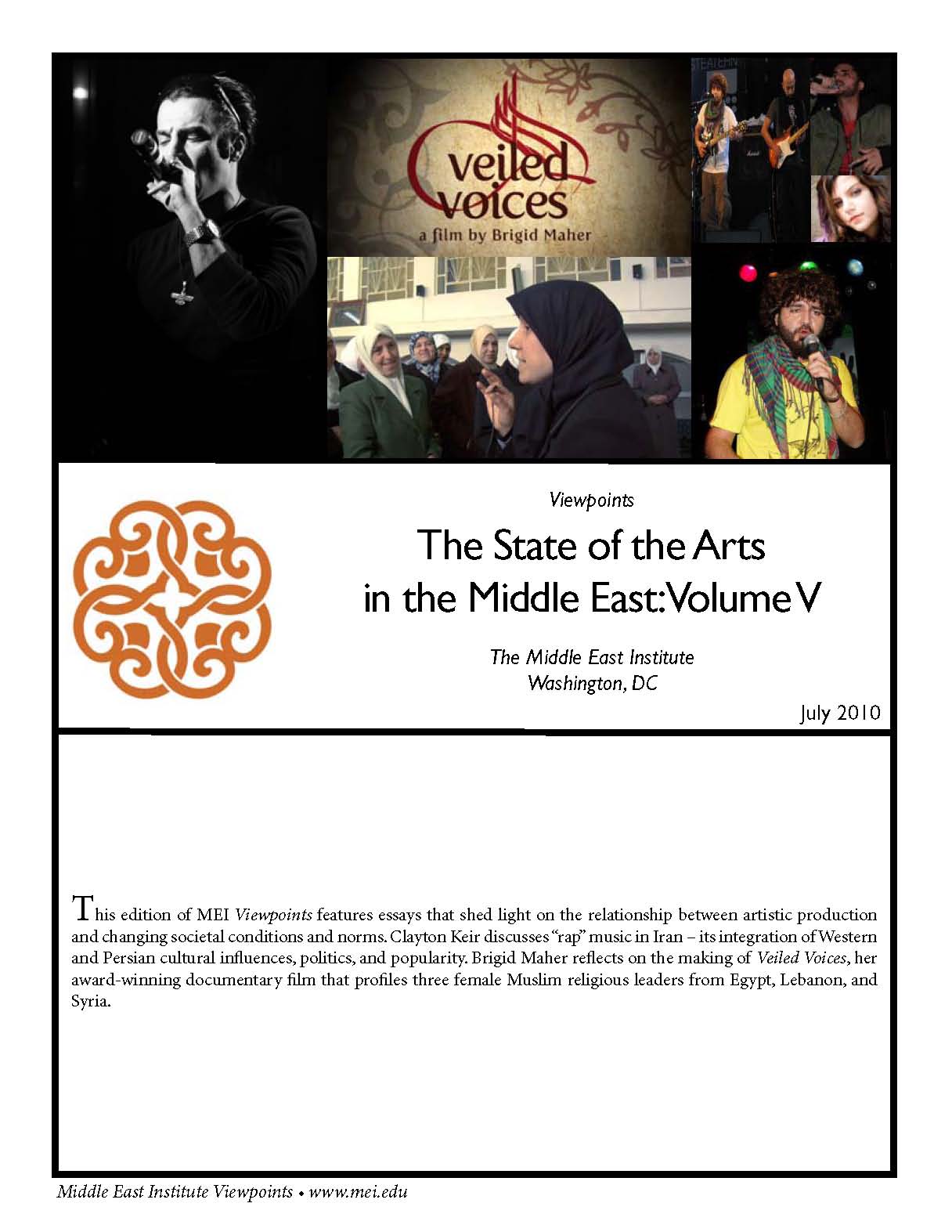
Introduction to The State of the Arts in the Middle East: Volume V
This edition of MEI Viewpoints features essays that shed light on the relationship between artistic production and changing societal conditions and norms. Clayton Keir discusses “rap” music in Iran – its integration of Western and Persian cultural influences, politics, and popularity. Brigid Maher reflects on the making of Veiled Voices, her award-winning documentary film that profiles three female Muslim religious leaders from Egypt, Lebanon, and Syria.
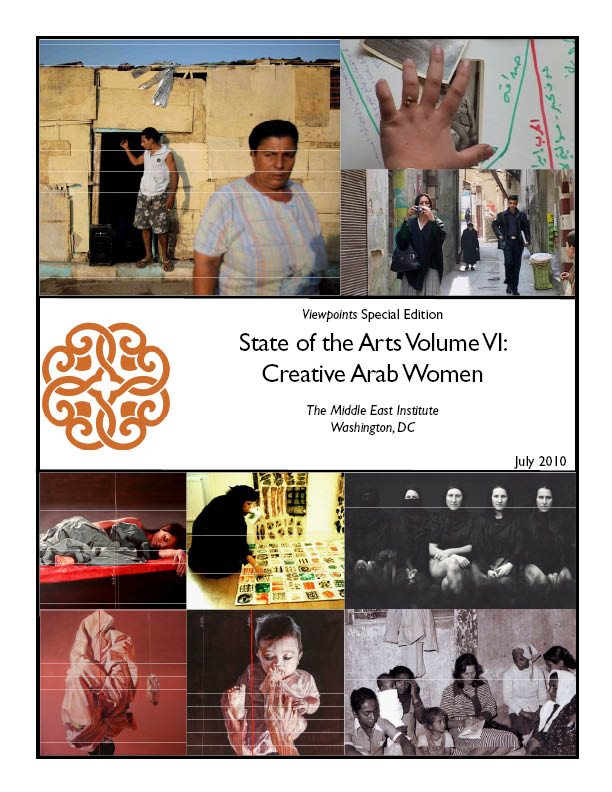
Introduction to The State of the Arts in the Middle East: Volume VI: Creative Arab Women
Creative Arab Women is the sixth edition of the MEI Viewpoints series on the State of the Arts in the Middle East. The 14 essays in this collection offer a glimpse into the rich and varied cultural output of Arab women in the region and the diaspora. Partly reminiscences and partly calls to action, they are essays of survival and empowerment that add a deeply personal dimension to the subject of the role of Arab women as cultural producers. MEI is grateful to Dr.
Several months ago on a Tuesday afternoon, a local girls football team was practicing on a dirt field in Sidi Moumen, a notorious 350,000-person shantytown on the outskirts of Casablanca, Morocco. A crowd of boys had gathered along the fence. One of the boys began making comments. “Look at her touch on the ball,” he mumbled to his friend, “where did she learn to play football?” “My five-year old brother has better control,” shot back the other, slapping his friend’s hand and laughing.