Skip to Content

Research & Commentary Results

Filter by
3118 Results
Will protests in Iran lead to negotiations with the US?
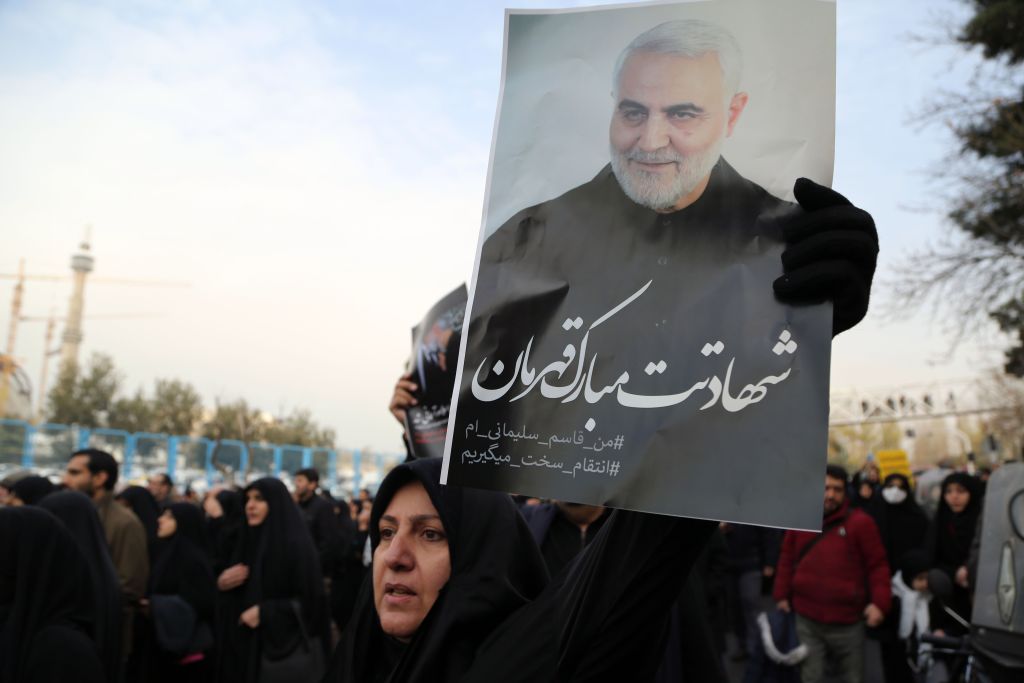
Iranian protesters gather around a fire during a demonstration against an increase in gasoline prices in the capital Tehran, on November 16, 2019. - One person was killed and others injured in protests across Iran, hours after a surprise decision to increase petrol prices by 50 percent for the first 60 litres and 300 percent for anything above that each month, and impose rationing. Authorities said the move was aimed at helping needy citizens, and expected to generate 300 trillion rials ($2.55 billion) per
  • Analysis
  • Will protests in Iran lead to negotiations with the US?

    The protests that began in Iran in mid-November may well have a direct impact on Tehran’s relations with Washington. Initially sparked by the Iranian government’s sudden decision to raise fuel prices, the demonstrations have made clear the country’s fragile socio-economic and political situation.

    Déjà vu all over again: The three “I”s of gasoline subsidies and social unrest in Iran
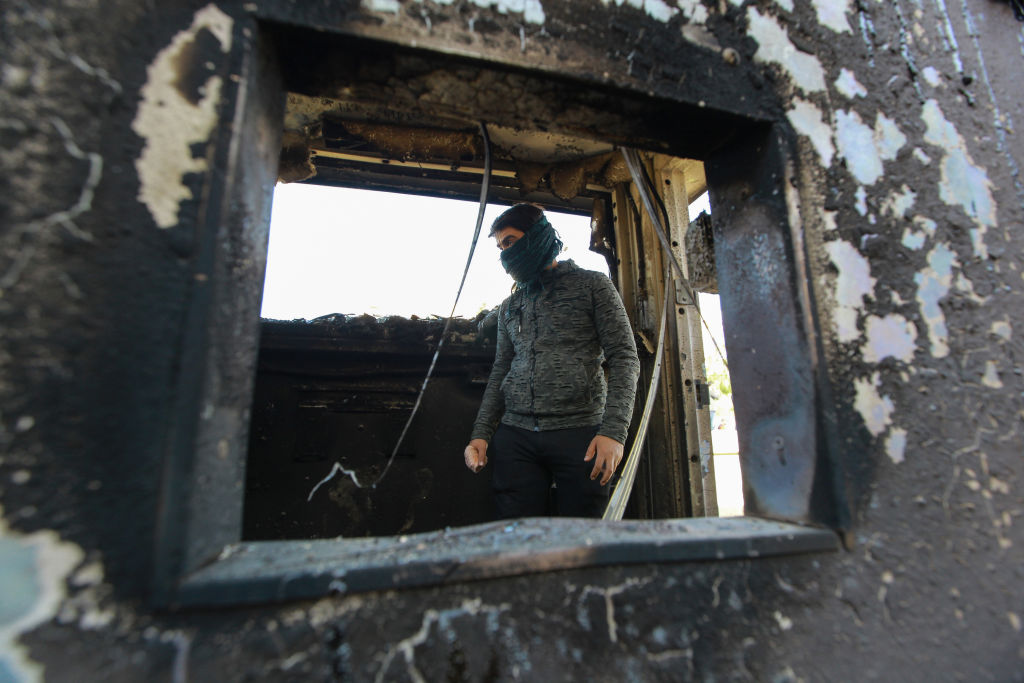
    An Iranian man checks a scorched gas station that was set ablaze by protesters during a demonstration against a rise in gasoline prices in Eslamshahr, near the Iranian capital of Tehran, on November 17, 2019.
  • Analysis
  • Déjà vu all over again: The three “I”s of gasoline subsidies and social unrest in Iran

    Adding to the backdrop of economic mismanagement, corruption, and increasing rates of poverty and inequality, the recent gasoline rationing and price hikes have ignited widespread and violent protests inside Iran. Despite recent changes, the country’s energy subsidy regime remains highly inequitable, ineffective, and inefficient.

    November 25, 2019

    Pompeo’s audience: The Trumpian base
    U.S. Secretary of State Mike Pompeo speaks during a press conference at the U.S. Department of State on November 18, 2019 in Washington, DC
  • Analysis
  • Pompeo’s audience: The Trumpian base

    It is not always recognized that Secretary of State Mike Pompeo’s Nov. 18 declaration that Israeli “settlements are not inconsistent with international law” was primarily political, not diplomatic, designed for domestic American consumption as part of the president’s reelection campaign. Secondarily, it was intended to strengthen Israeli Prime Minister Benjamin Netanyahu’s hand in the current coalition negotiations and/or the likely upcoming Knesset election, if coalition negotiations fail. Third on the list, almost an afterthought, is the effect on the Palestinians, whose future state’s boundaries it purports to impact.

    November 21, 2019

    Traces of the 1979 assault on the Grand Mosque still roil the Middle East today
     Muslim pilgrims gather at the Grand Mosque in Saudi Arabia's holy city of Mecca on August 7, 2019, prior to the start of the annual Hajj pilgrimage in the holy city.
  • Commentary
  • Traces of the 1979 assault on the Grand Mosque still roil the Middle East today

    Four decades on, echoes of the November 1979 assault on the Grand Mosque in Mecca continue to reverberate. Coming on the heels of the Iranian revolution and days after the Iran hostage-taking, the Mecca attack, carried out by a group of several hundred Saudi extremist Islamists declaring a new Mahdi, shocked the Sunni world and pushed Muslims in a far more conservative direction.

    November 20, 2019

    Why Doha should worry: The case for an Iran-Qatar non-aggression pact
    Westbay as seen from the corniche on 20 October 2018 after heavy rainfall, Doha, Qatar.
  • Analysis
  • Why Doha should worry: The case for an Iran-Qatar non-aggression pact

    Fears of a large-scale war in the Middle East remain heightened as the U.S. continues ratcheting up sanctions against Iran while Tehran takes measures to scale back its restrictive commitments under the Joint Comprehensive Plan of Action (JCPOA). The latest sign of Iranian retaliation against the U.S. withdrawal from the 2015 nuclear accord was its decision, confirmed by the International Atomic Energy Agency (IAEA) on Nov. 11, to begin refining uranium at its Fordow underground enrichment facility.

    November 20, 2019

    Iran, Russia and the Caucasus
    Middle East Institute
  • Podcast
  • Iran, Russia and the Caucasus

    Brenda Shaffer (Georgetown University), Anna Borshchevskaya (Washington Institute for Near East Policy), and Alex Vatanka (MEI) join host Alistair Taylor to discuss how the dynamics between Russia and Iran are playing out in the Caucasus, and what it means for the countries of the region.

    November 18, 2019

    Iran protests take aim at the regime
    Iranian protesters gather around a burning motorcycle during a demonstration against an increase in gasoline prices in the central city of Isfahan, on November 16, 2019.
  • Commentary
  • Iran protests take aim at the regime

    On the surface the latest protests in Iran appear to be not that different from the previous ones in late 2017 and early 2018. In reality, however, things are quite different this time around, and the Iranian authorities are deeply alarmed.

    Escalation in Gaza tests Israel-Hamas détente
    Palestinian Islamic Jihad militants attend the funeral of a comrade in Khan Yunis in the southern Gaza Strip November 14, 2019.
  • Commentary
  • Escalation in Gaza tests Israel-Hamas détente

    A Nov. 12 Israeli airstrike on the Gaza Strip killed Baha Abu al-Ata, a commander with the Palestinian Islamic Jihad (PIJ) militant group. Over the ensuring 48 hours, the PIJ launched some 450 rockets from Gaza into southern and central Israel. Hamas, the Palestinian political party/militant group that acts as the de facto government of Gaza, stayed out of the fighting — despite relatively high civilian casualties and the killing of one of its fighters.

    November 18, 2019

    Iranian government cuts internet access amid protests
    A man looks at a smartphone in his hand while walking outside along a street in the Iranian capital Tehran on November 17, 2019. - Iran's supreme leader on November 17 threw his support behind a decision to hike petrol prices, a move that sparked nationwide unrest in which he said
  • Commentary
  • Iranian government cuts internet access amid protests

    Amid widespread protests over an abrupt decision to hike gasoline prices by 50 percent, Iran’s internet is out again. The government cut access in what is widely seen as an attempt to stem the flow of information, pictures, and videos of protests that reportedly took place in at least 100 cities and towns and involved an estimated 87,000 Iranians.

    November 18, 2019

    Punching above their weight: Cyber lessons for small states
    The NATO Cooperative Cyber Defence Centre of Excellence (CoE) in Tallinn, Estonia, 14 April 2015.
  • Analysis
  • Punching above their weight: Cyber lessons for small states

    The role of cybersecurity in the future of geopolitics in the Middle East and the surrounding regions will have much to do with individual state and enterprise preparedness. With cyber threats a growing source of interstate tension, governments must take measures to increase national cyber preparedness that are tailored to their vulnerabilities and cyber ecosystems. Israel and Estonia are examples of states that prove this rule. Despite their relatively small size, both have demonstrated an exceptional capacity to deter or defend against cyber aggression from their much larger, more aggressive neighbors.

    November 18, 2019

    Iranian hacking and US election cybersecurity
    Middle East Institute
  • Podcast
  • Iranian hacking and US election cybersecurity

    Emerson T. Brooking of the Digital Forensics Research Lab at the Atlantic Council and Steph Shample of Flashpoint join guest host Mike Sexton, director of MEI’s Cyber Program, to discuss several recent investigations into Iranian and Russian hacking and disinformation campaigns that have targeted US politics and other international organizations.

    November 15, 2019

    The fall of the other wall
    The US Department of State building is seen in Washington, DC, on July 22, 2019.
  • Analysis
  • The fall of the other wall

    With the fall of the Berlin Wall 30 years ago, ties between Western and Eastern Europe were renewed. In the same period, another wall crumbled — between the Middle East and the former Soviet states. And yet, to this day, U.S. national security institutions continue to view these two regions through a Cold War lens, separating how they are handled. This approach needs to change; integrating research and policy toward the Middle East and the bordering states of the former Soviet Union would improve analytical understanding and help identify new policy options.