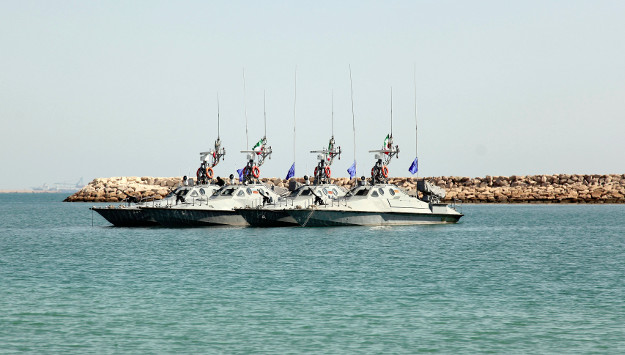
I.R.G.C. Seizes Saudi Boat, Detains Four Crew Members
The naval forces of the Islamic Revolution Guards Crops (I.R.G.C.) have seized a Saudi vessel for allegedly trespassing on Iranian territorial waters, the Iranian media reported today. Majid Agha-Babaei, the director-general of border affairs at Iran’s Interior Ministry, said I.R.G.C.
Al-Qaeda Affiliate and Ahrar al-Sham Compete for Control in Idlib
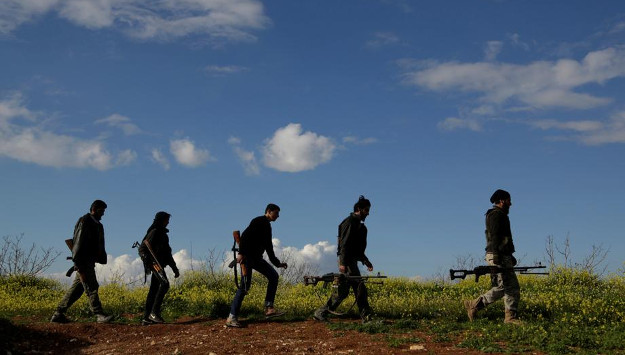
Idlib is currently the site of increasing competition between the two most dominant armed coalitions, the al-Qaeda-linked Hay’at Tahrir al-Sham (H.T.S.) and Ahrar al-Sham. The province has witnessed limited airstrikes since a de-escalation agreement, which came into effect on May 5, was brokered by Russia, Turkey, and Iran at the Astana talks. Idlib was one of four areas labeled as a de-escalation zone.
Iran Steps up Efforts to Oust U.S. Military from Middle East
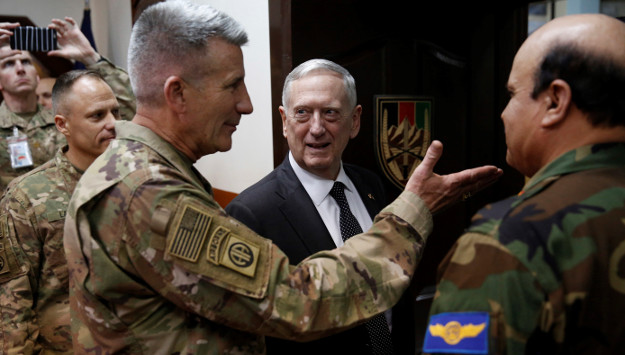
With the Islamic State collapsing in Iraq and losing ground in Syria, Iran and its regional proxies see the United States as the primary threat to their influence and ambitions and have stepped up efforts to oust the U.S. military from the region. Through diplomatic outreach – and at times veiled threats – Iranian leaders have been urging the Afghan and Iraqi governments to expel American forces from their countries. Tehran has also deepened its ties with the Taliban and has reportedly teamed up with Moscow to undermine U.S.-led stabilization efforts in war-torn Afghanistan.
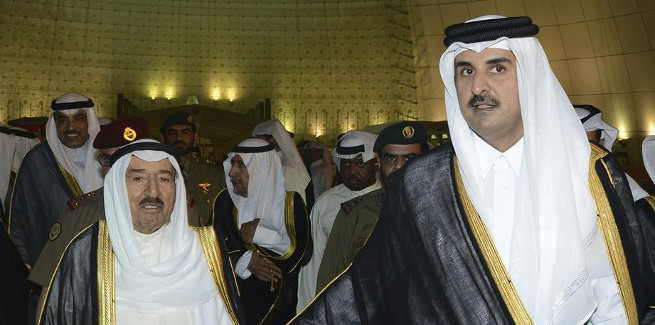
The ongoing Qatar crisis poses a major dilemma for Kuwait and Oman. Consistent with their “neutral” foreign policies, these two Arab Gulf states have maintained ties with Doha and seek to resolve the gravest internal Gulf Cooperation Council (G.C.C.) row since the organization’s establishment in 1981. Officials in Kuwait City and Muscat fear that failure to settle the Qatar crisis will break up the council, which would directly undermine vital Kuwaiti and Omani national interests given the potential for such a scenario to dramatically exacerbate regional geopolitical instability.
Israel and Hezbollah have recently raised the profile of their long quiescent front across the Blue Line border. Warnings have increased that a conflict will soon engulf Lebanon, and perhaps even draw in the United States. Hezbollah’s leader Hassan Nasrallah has threatened to attack Israel’s nuclear reactor at Dimona and Israeli chemical installations in Haifa.
Iran: Missile Strikes in Syria Carry Wider Warning to Regional States and U.S.
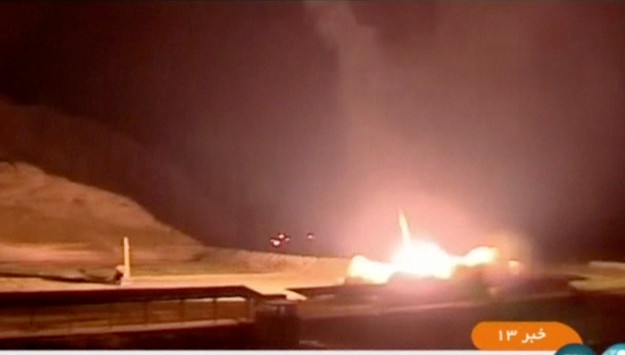
On Sunday, the Iranian military said it had launched six missiles at Islamic State positions in Syria in retaliation for the June 7 attacks in Tehran claimed by the terrorist group. A statement by the Islamic Revolution Guards Corps (I.R.G.C.) confirmed that it fired medium-range missiles from bases in the western Iranian provinces of Kermanshah and Kurdistan and killed a “large number” of Islamic State terrorists in Syria’s Deir Az Zour province.
Monday Briefing: Eastern Syria a Hotbed of Geopolitical Interests
In this week’s Monday Briefing, MEI experts Charles Lister, Alex Vatanka, Marvin G. Weinbaum, and Gerald Feierstein provide analysis on eastern Syria as a new hotbed of geopolitical competition, Iranian responses to the Islamic State attack, additional U.S. troops in Afghanistan, and renewed Saudi succession speculation.
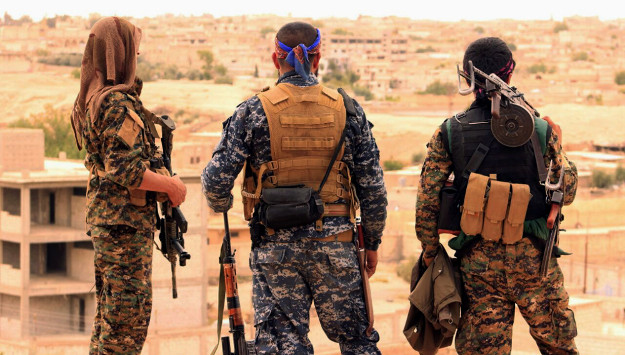
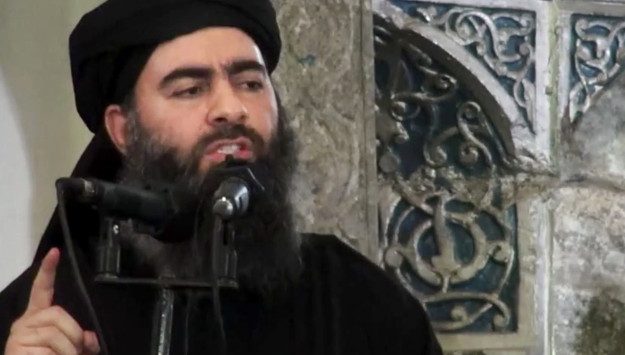
Russia’s claim to have killed ISIS leader Abu Bakr al-Baghdadi in an airstrike in Raqqa on May 28 should be taken with a heavy grain of salt. At the time in question, the U.S.-led Syrian Democratic Forces (S.D.F.) were only days away from launching their final assault on the city and there’s no logical reason imaginable why Baghdadi would have risked staying in a surrounded, sitting target. Notwithstanding justified doubts surrounding Baghdadi’s then presence in Raqqa, Russia’s statement also says its strike killed another 330 ISIS fighters – which is almost certainly an absurd claim.
Iran-Backed Forces Link Up along Syrian-Iraqi Border near al-Tanf despite U.S. Warnings
Iranian-supported Shiite militia forces in Iraq and Syria have finally linked up along the shared border between the two countries, Fars News Agency reports.
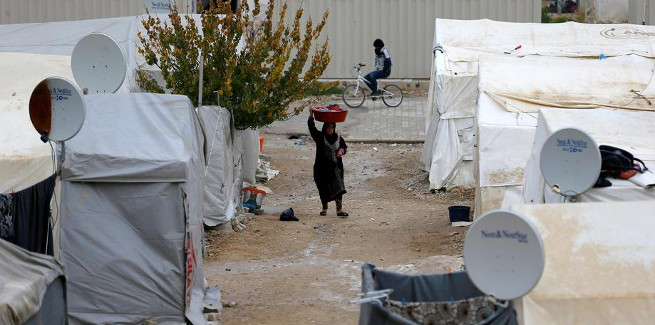
Since the outbreak of the Syrian war, Turkey has become a critical conduit for international humanitarian operations and life-saving economic support to approximately three million Syrian refugees. Turkey’s decision to restrict various international NGOs from operating within its territory is now disrupting crucial provisions to those in both northern Syria, and inside its own borders.
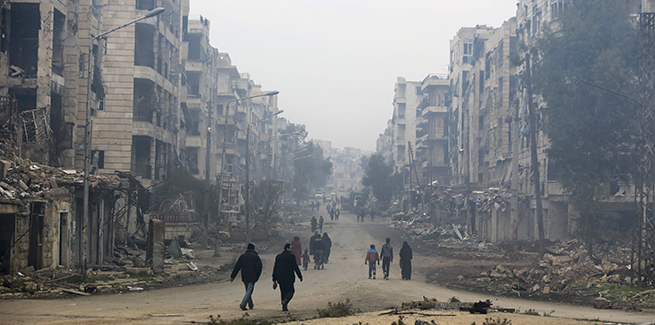
Six months after the heavily publicized defeat of Syrian rebel forces in Aleppo to the Assad government, the once magnificent metropolis and largest city of northern Syria is still reeling from the consequences of years of violent conflict. The elaborate communal, economic and material threads that for centuries had made up the social fabric underpinning the city’s wealth, as well as its physical and societal integrity, may have been irreparably damaged. Today, much of the city lies in rubble and many of its once proud inhabitants have been reduced to abject poverty.
Can the Trump Admin get its Act Together on G.C.C. Crisis? | Monday Briefing
In this week’s Monday Briefing, MEI experts Gerald Feierstein, Robert S. Ford, Alex Vatanka, and Ruba Husari provide analysis on the Trump administration’s handling of the G.C.C. crisis, how Iran and energy markets have responded to it, and the escalating conflict in eastern Syria.
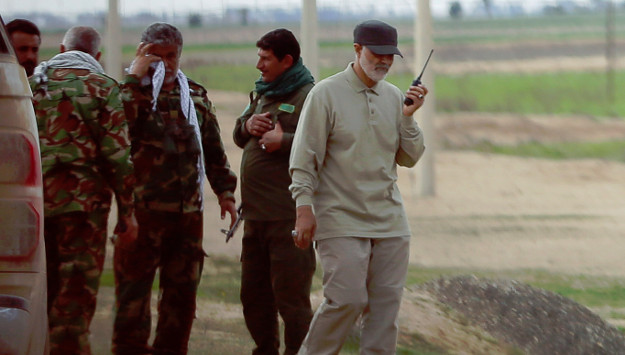
Afghan Militia Led by Soleimani Reach Syrian-Iraqi Border in Defiance of U.S.
Iranian-led Afghan Shiite militia forces have made significant territorial gains in southeastern Syria and have reached the shared border between Syria and Iraq, the Iranian media reports.
Rouhani Blasts U.S. Strikes in Syria and Reiterates Support for Assad
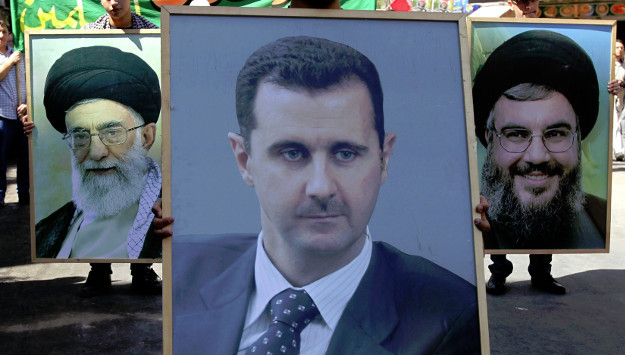
Iranian President Hassan Rouhani hailed the latest military gains by the Syrian army and its allies and reiterated Tehran’s continued support to Damascus in a telephone conversation with his Syrian counterpart Bashar al-Assad earlier today. The Iranian president also condemned the latest U.S. strikes against pro-Damascus forces in southeastern Syria as a violation of international law.