This paper is part of an MEI scholar series, titled “Obama’s Legacy in the Middle East: Passing the Baton in 2017.” Click here to view the full project, or navigate using the table of contents to the right.
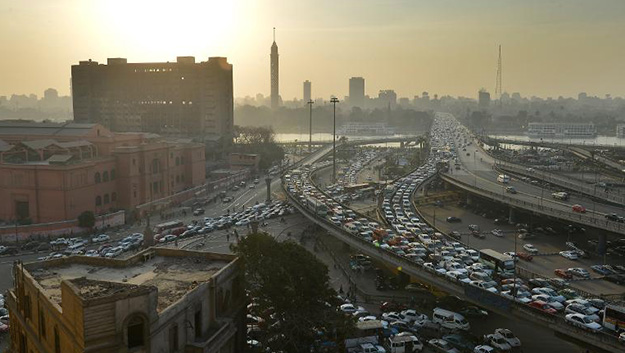
Cairo’s Ring Road, a peripheral highway linking the city’s core to surrounding districts, is an eight-lane free-for-all, with cars, buses, and overloaded trucks weaving randomly at high speeds. “I for one consider it to be an off-road, not a highway,” says Mahmoud Mostafa Kamal, editor of the online Arabic-language automotive magazine, el-Tawkeel (The Dealership).
This paper is part of an MEI scholar series, titled “Obama’s Legacy in the Middle East: Passing the Baton in 2017.” Click here to view the full project, or navigate using the table of contents to the right.
Obama’s Legacy in the Gulf: Despite Disgruntlement, U.S. Remains Indispensable
This paper is part of an MEI scholar series, titled “Obama’s Legacy in the Middle East: Passing the Baton in 2017.” Click here to view the full project, or navigate using the table of contents to the right.
Egypt’s War on Terror: ISIS, President Sisi, and the U.S.-led Coalition
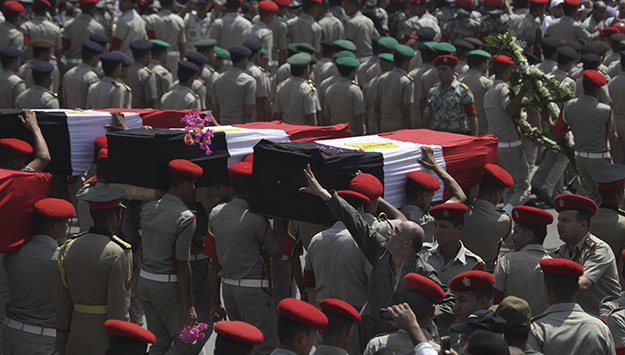
As the war against ISIS rages in Syria and Iraq, Egypt is fighting its own war on terror. On October 24, the Sinai Peninsula witnessed the deadliest attack on Egypt’s military in years. Twenty-eight soldiers were killed and another 30 injured when a car bomb exploded at the Karm al-Qawadis security checkpoint in Sheikh Zuweid in North Sinai.
Thanks to unprecedented current account surpluses, the Gulf Cooperation Council (GCC) countries are investing billions abroad and looking more toward the East. The GCC’s growing trade ties with China have been accompanied by encouraging development in investment relations. For these countries, investment projects in China promise access not only to large and rapidly growing energy markets, but also to other booming sectors.
Gulf Investment in China: Beyond the Petroleum Sector
This essay explores recent GCC investment in sectors of the Chinese economy other than the petrochemicals industry and examines the challenges confronted by Gulf investors.
The rise of China and India, coupled with major changes in the global energy market such as the US shale revolution have shifted the Gulf countries’ economic focus towards the Asian continent. East Asia has already emerged as the GCC’s most important trade partner, accounting for over 57% of its external trade.
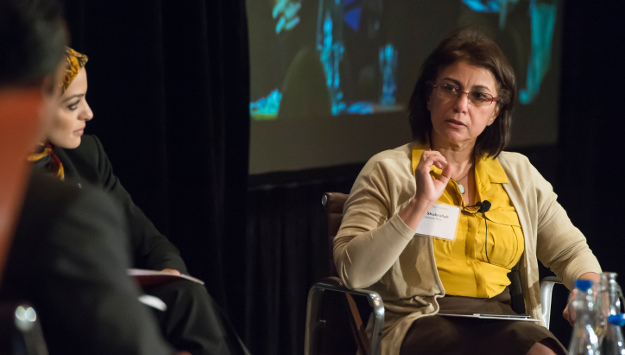
Q&A with Hala Shukrallah, President of Egypt's Al-Dostour Party
Hala Shukrallah, president of Egypt’s Al Dostour (Constitution) Party, spoke with MEI about the party’s preparations for upcoming parliamentary elections, its legislative agenda, and the challenges it will face in Parliament.See more of her comments at this year’s Egypt Conference.
Q: How has the Dostour party been preparing for the upcoming parliamentary elections?
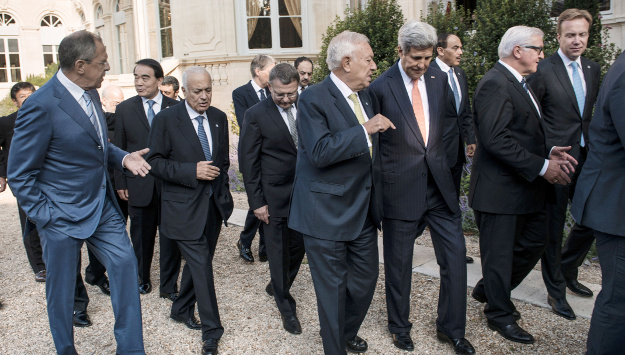
One way to grasp the immense difficulty facing President Obama as he tries to forge an effective international coalition to oppose the Islamic State is to examine the difference between this effort and the last time the United States led a diverse group of countries to take on a conflict in the Middle East: Operation Desert Storm, in 1991.
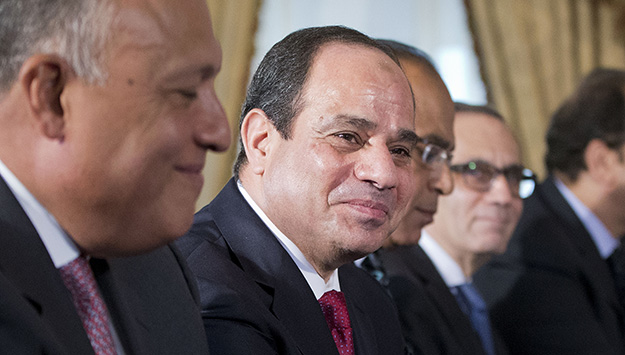
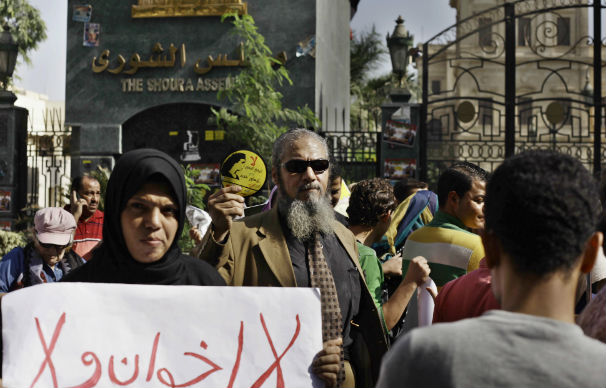
Most of Egypt’s newly created secular political parties have complained bitterly about the Parliament Election Law, which former Interim President Adly Mansour rushed to approve in his last day in office, before handing over power to newly-elected President Abdel Fattah el-Sissi.
Egyptian Economic Challenges and Policy Exigencies
In the last three years, Egypt’s economic position has deteriorated dramatically. Domestic and external deficits have increased, causing public debt to grow sharply, external reserves to fall, investment to shrink, and inflation to increase. In the process, growth decelerated, unemployment rose, income distribution worsened, and the medium term economic outlook became clouded.
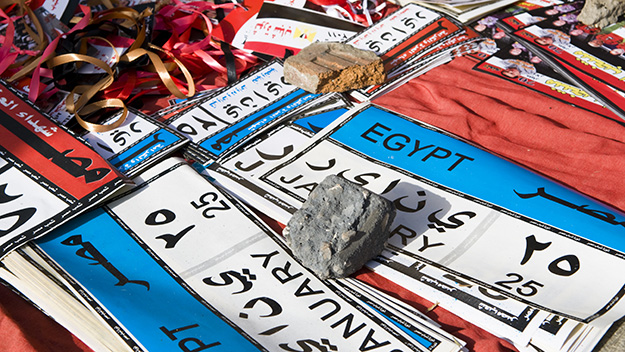
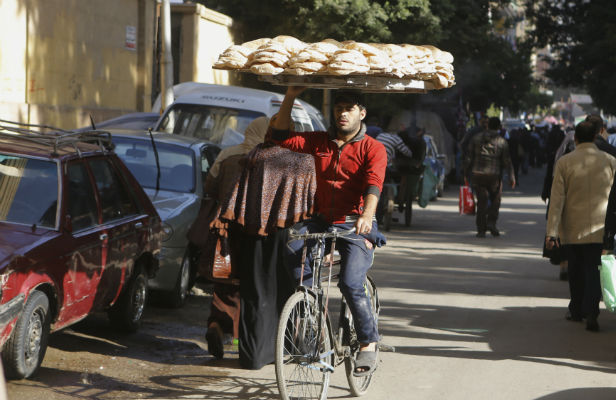
Although power cuts are hardly new in Egypt, no Egyptian government has tackled the problem seriously and transparently. After the January 25, 2011 uprising, Egyptians had less patience with the failures of state services and demanded change.
Egypt’s Muslim Brotherhood: Politically Down and Out?
On August 9, 2014, the Muslim Brotherhood in Egypt began another chapter in its besieged political life. The highest administrative court in Egypt, the Supreme Administrative Court, dissolved the Freedom and Justice Party (FJP), the political arm of the Muslim Brotherhood. The Court also liquidated all of the FJP’s assets in an effort to quash any further political ambitions and activities that the Brotherhood might have in Egypt. The ruling—a calculated move conducted prior to upcoming parliamentary elections, scheduled for later this year—was an attempt