Monday Briefing: The Israeli ship is drifting, ever more dangerously, in uncharted waters
Read MEI’s weekly briefing featuring expert analysis of key regional developments for the week ahead.
Expert regional analysis by MEI scholars and contributors.
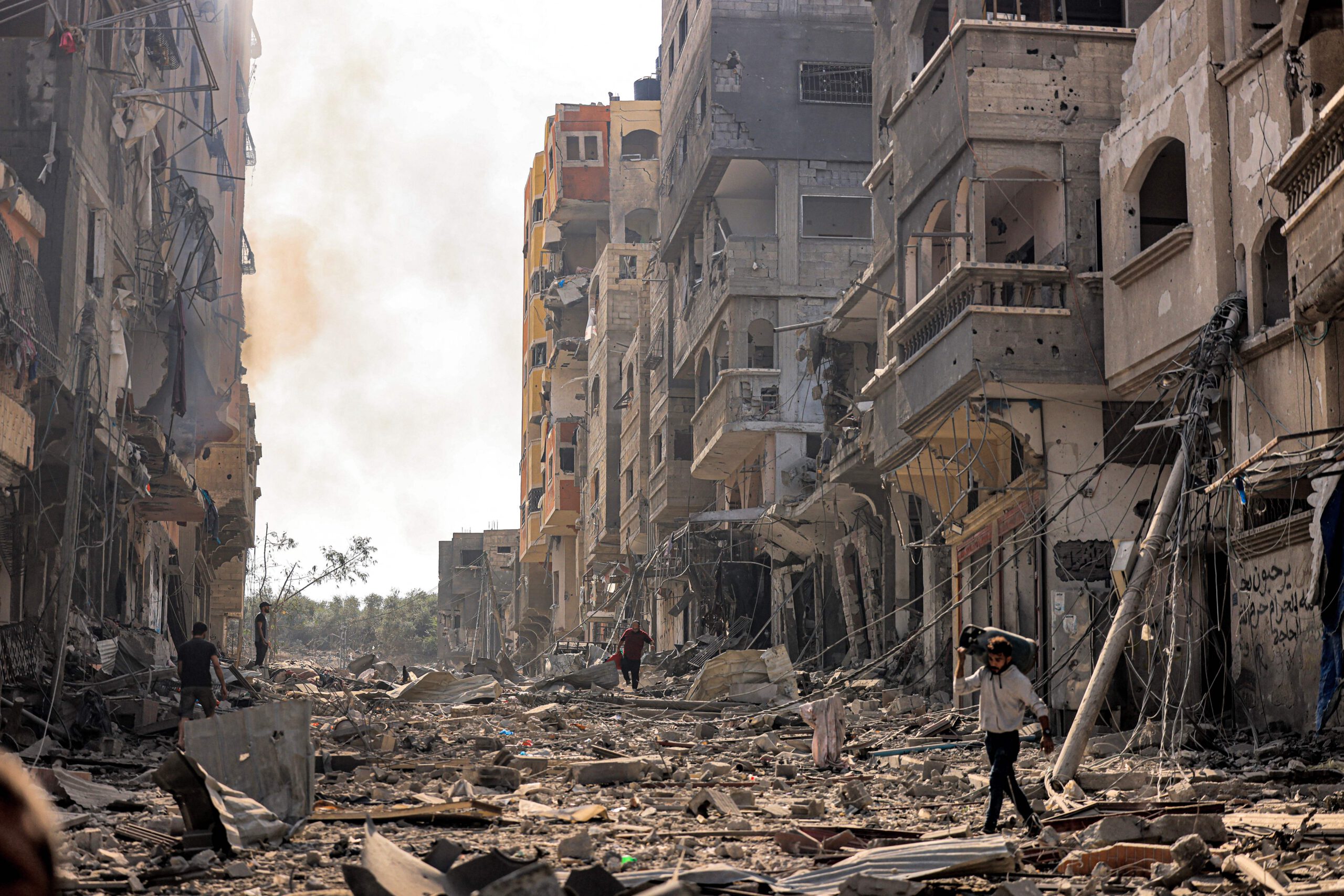
As the ongoing attempts to revive a ceasefire and hostage deal between Israel and Hamas are showing minimal signs of success, Israel is moving forward with its plan for an operation in Rafah, the most southern city in Gaza that borders Egypt. On May 6, the Israeli military issued an evacuation order for more than 200,000 Gazans in the southern-west part of the Gaza Strip.
Read MEI’s weekly briefing featuring expert analysis of key regional developments for the week ahead.
Anti-migration policies in Libya, Tunisia, and Niger have had dire consequences, as highlighted by the more than 25,000 migrant deaths in the Mediterranean since 2014, a figure that does not fully capture the extent of the tragedy. To address these failures will require substantial policy changes and an evolution in approach to the migration issue.
Read MEI’s weekly briefing featuring expert analysis of key regional developments for the week ahead.
Israeli leaders insist that the extreme destruction in the Gaza Strip is unavoidable given Hamas’ use of “human shields” and the fact that the militant group has embedded itself among the civilian population and routinely operates from civilian structures like hospitals and schools. But far from explaining the current devastation, the questionable “human shields” charge has become a way to shield Israel from legitimate scrutiny and accountability.
Read MEI’s weekly briefing featuring expert analysis of key regional developments for the week ahead.
For the last few months, people around the world have been closely following the ongoing brutality of the war in Gaza. Pictures of Palestinians fleeing south and looking for relatives under the rubble, videos of children searching for food and water — these and more have been circulating on social media and news networks every day since October 7.
As the war in Gaza approaches its seventh month, the settler movement has been raging its own separate war against none other than the Israeli military itself. While Israeli society is still healing from the devastation of Oct. 7 and tens of thousands of Israelis are displaced from their homes near the Gaza Strip and the northern border, the settlers have launched campaigns against the Head of the Central Command, advocated for resettling Gaza, and escalated tensions with the Israeli military.
Six months since the October 7 Hamas attacks on Israel and subsequent outbreak of war in Gaza, the deadly and devastating conflict looks no closer to concluding. Is it still possible to achieve a sustainable cessation of hostilities and restart the conflict-resolution process? To get there, what are the incentives and disincentives that could be constructed for the two main combatants, Israel and Hamas?
The Second War for Palestine has continued longer than any Israel-Palestinian conflict since Israel’s establishment. Neither Gamal Abdel Nasser’s army nor Hafez al-Assad’s tanks fought as long as the Izzedine al-Qassam Brigades still battling in Gaza.
The Gaza Strip faces a severe and worsening water crisis. With the death toll now above 31,000 and a catastrophic humanitarian crisis plaguing the strip, one of the most urgent challenges facing its residents is access to water.
The scale of rebuilding needed after the Gaza war, in addition to the difficult political questions involved, will require close international coordination as well as innovative, future-informed thinking.