Skip to Content

Research & Commentary Results

Filter by
1406 Results
Will protests in Iran lead to negotiations with the US?
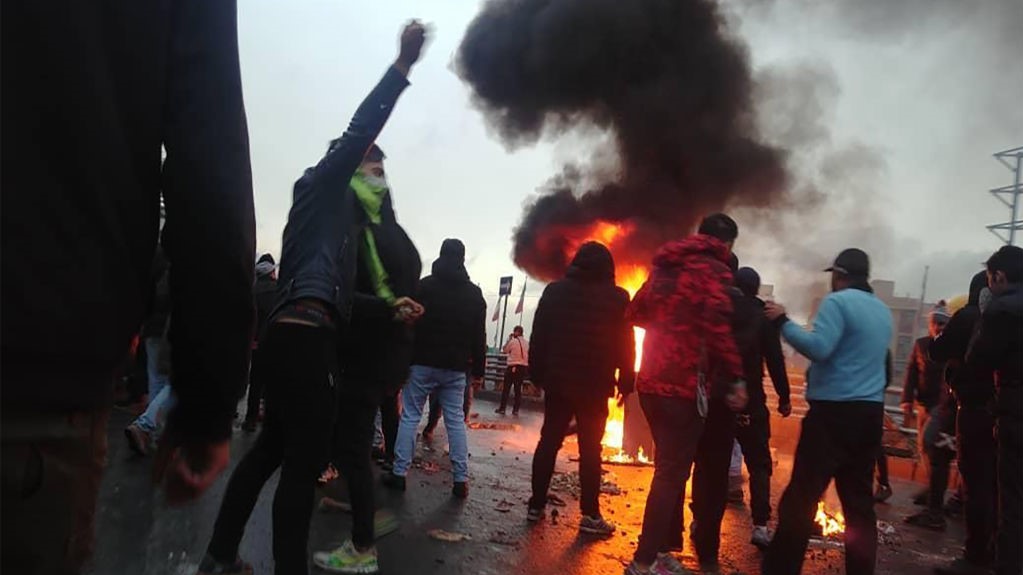
Iranian protesters gather around a fire during a demonstration against an increase in gasoline prices in the capital Tehran, on November 16, 2019. - One person was killed and others injured in protests across Iran, hours after a surprise decision to increase petrol prices by 50 percent for the first 60 litres and 300 percent for anything above that each month, and impose rationing. Authorities said the move was aimed at helping needy citizens, and expected to generate 300 trillion rials ($2.55 billion) per
  • Analysis
  • Will protests in Iran lead to negotiations with the US?

    The protests that began in Iran in mid-November may well have a direct impact on Tehran’s relations with Washington. Initially sparked by the Iranian government’s sudden decision to raise fuel prices, the demonstrations have made clear the country’s fragile socio-economic and political situation.

    Gen. Votel on US Policy in Afghanistan
    Middle East Institute
  • Video
  • Gen. Votel on US Policy in Afghanistan

    Gen. (Ret.) Joseph Votel discusses the role of Afghanistan in US regional strategic interests, whether a peace deal is possible with the Taliban, and how important Pakistan is to achieving a sustainable political settlement.

    December 3, 2019

    The Caucasus and the Middle East
    Georgian soldiers run during a farewell ceremony before their departure to Afghanistan in Tbilisi, June 27, 2013.
  • Analysis
  • The Caucasus and the Middle East

    For years, politics and conflicts in the Middle East have spilled over into many other regions of the world. Refugee crises, terrorism, and political instability in the Middle East have impacted foreign and domestic policy and politics in North America and Europe, but the Caucasus is much closer and, therefore, a particularly important case for policymakers in Washington and Brussels.

    December 2, 2019

    Turkey’s collision course with NATO
    President of Turkey, Recep Tayyip Erdogan (R) receives North Atlantic Treaty Organization (NATO) Secretary General, Jens Stoltenberg (L) in Istanbul, Turkey on October 11, 2019.
  • Commentary
  • Turkey’s collision course with NATO

    NATO leaders will celebrate the 70th anniversary of their alliance in London on Dec. 3 and 4. Despite soft words from NATO Secretary-General Jens Stoltenberg, however, the alliance and Turkey are on a collision course.

    US-Taliban talks are back on but little has changed
    US President Donald Trump holds a bilateral meeting with Afghan's President Ashraf Ghani at Bagram Air Field during a surprise Thanksgiving day visit, on November 28, 2019 in Afghanistan.
  • Commentary
  • US-Taliban talks are back on but little has changed

    President Donald Trump’s lightning fast roundtrip to Bagram airbase north of Kabul had its share of surprises. In addressing troops, he confirmed previous reports that talks are once again underway with the Taliban, but then went on to inject a ceasefire as a condition for a new agreement.

    Déjà vu all over again: The three “I”s of gasoline subsidies and social unrest in Iran
    An Iranian man checks a scorched gas station that was set ablaze by protesters during a demonstration against a rise in gasoline prices in Eslamshahr, near the Iranian capital of Tehran, on November 17, 2019.
  • Analysis
  • Déjà vu all over again: The three “I”s of gasoline subsidies and social unrest in Iran

    Adding to the backdrop of economic mismanagement, corruption, and increasing rates of poverty and inequality, the recent gasoline rationing and price hikes have ignited widespread and violent protests inside Iran. Despite recent changes, the country’s energy subsidy regime remains highly inequitable, ineffective, and inefficient.

    November 25, 2019

    A prisoner swap with the Taliban, but will it lead to anything?
    Security stands guard at the Ghani headquarters on September 29, 2019 in Kabul, Afghanistan.
  • Commentary
  • A prisoner swap with the Taliban, but will it lead to anything?

    Last week saw the Taliban’s release of two kidnapped professors in exchange for the Kabul government’s freeing of three prized Taliban prisoners. While the swap may have been necessary on humanitarian grounds, it was unfortunate otherwise. Rather than defending the swap on its own merits, Kabul and Washington are hailing the exchange as a possible breakthrough following the collapse of the Doha agreement and the stalling of planned intra-Afghan discussions.

    Leveraging the Current Uprising for Sustained Political Change
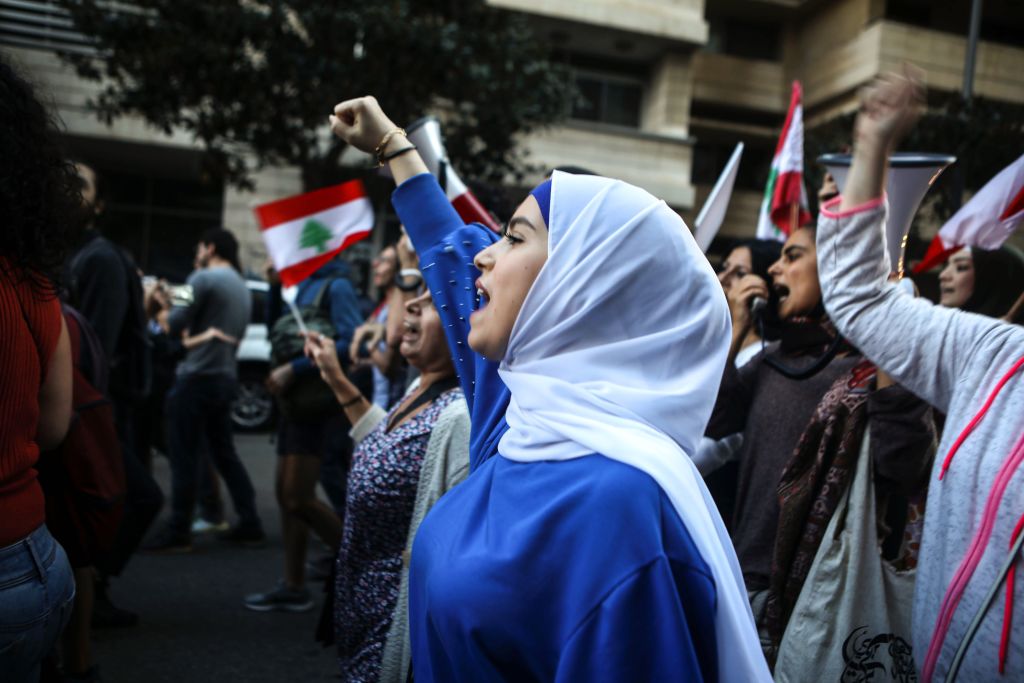
    Lebanese demonstrators raise a new giant sign of a fist that bears the Arabic word
  • Analysis
  • Leveraging the Current Uprising for Sustained Political Change

    The nationwide protests are the most significant domestic political development in Lebanon since the end of the civil war. It would be useful to examine both the short and long term political potential of this new awakening.

    In the short term, the protests have already mobilized the power of the public to bring down a corrupt and ineffective government, and to gain great leverage on the rejection or acceptance of any new government. They have also raised urgent national demands and forced the ruling class to confront these demands. 

    November 22, 2019

    Lebanon’s leap into the unknown
    Anti-government activists take part in a protest in downtown Beirut, demonstrations across Lebanon entered its 2nd months.
  • Analysis
  • Lebanon’s leap into the unknown

    On a recent trip to my native Lebanon I looked on its ongoing, unprecedented protests with both wonder and worry. The country is a month into widespread anti-government demonstrations. The protests’ scale ebbs and flows but the relative calm during my stay had a fleeting if not sinister quality to it. That calm is unraveling. However this chapter of Lebanon’s history unfolds, this complicated country has changed irreversibly.

    November 21, 2019

    Return to the northeast: Syrian Army deployments against Turkish forces
    Syrian government soldiers climb up a wooden pole with a Syrian government national flag while deploying for the first time in the eastern countryside of the city of Qamishli in the northeastern Hasakah province on November 5, 2019.
  • Analysis
  • Return to the northeast: Syrian Army deployments against Turkish forces

    In mid-October, five years after it was expelled from most of eastern Syria as ISIS swept in, the Syrian Arab Army (SAA) returned to much of the northeast as part of a deal between the Syrian Democratic Forces and Damascus struck just days after Turkey launched an offensive against the region. By examining the distribution and make-up of units sent to the northeast we can better understand the strength of the SAA in the region and the current state of its broader deployments across the country.

    November 20, 2019

    Why Doha should worry: The case for an Iran-Qatar non-aggression pact
    Westbay as seen from the corniche on 20 October 2018 after heavy rainfall, Doha, Qatar.
  • Analysis
  • Why Doha should worry: The case for an Iran-Qatar non-aggression pact

    Fears of a large-scale war in the Middle East remain heightened as the U.S. continues ratcheting up sanctions against Iran while Tehran takes measures to scale back its restrictive commitments under the Joint Comprehensive Plan of Action (JCPOA). The latest sign of Iranian retaliation against the U.S. withdrawal from the 2015 nuclear accord was its decision, confirmed by the International Atomic Energy Agency (IAEA) on Nov. 11, to begin refining uranium at its Fordow underground enrichment facility.

    November 20, 2019

    Setting the Middle Corridor on track
    China Railway Express crosses Istanbul's sub-sea tunnel, Marmaray (the railway system linking the eastern and western sides of Istanbul from under the Marmara Sea) in Istanbul, Turkey on November 7, 2019. The first freight train from China crossed to Europe using Marmaray.
  • Analysis
  • Setting the Middle Corridor on track

    China’s Belt and Road Initiative (BRI) has been a powerful driver of the development of existing and new Eurasian rail routes. A web of competing and complementary rail lines has begun to form across the Eurasian landmass. Railway cargo service between China and Europe has fast become a compelling “middle option” — cheaper than air and faster than sea.

    Tearing down the walls of vested interests in the Middle East and North Africa
    The sun sets behind the urban skyline as port cranes and shipping containers sit in an industrial transport area in Beirut, Lebanon, on 11 October 2019.
  • Analysis
  • Tearing down the walls of vested interests in the Middle East and North Africa

    The MENA region needs bolder and deeper economic reforms. GDP growth is projected to be 0.6 percent in the region in 2019, a fraction of what is needed to create enough jobs for its fast-growing working-age population. Even in the few countries that have had periods of higher growth since the 2011 Arab Spring, poverty rates have failed to drop, suggesting the need for reforms to instill fair competition and promote more inclusive patterns of growth.

    November 18, 2019

    Iran protests take aim at the regime
    Iranian protesters gather around a burning motorcycle during a demonstration against an increase in gasoline prices in the central city of Isfahan, on November 16, 2019.
  • Commentary
  • Iran protests take aim at the regime

    On the surface the latest protests in Iran appear to be not that different from the previous ones in late 2017 and early 2018. In reality, however, things are quite different this time around, and the Iranian authorities are deeply alarmed.