After the Summit: Assessing Iraq's Relations with its Arab Neighbors
MEI Podcast, 12 July, 2012After the Summit: Assessing Iraq’s Relations with its Arab NeighborsJohn Desrocher, Gregory Gause, Ken Pollack, Amb. Samir Sumaida’ie, Phebe Marr
Saudi Professor Faces Charges After Fighting for Free Speech
This Opinion was first published on Al-Monitor.com on June 28, 2012
What are the limits of free speech and open dissent in the Kingdom of Saudi Arabia? They are often unclear and seemingly arbitrary, but there is no doubt that Dr. Mohammad al-Qahtani, a professor and activist, went well beyond them, and he knew it. He was hardly surprised when Saudi prosecutors, finally fed up with his vociferous denunciations of the regime, hit him with a long list of criminal charges. He had predicted it, and in the context of Saudi Arabia, he was asking for it.
Saudi Arabia Moves Closer to A New Generation of Leaders
This Opinion first appeared in Al-Monitor on June 16, 2012
The death Saturday (June 16) of Saudi Crown Prince Nayef bin Abdul Aziz is likely to have little short-term impact on the economic or political life of the kingdom or on its international relations. But it does accelerate the inevitable transition to a new generation of rulers who may have very different ideas about how the al-Saud should rule their people, deal with their neighbors and manage the critical relationship with the United States.
Turkey’s popular and outspoken Prime Minister, Recep Tayyip Erdogan, was treated to a hero’s welcome last week when he met with Syrian refugees for the first time since Turkey opened its doors to the thousands of people fleeing Bashar Al-Assad’s crackdown. Erdogan’s pledge to defend the rights of the Syrian people and his call for Assad’s removal, however, fell short of expectations. Although Erdogan’s speech drew some applause, it was also interrupted by shouts of “We want arms for the Free Syrian Army and a buffer zone inside Syria!” The Turkish PM’s reiteration of his previous positi
The Middle East Institute is pleased to host poet, writer and activist Nimah Nawwab for a conversation about Saudi women in an era of unprecedented change in the Middle East. Despite the many advances of the Arab Spring, the region continues to face mounting social, political, and economic challenges. In Nawwab's native Saudi Arabia, these challenges form the basis for her art and activism.
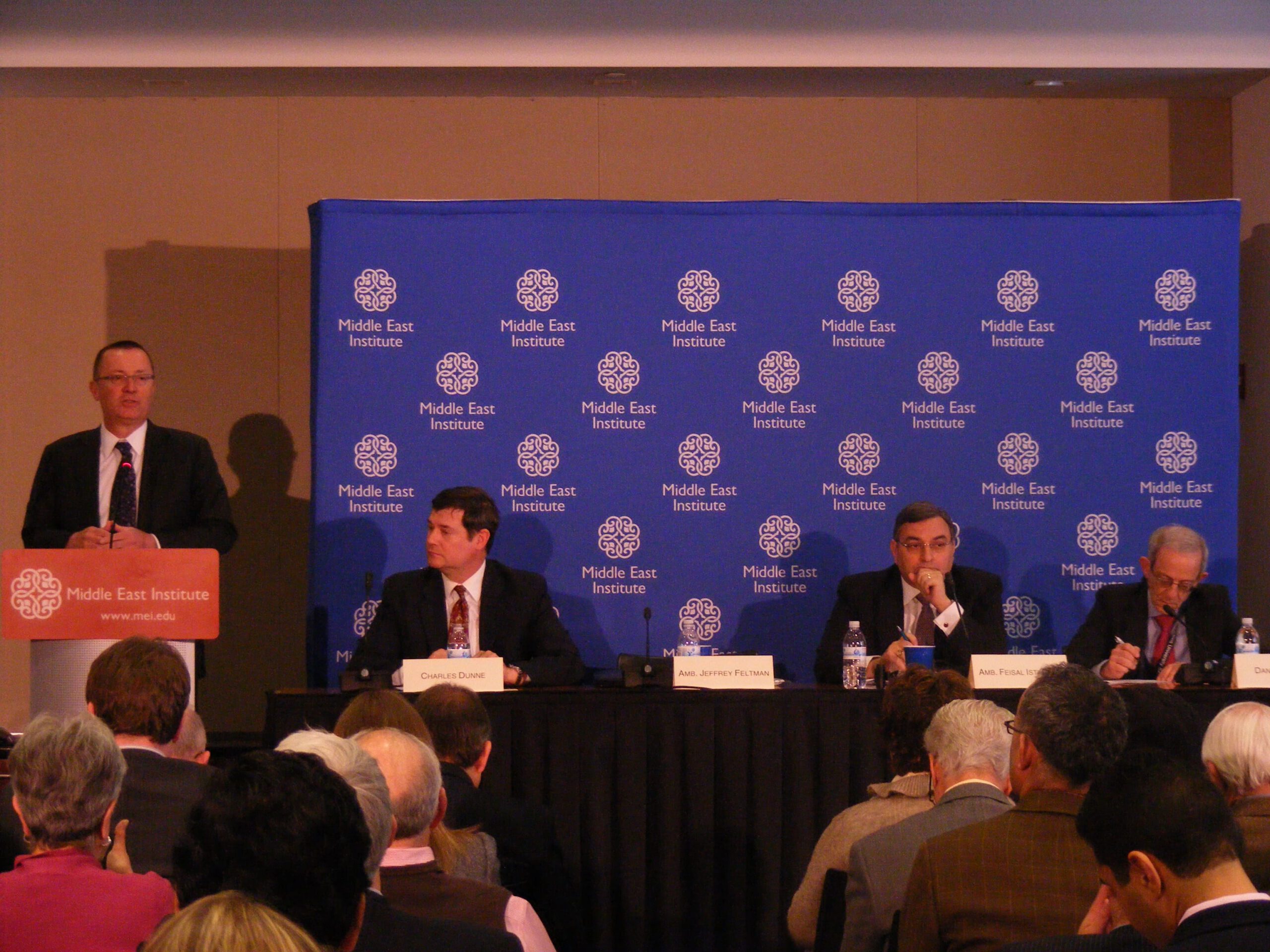
Panelists will explore both the challenges and opportunities presented by the transition of the U.S.-Iraqi partnership from a mainly military to a diplomatic one. What sort of working relationship is emerging between the U.S. and Iraqi governments? What kind of cooperation is taking place in the areas of domestic and regional security, diplomacy, trade, energy, and reform? How has the troop drawdown affected U.S. influence in Iraq and the region in general? Feltman, Istrabadi and Serwer will explore strategies and policies resulting from the new bilateral dynamics.
Introduction to Public Health in the Middle East: Building a Healthy Future
Originally posted September, 2011
The flow of ideas, people, and commerce across national boundaries has been occurring with breathtaking rapidity in the broader Middle East, as elsewhere. These increasingly dense exchanges have generated new threats and vulnerabilities that have tended to impact women, children, and the poorest members of society disproportionately. They also have given people more resources and opportunities with which to shape their lives and their futures.