Skip to Content

Research & Commentary Results

Filter by
1599 Results
Why Should Iran Accept U.S. Presence in Afghanistan?
Middle East Institute
  • Analysis
  • Why Should Iran Accept U.S. Presence in Afghanistan?

    Read the full article on Al-Monitor. 

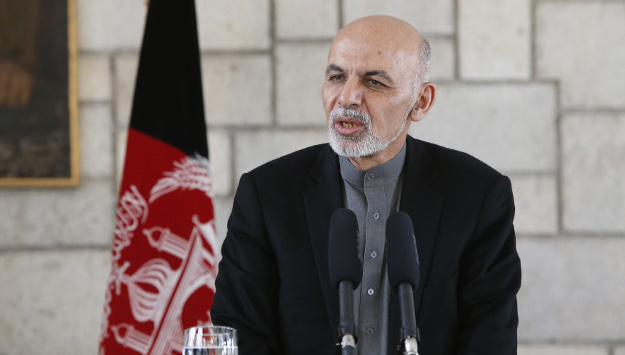
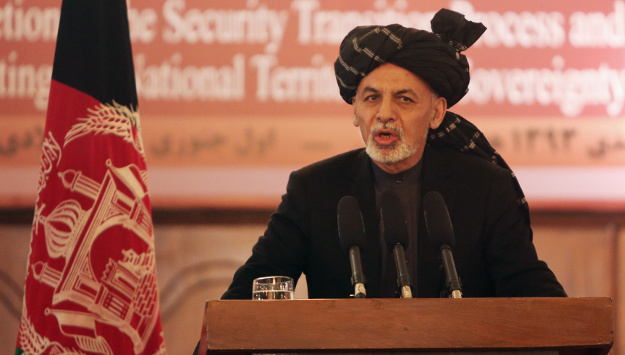
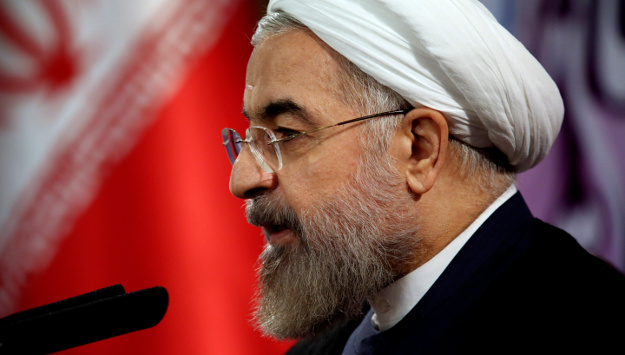
    At first glance, Iran appears to be unconvinced about Afghanistan’s new President Ashraf Ghani, and the feeling is probably mutual. Ghani chose Saudi Arabia, China and then Pakistan as the first countries to visit as president, and has yet to visit Tehran. 

    Egypt and Israel: Sinai Heat Thaws the Cold Peace
  • Analysis
  • Egypt and Israel: Sinai Heat Thaws the Cold Peace

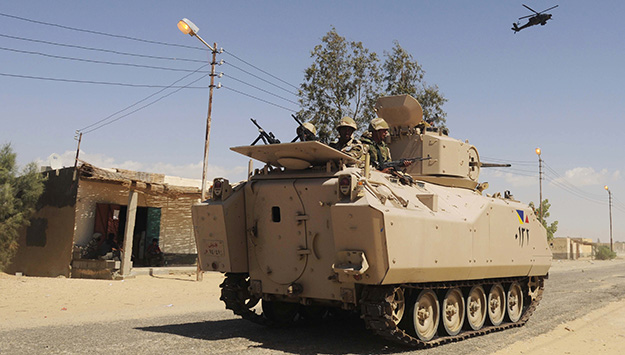
    Egyptian President Abdul-Fattah el-Sisi is no Zionist, as senior Israeli interlocutors like to point out, but his vision of state sovereignty and Egyptian national security often closely aligns with the interests of Israel. When Sinai’s Ansar Beit al-Maqdis, Egypt’s most lethal jihadi group, recently pledged allegiance to the Islamic State in Syria and Iraq, perhaps the most interesting response was the non-response by the governments of Egypt and Israel. From the view of both, the origins and ideologies of Islamist groups are all the same.

    December 16, 2014

    Report: Sunni Deobandi-Shi'i Sectarian Violence in Pakistan
  • Analysis
  • Report: Sunni Deobandi-Shi'i Sectarian Violence in Pakistan

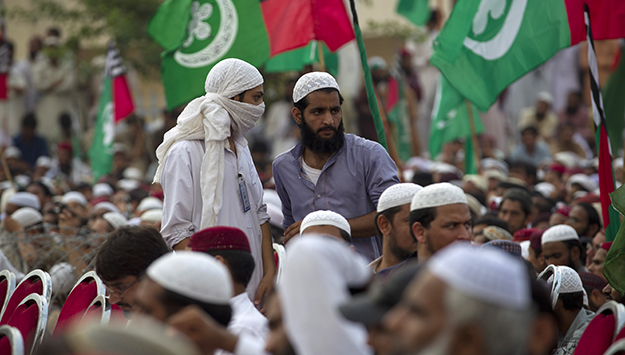
    In both general and more informed discussions in Pakistan and beyond, sectarian violence in Pakistan between Sunni and Shi‘i groups is almost without exception referred to simply as Sunni-Shi‘i violence. But such a characterization is a misnomer. Two of Pakistan’s three major Sunni subsects, the Ahl-e-Hadis, and to a lesser extent, the Barelvis, may have antipathy toward the Shi‘a, but rarely express such sentiments through violent activity.

    December 11, 2014

    Early Elections in Israel: A Reality Check
  • Analysis
  • Early Elections in Israel: A Reality Check

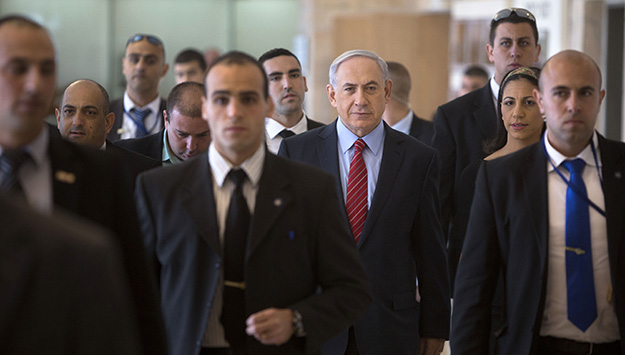
    There’s an expression in Israel along the lines of “people are scrupulously honest with pollsters, then they get into the voting booth and lie like hell.” It is important to bear this chestnut in mind as one scans survey returns regarding prospects for the major parties in the upcoming elections.
    December 5, 2014

    The Israeli-Palestinian Conflict and Obama’s Legacy
  • Analysis
  • The Israeli-Palestinian Conflict and Obama’s Legacy

    This paper is part of an MEI scholar series, titled “Obama’s Legacy in the Middle East: Passing the Baton in 2017.” Click here to view the full project, or navigate using the table of contents to the right.

    The Israeli-Palestinian conflict has gone through a number of different phases in its long history. It is possible—though only time will tell—that a new phase is beginning now, but not a particularly hopeful one.[1]

    November 14, 2014

    Soft Islam: Indonesia’s Interfaith Mission for Peace in the Middle East
  • Analysis
  • Soft Islam: Indonesia’s Interfaith Mission for Peace in the Middle East

    Historians and anthropologists have focused on Muslim networks of scholars, merchants, and pilgrims that connect the Middle East with Southeast Asia. Especially with respect to the study of Islam in Indonesia, where political scientists and anthropologists approach Islam largely in terms of national politics and local cultures, this burgeoning body of literature on global Muslim networks offers both ethnographic insights into actual practices and an historical appreciation for the longue durée. The importance of this scholarship notwithstanding, much of this work focuses on formal networks of migration, trade, learning, and pilgrimage. In this respect, the cultural and political work of Islam has been largely confined to the study of either Muslim scholars or lay Muslims who participate in trade, travel, study, and migration. Here I shift the focus to a religious diplomacy tour that connected Muslims with states, citizen-believers, and global politics.

    November 12, 2014

    Obama's Legacy in Afghanistan
  • Analysis
  • Obama's Legacy in Afghanistan

    This paper is part of an MEI scholar series, titled “Obama’s Legacy in the Middle East: Passing the Baton in 2017.” Click here to view the full project, or navigate using the table of contents to the right.

    Iran-Pakistan: Will Border Tensions Boil Over?
  • Analysis
  • Iran-Pakistan: Will Border Tensions Boil Over?

    This article was first published on BBC News.

    There have been a number of rounds of border skirmishes between Iran and Pakistan since the first week of October. However, reports that Pakistani forces have returned mortar fire is highly unusual and represents an increase in tensions that have marred this region for years.

    Gaza’s Economic Revival to be Addressed at Cairo Conference
  • Analysis
  • Gaza’s Economic Revival to be Addressed at Cairo Conference

    This summer’s war between Israel and Hamas, like the previous rounds — Operation Cast Lead in 2008-2009 and Operation Pillar of Cloud in 2012 — exacted a terrible cost not only in human lives (more than 2,100 Palestinians and 73 Israelis[1]) but also in the wholesale destruction of Gaza’s infrastructure.  The Palestinian Authority estimates reconstruction and rehabilitation costs of the recent conflict to exceed $4 billion, more than two times Gaza’s GNP.[2]

    October 10, 2014

    The Afghan Unity Government: A Victory for Democracy
  • Analysis
  • The Afghan Unity Government: A Victory for Democracy

    Afghanistan is often thought of as a place where some of the world’s most dangerous Islamists have taken refuge, been nurtured, and been allowed to launch regional and global jihad. Yet, with the agreement to form a unity government, the nation has provided an answer to extremism. Admittedly, the presidential election results were so riddled with fraud that it is probably impossible to determine who actually won. But it may nevertheless result in a victory for democracy. Seven million people risked their lives to vote.

    Israel: The Future is Asia
    Middle East Institute
  • Analysis
  • Israel: The Future is Asia

    The forces of globalization have not erased national boundaries. Nor have they shortened the physical distances between countries. Tel Aviv and Tokyo still lie more than 9,000 kilometers apart. The direct flight time between Ben Gurion Airport and Beijing Capital Airport remains just over nine hours.

    September 22, 2014

    Israel and Indonesia: Window of Opportunity?
    Middle East Institute
  • Analysis
  • Israel and Indonesia: Window of Opportunity?

    Israel and Indonesia are two nations whose relations―due to political circumstances―have yet to fulfill their enormous potential. Were there to be progress in peace negotiations between Israelis and Palestinians, a window of opportunity could open for Indonesia’s new president to take practical steps that would begin to unlock this potential.

    September 21, 2014

    Pakistan's Political Turmoil: Interview with Dr. Marvin Weinbaum
  • Analysis
  • Pakistan's Political Turmoil: Interview with Dr. Marvin Weinbaum

    The crisis in Pakistan is coming to a head. Of course it’s been building since the 15th of August, but now we’re faced with a situation in which this government is either going to survive or, very likely, were going to see a military takeover.

    The big question is where does the military stand, because everybody realizes that ultimately the outcome will depend on what the military is willing to accept or, indeed, what the military wants.