Skip to Content

Research & Commentary Results

Filter by
1767 Results
After ISIS, Fatemiyoun Vows to Fight with “Axis of Resistance” to Destroy Israel
Middle East Institute
  • Analysis
  • After ISIS, Fatemiyoun Vows to Fight with “Axis of Resistance” to Destroy Israel

    With ISIS militarily defeated in Syria and Iraq, the Fatemiyoun Division, an all-Afghan Afghan Shiite militia group fighting in Syria, says its fighters will join the Lebanese Hezbollah and Iranian-sponsored Iraqi militia groups to fight Israel next.

    November 22, 2017

    France and Egypt Try to Moderate Saudi-Iran Escalation | Monday Briefing
  • Analysis
  • France and Egypt Try to Moderate Saudi-Iran Escalation | Monday Briefing

    In this week’s Monday Briefing, MEI experts Paul Salem, Alex Vatanka, Randa Slim, Marvin G. Weinbaum, and Eran Etzion provide analysis on recent and upcoming events including the Arab League meeting in Cairo to moderate the Saudi-Iran escalation, Iran’s view of the Sochi Summit as a turning point, Putin’s effort to reach an agreement on Syria before presidential elections, Afghanistan’s response to the increase of US troops on their ground, and the political upheaval in Israel as Netanyahu’s corruption case continues.

    Yemen’s War Reshapes Arab Gulf Armies
  • Analysis
  • Yemen’s War Reshapes Arab Gulf Armies

    The war in Yemen is reshaping the armed forces of Arab Gulf states. It is the first time that Emirati and Saudi elite units are leading a war effort in their bid to counter Yemeni Houthi rebels and forces loyal to former President Ali Abdullah Saleh, as well as a counterterrorism campaign against jihadi groups, mainly Al-Qaeda in the Arabian Peninsula (AQAP).

    November 15, 2017

    The Saudi-Lebanon Crisis Is Largely About Yemen
  • Analysis
  • The Saudi-Lebanon Crisis Is Largely About Yemen

    November 13, 2017 – The crisis between Saudi Arabia and Lebanon and the resignation of Prime Minister Saad Hariri appears to be largely about Yemen, says Paul Salem, Sr. Vice President for Policy Analysis, Research, and Programs at the Middle East Institute.

    November 13, 2017

    The Lebanon Crisis Pivots on Hezbollah’s Presence in Yemen | Monday Briefing
  • Analysis
  • The Lebanon Crisis Pivots on Hezbollah’s Presence in Yemen | Monday Briefing

    In this week’s Monday Briefing, contributors Paul Salem, Eran Etzion, Alex Vatanka, and Bilal Saab provide analysis on recent and upcoming events including the rising tension between Saudi Arabia and Lebanon over Hezbollah’s presence in Yemen, rumors that an Israeli attack on Lebanon is imminent, the Saudis’ latest attempt to round up collective action against Iran, and the new phase in the Saudi-Iran proxy war following the recent explosion of a pipeline in Bahrain.

    Hariri’s Resignation and the Saudi Corruption Crackdown
    Middle East Institute
  • Podcast
  • Hariri’s Resignation and the Saudi Corruption Crackdown

    Last weekend’s arrests of prominent Saudi government officials and leading businessmen on charges of corruption has sent shockwaves through Saudi society as well as global center of finance and commerce. The developments also impacted Lebanon, with Prime Minister Saad Hariri announcing his resignation from the Saudi capital of Riyadh. MEI experts Gerald Feierstein, Jean-Francois Seznec, and Randa Slim join Paul Salem to discuss these developments.

    November 9, 2017

    The End of Saudi-Style Stability
  • Analysis
  • The End of Saudi-Style Stability

    Read the full op-ed on The New York Times.

    For decades, Saudi Arabia was a stable and reliable economic and strategic partner of the United States. That country no longer exists.

    November 9, 2017

    Barzani Stands Down as K.R.G. President | Monday Briefing
  • Analysis
  • Barzani Stands Down as K.R.G. President | Monday Briefing

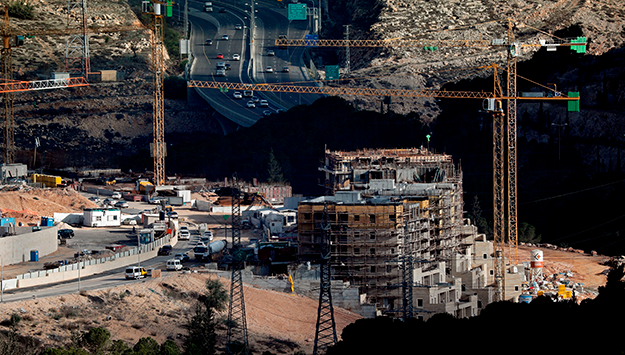
    In this week’s Monday Briefing, MEI experts Randa Slim, Yousef Munayyer, Charles Lister, Charles Schmitz, and Alex Vatanka provide analysis on recent and upcoming events including President Barzani’s decision to step down from the KRG, the Trump administation’s silent response to Israeli settlement expansion in Jerusalem , the Armed Syrian Opposition’s attendance of the seventh round of Astana Talks, Saudi foreign minister blaming Iran for lack of progress in peace talks in Yemen, and President Rouhani’s failure to advance the reform cause in Iran.

    October 30, 2017

    Yemen’s Humanitarian Disaster: Halting the Famine Threat
  • Analysis
  • Yemen’s Humanitarian Disaster: Halting the Famine Threat

    Summary

    Only several months after the Saudi-led military coalition waged its ongoing campaign against the Iranian-backed Houthi rebels in March 2015, the United Nations began issuing warnings about famine. Today, millions of Yemenis are on the brink of famine, with about half a million suffering from a cholera outbreak. This paper analyzes the causes of Yemen’s humanitarian catastrophe and offers the Trump administration recommendations for helping the impoverished Arab state avoid a famine.

    October 25, 2017

    The G.C.C. Countries and China’s Belt and Road Initiative (BRI): Curbing Their Enthusiasm?
    Middle East Institute
  • Analysis
  • The G.C.C. Countries and China’s Belt and Road Initiative (BRI): Curbing Their Enthusiasm?

    Chinese leaders emphasize that the Belt and Road Initiative (BRI) is focused on developing connectivity through inclusive cooperation. Yet, certain BRI projects have potential strategic outcomes that can affect regional power dynamics. Thus, States that might otherwise be inclined to cooperate with China on the BRI could perceive elements of the initiative to run counter to their interests. This essay shows that, in considering the BRI, the leaders of the Gulf Arab countries have to balance their increasingly important relationship with China against the ways this initiative empowers rivals or threatens their relations with important external powers.

    October 17, 2017

    Iran Sees Iraqi Kurdistan’s Push for Independence as “Israeli Project”
  • Analysis
  • Iran Sees Iraqi Kurdistan’s Push for Independence as “Israeli Project”

    Iranian officials and state-run media outlets continue to label the recent Iraqi Kurdish leaders’ push for independence as an “Israeli project” aimed at countering Iran’s influence in the region. Grand Ayatollah Hossein Nuri Hamedani, a senior Iranian cleric, said this week that Tehran would not “allow a new Israel to take shape in the region.” An article in Fars News Agency, which is affiliated with the Islamic Revolution Guards Corps (I.R.G.C.), echoed a similar view.

    October 12, 2017

    Trump Administration Lifts Most Sudan Sanctions
  • Analysis
  • Trump Administration Lifts Most Sudan Sanctions

    The Trump administration has decided to lift most sanctions on Sudan, according to a report in the Washington Post, October 6. The move reflects a range of administration priorities, including a desire to isolate North Korea further as well as to use sanctions relief rather than the sanctions themselves to leverage additional Sudanese reforms.

    October 6, 2017

    Erdogan Visits Iran as Tension Rises over Kurdish Vote | Monday Briefing
  • Analysis
  • Erdogan Visits Iran as Tension Rises over Kurdish Vote | Monday Briefing

    In this week’s Monday Briefing, MEI experts Alex Vatanka, Randa Slim, Marvin G. Weinbaum, Yousef Munayyer, and Gerald Feierstein provide analysis on recent and upcoming events including Turkish President Erdogan’s visit to Iran, Ayatollah Ali al-Sistani’s efforts to push for dialogue after the Kurdish independence referendum, the pending indictment of Nawaz Sharif in Pakistan, signs of progress in the reconcilliation attempt between Hamas and Fatah, and the Saudi king’s visit to Moscow.

    Think West to Go West: Origins and Implications of India’s West Asia Policy Under Modi (Part I)
    Middle East Institute
  • Analysis
  • Think West to Go West: Origins and Implications of India’s West Asia Policy Under Modi (Part I)

    Prime Minister Modi’s 2015 visit to the U.A.E. and subsequent events have seen India’s view of the region undergo a fundamental shift. This essay, the first of two parts, shows how New Delhi has come to regard the Gulf more as a source of investment and less as a source of energy and visas; and has begun to take a more strategic and military view of the region.

    September 26, 2017

    Iran’s New Army Chief: Tiniest Mistake Will Shorten Israel’s 25-Year Lifespan
  • Analysis
  • Iran’s New Army Chief: Tiniest Mistake Will Shorten Israel’s 25-Year Lifespan

    On Monday, the new chief commander of Iran’s Army said Israel had a maximum life span of 25 years and that the Jewish state would perish even earlier if it “makes any mistake” over its remaining lifetime. “The notion that the Zionist regime of Israel will not be existing 25 years from now does not mean that it would have a full time span of 25 years to live,” Tasnim News Agency quoted Major General Abdolrahim Mousavi as saying. He also warned that any Israeli mistake would result in the destruction of Haifa and Tel Aviv.

    September 18, 2017