Skip to Content

Research & Commentary Results

Filter by
3297 Results
Russia, Iran, and the competition to shape Syria’s future
Russian President Vladimir Putin (L) and Iranian President Hassan Rouhani (R) attend the trilateral summit to discuss progress on Syria, between the Presidents of Turkey, Russia and Iran on November 22, 2017 in Sochi, Russia.
  • Analysis
  • Russia, Iran, and the competition to shape Syria’s future

    One important dynamic that is not acknowledged enough is the intensifying competition between Russia and Iran to determine the future shape of Syria and their position in it. While the very real competitive dynamic between Moscow and Tehran will never transition to hostility, it is beginning to have a very real effect on the evolution of major aspects of the crisis — from active conflict theaters, to the structures of the state, control over resources, and the prospect of intra-state conflict on Syrian soil.

    Israel’s upcoming elections: Much ado about nothing?
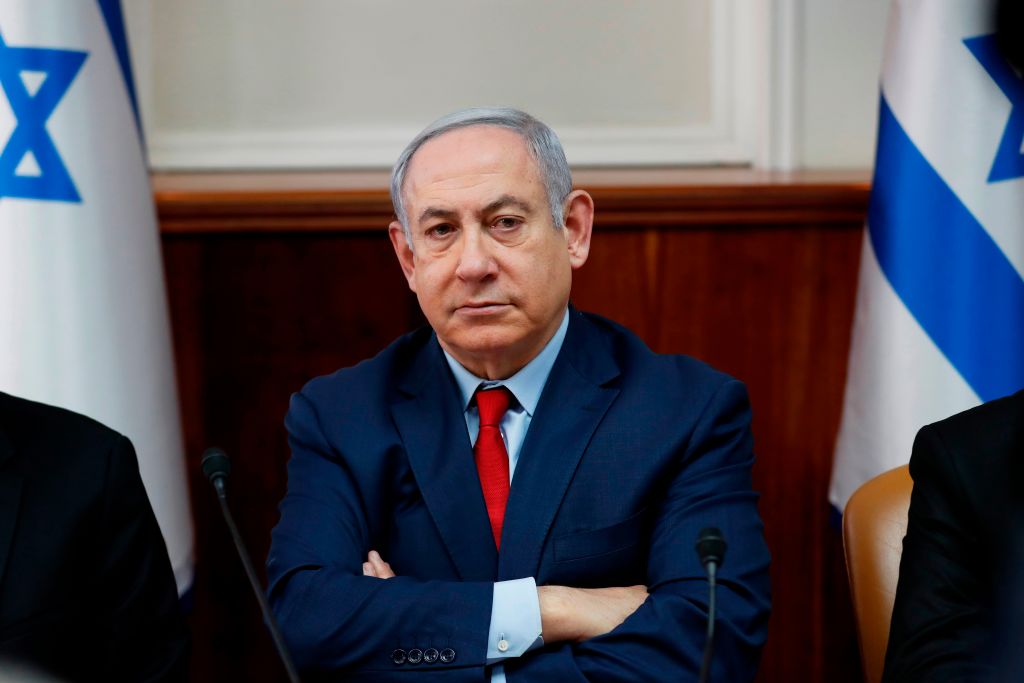
    TOPSHOT - Israeli Prime Minister Benjamin Netanyahu embraces his wife Sara as confetti and fireworks are blown during his appearance before supporters at his Likud Party headquarters in the Israeli coastal city of Tel Aviv on election night early on April 10, 2019. (Photo by Thomas COEX / AFP) (Photo credit should read THOMAS COEX/AFP/Getty Images)
  • Analysis
  • Israel’s upcoming elections: Much ado about nothing?

    Prime Minister Benjamin Netanyahu won a fifth term in April, the first such victory for an Israeli politician. In May, he failed to form a governing coalition, a first for an Israeli politician as well. Snap elections are scheduled for Sept. 17 and, true to form, rivals and observers are saying that surely his era may be nearing an end. Notwithstanding the possible changes that could be witnessed on the local political scene, skeptics are hard-pressed to see how the elections could bring about drastic change for either Israel or the region.

    September 10, 2019

    US and Iran testing diplomatic waters
    Middle East Institute
  • Podcast
  • US and Iran testing diplomatic waters

    Randa Slim, director of MEI’s Conflict Resolution and Track II Dialogues initiative, and MEI Senior Fellow Alex Vatanka join guest host Jerry Feierstein to discuss recent regional developments that may be early indicators of an emerging round of diplomatic talks between the United States and Iran, and what renewed talks might be able to achieve.

    August 30, 2019

    Syria: Debates won’t change reality
    TOPSHOT - A convoy of US forces armoured vehicles drives near the village of Yalanli, on the western outskirts of the northern Syrian city of Manbij, on March 5, 2017. / AFP PHOTO / DELIL SOULEIMAN (Photo credit should read DELIL SOULEIMAN/AFP/Getty Images)
  • Analysis
  • Syria: Debates won’t change reality

    Over the past few weeks, my colleagues at MEI have debated whether the U.S. should stay in Syria or leave. Here I’d make a different argument: that it doesn’t really matter. The president has already made the decision to leave, and while his aides may have been able to slow roll the troop drawdown, the reality is that Donald Trump has made it clear the U.S. will not disburse any additional resources. Even within the 2020 Democratic field, not a single candidate has advocated increasing resources.

    August 29, 2019

    The Syrian Oil Crisis: Causes, Possible Responses, and Implications
    Iranian supertanker Grace 1 off the coast of Gibraltar on August 15, 2019.
  • Analysis
  • The Syrian Oil Crisis: Causes, Possible Responses, and Implications

    Unlike most other goods, the inflation-adjusted prices of oil and oil derivatives actually became cheaper in the years after the Syrian uprising and the loss of most of the country’s oil fields. Iran stepped in to fill the gap by shipping oil by sea through the Suez Canal. In recent months, however, these shipments seem to have ground to a halt, crippling regime-controlled areas. This paper examines several competing explanations for the slowdown in Iranian oil shipments, explores a range of possible responses for the Assad regime, and takes a closer look at the implications for the regime, its allies, and regular Syrians.

    August 28, 2019

    Why does Trump treat Iran and North Korea so differently?
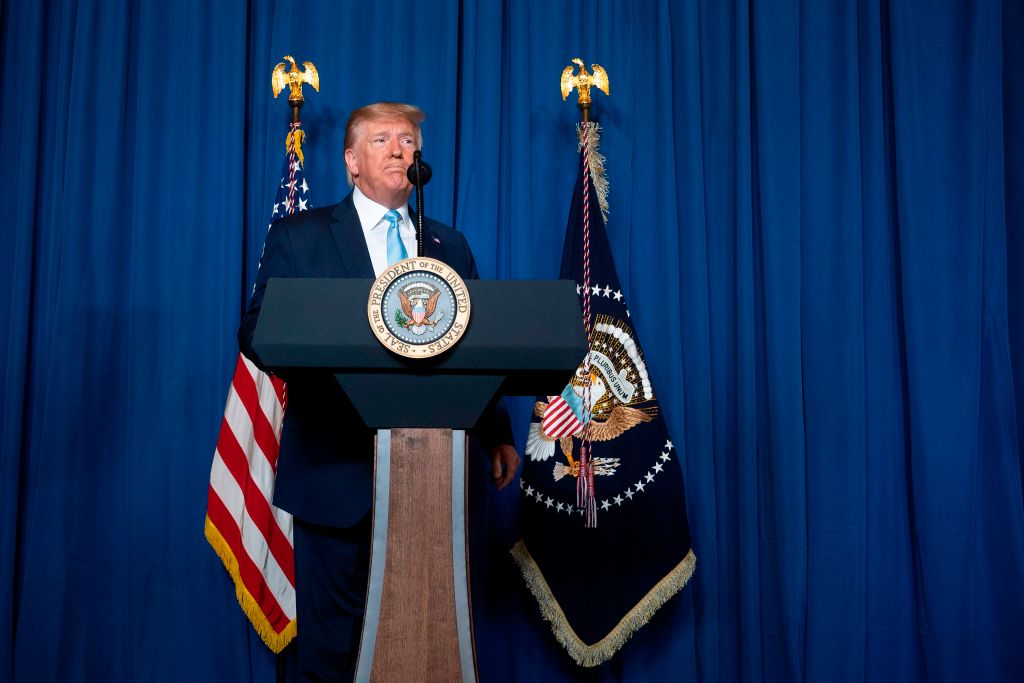
    WASHINGTON, DC - MAY 08: U.S. President Donald Trump holds up a memorandum that reinstates sanctions on Iran after he announced his decision to withdraw the United States from the 2015 Iran nuclear deal in the Diplomatic Room at the White House May 8, 2018 in Washington, DC. After two and a half years of negotiations, Iran agreed in 2015 to end its nuclear program in exchange for Western countries, including the United States, lifting decades of economic sanctions. Since then international inspectors have n
  • Analysis
  • Why does Trump treat Iran and North Korea so differently?

    Iran and North Korea both get a great deal of attention from the international community — for all the wrong reasons. Yet while U.S. President Donald Trump and North Korean Supreme Leader Kim Jong-un have met several times now, shaking hands, smiling, and posing for photos, Trump has not once met with Iranian President Hassan Rouhani or other senior Iranian officials. What accounts for this difference?

    August 27, 2019

    Countering and courting Iran: Israeli-Palestinian objectives in Iraq
    An Israeli F-15 I fighter jet launches anti-missile flares at it performs during a graduation ceremony of Israeli air force pilots at the Hatzerim Air Force base in Israel's Negev desert on December 26, 2018. (Photo by JACK GUEZ / AFP) (Photo credit should read JACK GUEZ/AFP/Getty Images)
  • Analysis
  • Countering and courting Iran: Israeli-Palestinian objectives in Iraq

    Israel has reportedly expanded its operations against Iran in the Middle East. In July, Israeli and foreign media attributed airstrikes on Iranian targets near Baghdad to Israel. Last week, U.S. officials confirmed that Israel was responsible for the attacks, which mark the first such air raids on Iraq since 1981, when Tel Aviv destroyed Saddam Hussein’s Osirak nuclear reactor.

    August 26, 2019

    Israel’s new front in the fight against Iran
    An Israeli F-35 fighter jet performs during an air show at the graduation ceremony of Israeli pilots in the Hatzerim Israeli Air Force base in the Negev desert, near the southern Israeli city of Beer Sheva, on June 27, 2019.
  • Analysis
  • Israel’s new front in the fight against Iran

    On Aug. 12, an explosion took place inside an ammunition warehouse in the al-Saqr military base in southern Baghdad, triggering hundreds of mortars and rockets to fire off in all directions throughout urban, populated areas. One person was killed and 29 wounded, as munitions and debris scattered as far as 5 kilometers away.

    What will the European Council's new president mean for EU-MENA relations?
    Belgium's Prime minister Charles Michel (R) addresses journalists as he arrives for the second day of an European Union leaders summit to discuss Syria, relations with Russia, trade and migration, on October 21, 2016 at the European Council, in Brussels
  • Analysis
  • What will the European Council's new president mean for EU-MENA relations?

    While some changes may be in the offing, for now most signs suggest that regional leaders should expect neither new opportunities, nor new challenges, but more likely a broad continuity of existing EU policy toward the region.

    August 20, 2019

    There Is No "Status Quo": Drivers of Violence in the Israeli-Palestinian Conflict
    A picture taken on February 1, 2019 from Jabel Mukaber, a Palestinian neighbourhood in Israeli-occupied East Jerusalem shows the Dome of the Rock mosque (golden dome) and al-Aqsa Mosque (silver dome) at the al-Aqsa Mosque compound in Jerusalem's Old City.
  • Analysis
  • There Is No "Status Quo": Drivers of Violence in the Israeli-Palestinian Conflict

    The Israeli-Palestinian conflict remains a destabilizing element in an already volatile Middle East. The Palestinians are too weak to wrest their independence from Israel. But as long as their right to self-determination is denied, they are likely to engage in regular violence targeting Israel. Absent outside intervention, Israel is powerful enough that it can suppress Palestinian demands for freedom — but it is not able to completely pacify the Palestinians. Thus, the conflict continues, punctuated every few years by rounds of more significant violence.

    August 20, 2019

    Monday Briefing: A mixed record for PM Khan’s first year in office
  • Analysis
  • Monday Briefing: A mixed record for PM Khan’s first year in office

    This week’s briefing on recent news and upcoming events in the region featuring Arif Rafiq, Ibrahim Jalal, Michael Sexton and Eliza Campbell, and Alex Vatanka.

    August 19, 2019

    Tlaib/Omar: It’s only politics
    Reps. Ilhan Omar, D-Minn., right, and Rashida Tlaib, D-Mich., attend a rally with Democrats in the Capitol to introduce the
  • Analysis
  • Tlaib/Omar: It’s only politics

    The current Rashida Tlaib/Ilhan Omar debacle has received more attention from every quarter than virtually anything other than a war. All the usual suspects have weighed in with (mostly) predictable comments, generally in the context of the long-running “special relationship” between Israel and the U.S. The two domestic political contexts are often mentioned only in passing. With all respect to those who have tried to take a longer or strategic view, I would suggest that it really boils down to the political calculations of just two men, President Donald Trump and Prime Minister Benjamin Netanyahu.

    August 19, 2019

    Ambassador Friedman: Palestinians already have autonomy
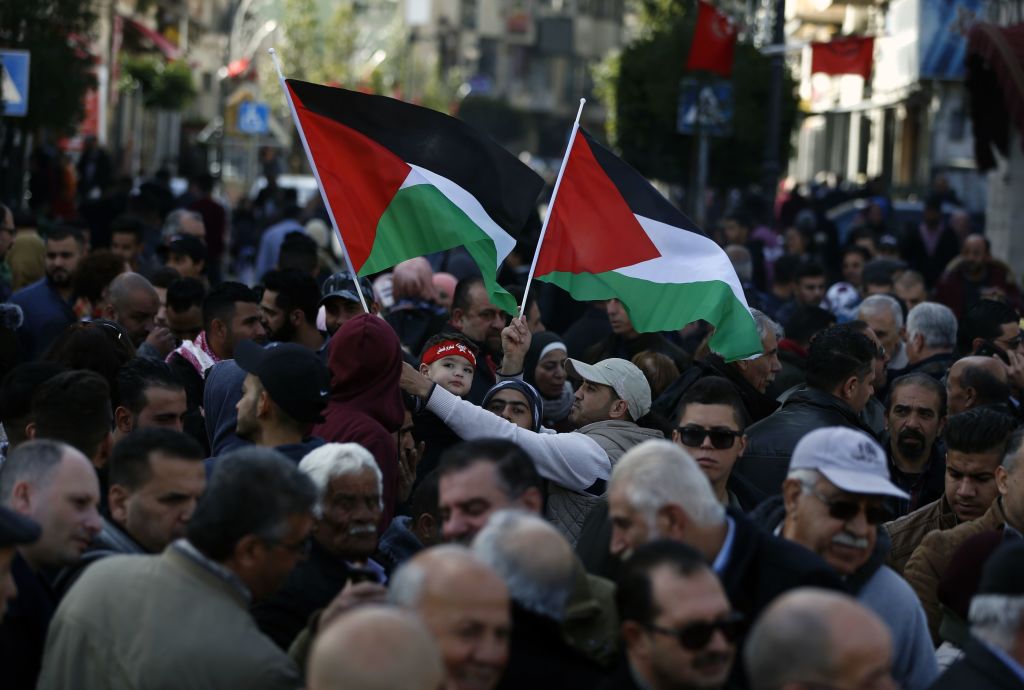
    A Palestinian protester waves a Palestinian flag during a demonstration in the village of Ras Karkar west of Ramallah in the occupied West Bank on September 4, 2018.
  • Analysis
  • Ambassador Friedman: Palestinians already have autonomy

    Autonomy is normally given to a specific cultural or national group as part of a political agreement. For Palestinians, the idea that autonomy is the goal of talks is unhelpful because they already have autonomy.

    August 15, 2019