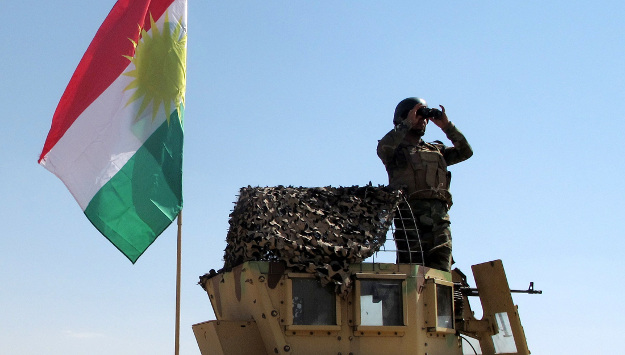
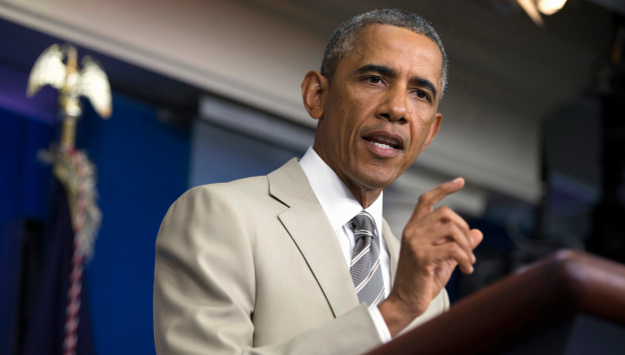
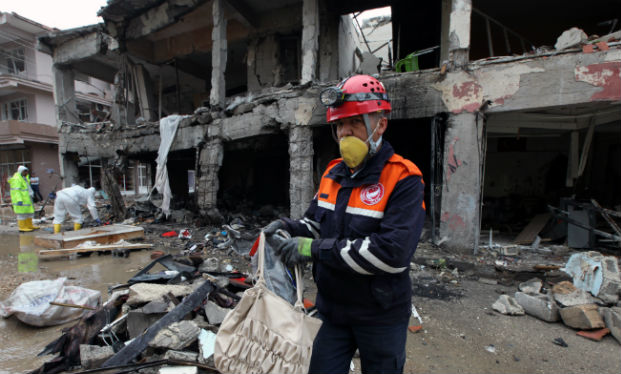
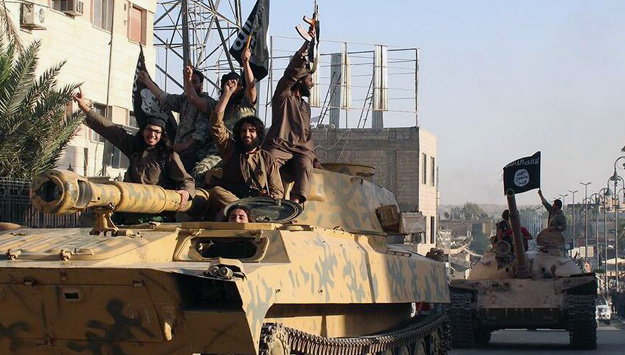
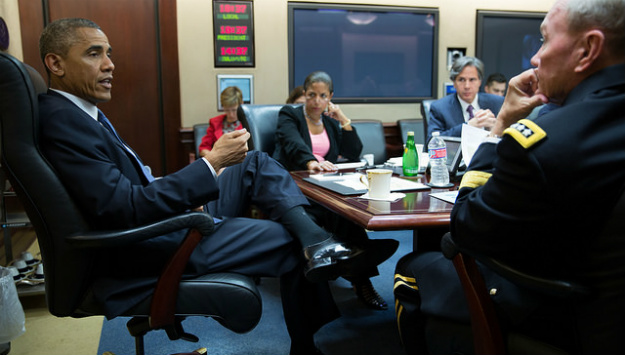
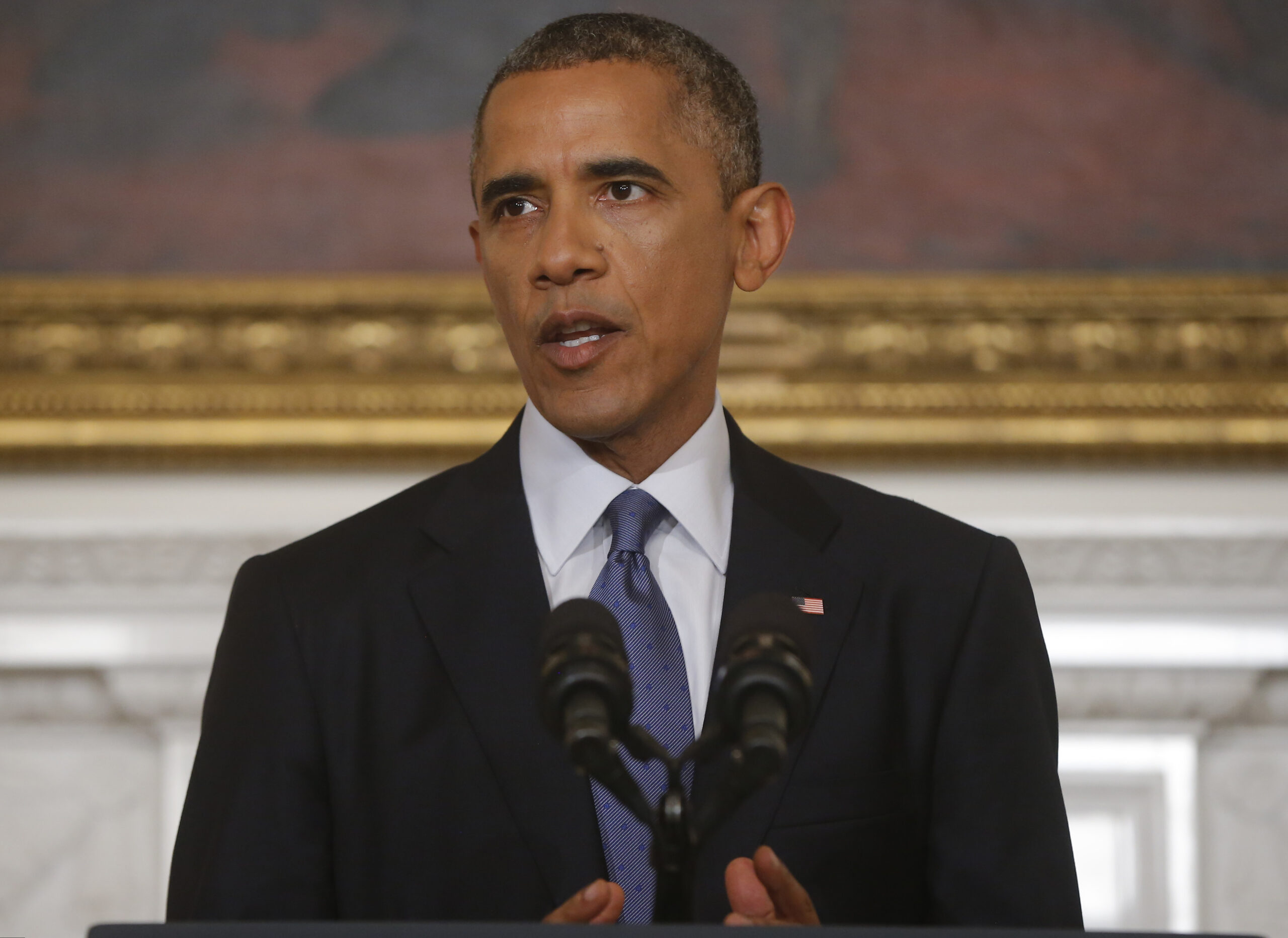
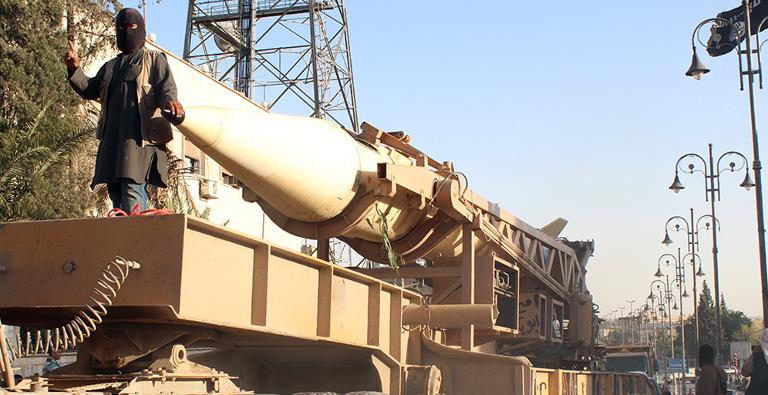
The United States might not have had a strategy for battling ISIS last week, but it does now. The NATO summit in Wales produced one. It reflects President Obama’s instincts and his ability to corral fractious allies.
It also says nothing about the use of force by the United States.
Turkey’s Syria and Iraq Policy Hostage to Islamic State
As the United States struggles to mobilize a coalition of allies including Turkey behind potential military action against the Islamic State (formerly known as ISIS) in Syria, Turkey’s Iraq and Syria policies remain captive to ISIS and the 49 Turkish hostages it holds. Turkey might be key to the U.S. effort to confront ISIS, and it is in a very tough spot.
American airstrikes might be needed in Syria, but that would not be the most important tactic for success, nor would more material aid to the rebels be sufficient to contain the Islamic State over the long term. As in Iraq, there has to be a political angle as well.
The outlines of a US strategy to roll back ISIS, or the ‘Islamic State’ as it styles itself, in Iraq have become relatively clear, even if success is uncertain.
Pro-Kurdish Peoples’ Democratic Party is Big Winner in Turkish Elections
A recent statement from the imprisoned leader of the Kurdistan Workers’ Party, Abdullah Ocalan, hails a new era for Turkey’s Kurds. In a statement from his cell on the prison island of Imrali in the Sea of Marmara, Ocalan said that Turkey was now on the verge of “historic developments” after last week’s presidential elections and declared that through a major democratic negotiation, the 30-year war was coming to an end.
One hundred and sixty-three years before the Islamic State’s band of thugs rolled into the city, terrorizing the city’s minorities, my Protestant missionary ancestor, his wife, and two children settled in Mosul, a long way from the home they left behind in Utica, New York.
Erdogan Wins the Presidential Vote but the Race Is Not Over
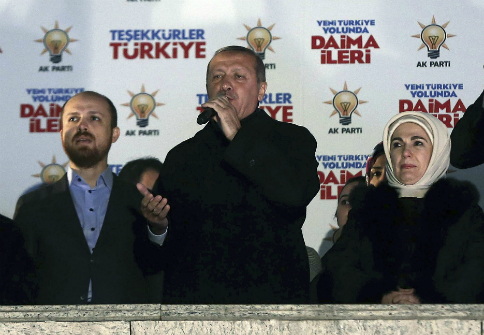
Turkish Prime Minister Recep Tayyip Erdogan has won the presidential election in Turkey’s first direct presidential election on Sunday, extending his 12-year grip on power. Despite heavy campaigning and the financial support from public funds, he won the election with only 51.95 percent of the vote, slightly higher than the minimum required to win the election.
Paul Salem, MEI’s vice president for policy and research, examines President Obama’s decision to step up US intervention against the Islamic State (also known as ISIS) in Iraq, and what it implies for broader US policy in the region, in this Expert Q&A.
How do you read the import and impact of President Obama’s recent announcements of airstrikes and humanitarian intervention in Iraq?
On August 10, Turkish voters will go to the polls to choose a new president for the first time in the country’s history. The following candidates are on the ballot: Recep Tayyip Erdogan, the Prime Minister and leader of the governing Justice and Development Party (AKP); Ekmeleddin Ihsanoglu, joint candidate for the opposition Republican People’s Party (CHP) and Nationalist Action Party (MHP); and Selahattin Demirtas, the candidate of the pro-Kurdish People’s Democratic Party (HDP).
"Marked" for Exclusion: The Problem of Pluralism, State-building, and Communal Identities in Iraq and the Arab World
In this essay, the author argues that the dynamics of contemporary Sunni-Shi‘a relations in Iraq and elsewhere in the Arab world are not fundamentally different from those animating other societal cleavages. The modern Iraqi state’s awkwardness vis-à-vis its Shi‘a population, and indeed other outgroups and minorities, was most directly a product of exclusionary nation-building based on problematic conceptions of “unity” and “pluralism.” Rather than actually fostering unity or respecting and nurturing pluralism (politically or communally), these concepts have often been used to exclude dissenters whose non-conformity was deemed a threat to the body politic.