Hind Kabawat is a senior program officer at the United States Institute of Peace (USIP) and a senior research associate at the Center for World Religions, Diplomacy and Conflict Resolution (CRDC) at George Mason University. Since 2012, she has been conducting periodic conflict resolution and peace-building workshops for communities within Syria and for Syrian refugees living in Jordan and Turkey.
Drug Use and Harm Reduction in the MENA Region and in Lebanon
Repressive policies that stigmatize and punish drug users have tended to exacerbate social problems rather than mitigate them. In contrast, harm reduction (HR) approaches to drug use have been shown to prevent the spread of blood-borne viruses (such as HIV, HBV, and HCV), thereby lowering morbidity and mortality rates. Over the past 15 years, many HR initiatives have been launched in the MENA region, including Lebanon. However, continued progress in HIV prevention will require more structured and comprehensive HR interventions, adjusted to the needs of local populations.
Analysis of Syrian civil war dynamics tends to draw a sharp contrast between the southern front, referring to the southernmost provinces of Deraa, Quneitra, and Suwayda, and the north. Most observers point to the south, in contrast to the north, as lacking a significant Islamic State (ISIS) presence. How true does this general assessment hold? Are radical or extremist groups much less influential in the south?
The Syrian Opposition Meeting in Cairo: One Small Step
Around 100 Syrian opposition figures recently concluded a conference in Cairo. The meeting was noteworthy for two reasons. It signaled Cairo’s cautious but unmistakable entry into the Syrian minefield, and it marks the still-fragmented opposition’s first careful steps in the direction of a compromise with the Assad regime.
Virtuoso French-Swiss qanun player Julien “Jalal Eddine” Weiss, who tirelessly promoted classical Arab and Syrian music to international audiences from his home in Aleppo, Syria, died this month in Paris. Forced to flee Syria’s brutal civil war like millions of other Syrians, Weiss’s death is a sad reminder of the ongoing threat to Aleppo’s rich cultural traditions, as well as an occasion to remember the city’s heritage, which played such an important role in inspiring his unique Middle Eastern compositions.
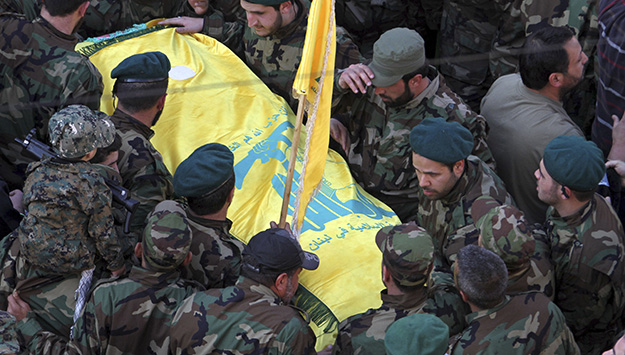
An Israeli helicopter fired rockets on a convoy in the Golan Heights on January 18, killing six members of Hezbollah and an Iranian general. MEI’s Randa Slim explains the context surrounding the attack and the likely repercussions.
Why did Israel choose this time to attack Hezbollah and Iranian targets in the Golan Heights?
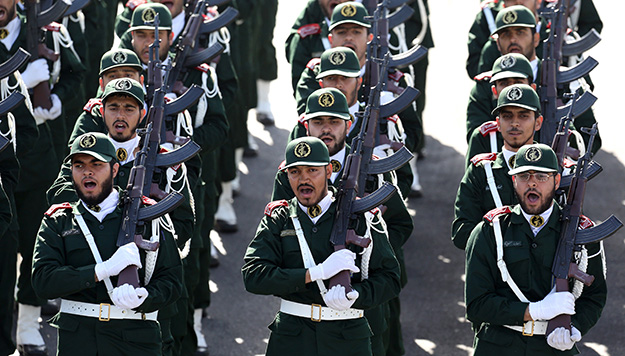
It is no longer accurate to describe the war in Syria as a conflict between Syrian rebels on the one hand and Bashar al-Assad’s regime forces “supported” by the Iranian Revolutionary Guards (IRG), Hezbollah, and Iraqi militias on the other. Most major battles in Syria—along the frontlines of regime-held areas—are now being directed and fought by the IRG and Hezbollah, along with other non-Syrian Shi‘i militias, with Assad forces in a supportive or secondary role.
An Artistic Dialogue Shows the Absence of Cultural Exports from the Arab World
The exceptionalism of Thaer Maarouf and Jason Tecson is that they reached over a cultural desert to talk to each other and to serve as catalysts of multi-contextual significance—emphasizing that beyond conflicts, it is traditions, culture, and history that define people today. The Arab world would do well to learn from their exchange. Exporting the distinguished culture of the Middle East is critical in any effort to counter the barbaric images of the region currently shaping Asia’s view of Arabs.
The American Approach in Syria and Iran: Soft and Dangerous
In his pursuit of foreign policy deals with Syria and Iran, President Obama has taken a soft approach. As a result, Syria and Iran have taken advantage with aggressive opportunism.
As the Obama administration searches for a Syria policy, some officials have become intrigued by an old idea that the United Nations now hopes could help tens of thousands of civilians and perhaps even break Syria’s political logjam.
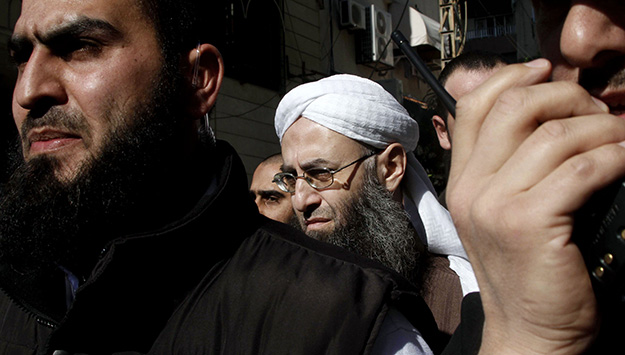
As fears of an ISIS surge in northern Lebanon continue to rise, it is important to have a balanced perspective on the makeup of current Lebanese Sunni Islamist groups. I recently spent three months conducting fieldwork in Lebanon, interviewing representatives from a wide variety of Islamist groups. I present my findings below.
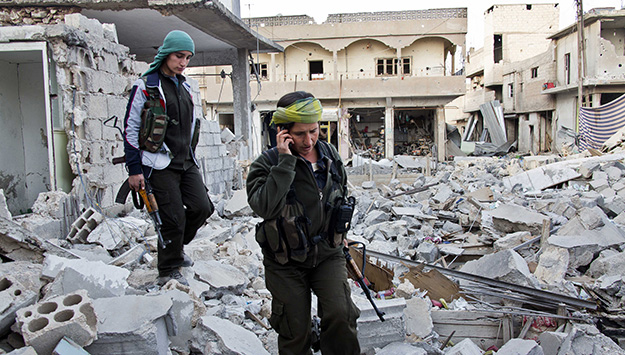
In the ongoing fighting in and around Kobani in northern Syria, it appears likely that the defending Kurdish forces will ultimately prevail and be able to expel the Islamic State (ISIS). However, in order to enable refugees to return, substantial aid and reconstruction efforts will be needed, and more benign Turkish border policies are essential in the meantime.
The Syrian Conflict and the Ascendancy of the Lebanese Armed Forces
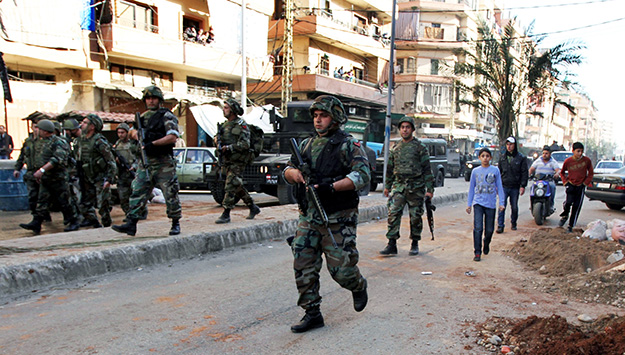
In the past, the Lebanese Armed Forces’ (LAF) inability to confront or deter Israel was reflected as political weakness for the Lebanese government vis-à-vis Hezbollah. Israel’s withdrawal from south Lebanon in 2000 heralded a growing political role for Hezbollah. This role was further enhanced by the 2006 war with Israel, with Hezbollah claiming victory and consolidating its influence within the LAF and the government.