Skip to Content

Research & Commentary Results

Filter by
594 Results
Saudis in charge: Managing OPEC+’s unhappy days
Photographer: Simon Dawson/Bloomberg via Getty Images
  • Analysis
  • Saudis in charge: Managing OPEC+’s unhappy days

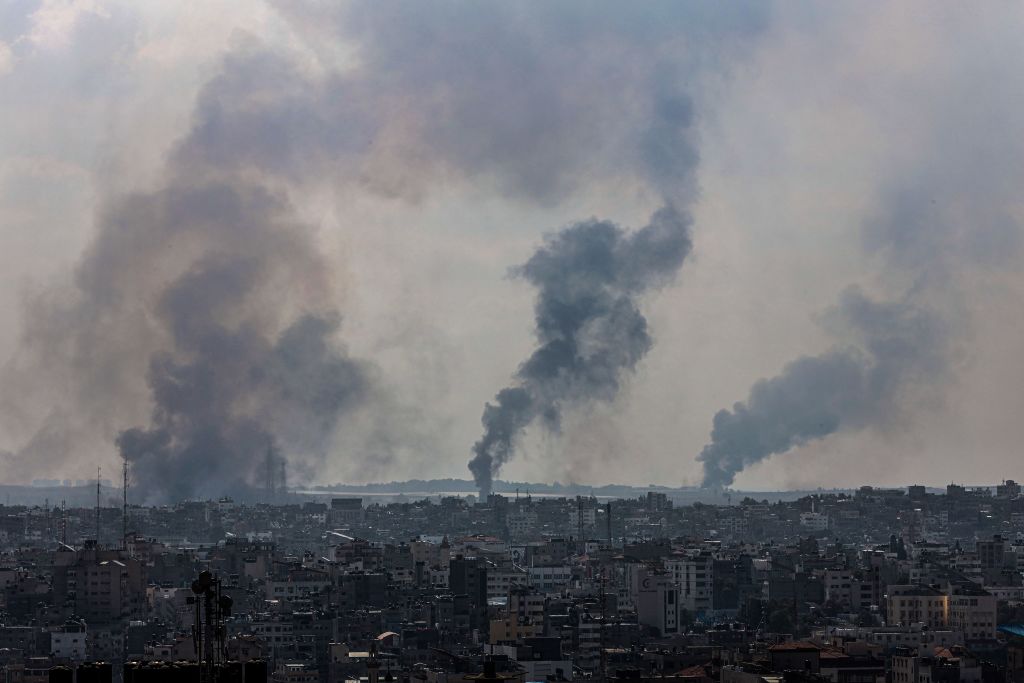
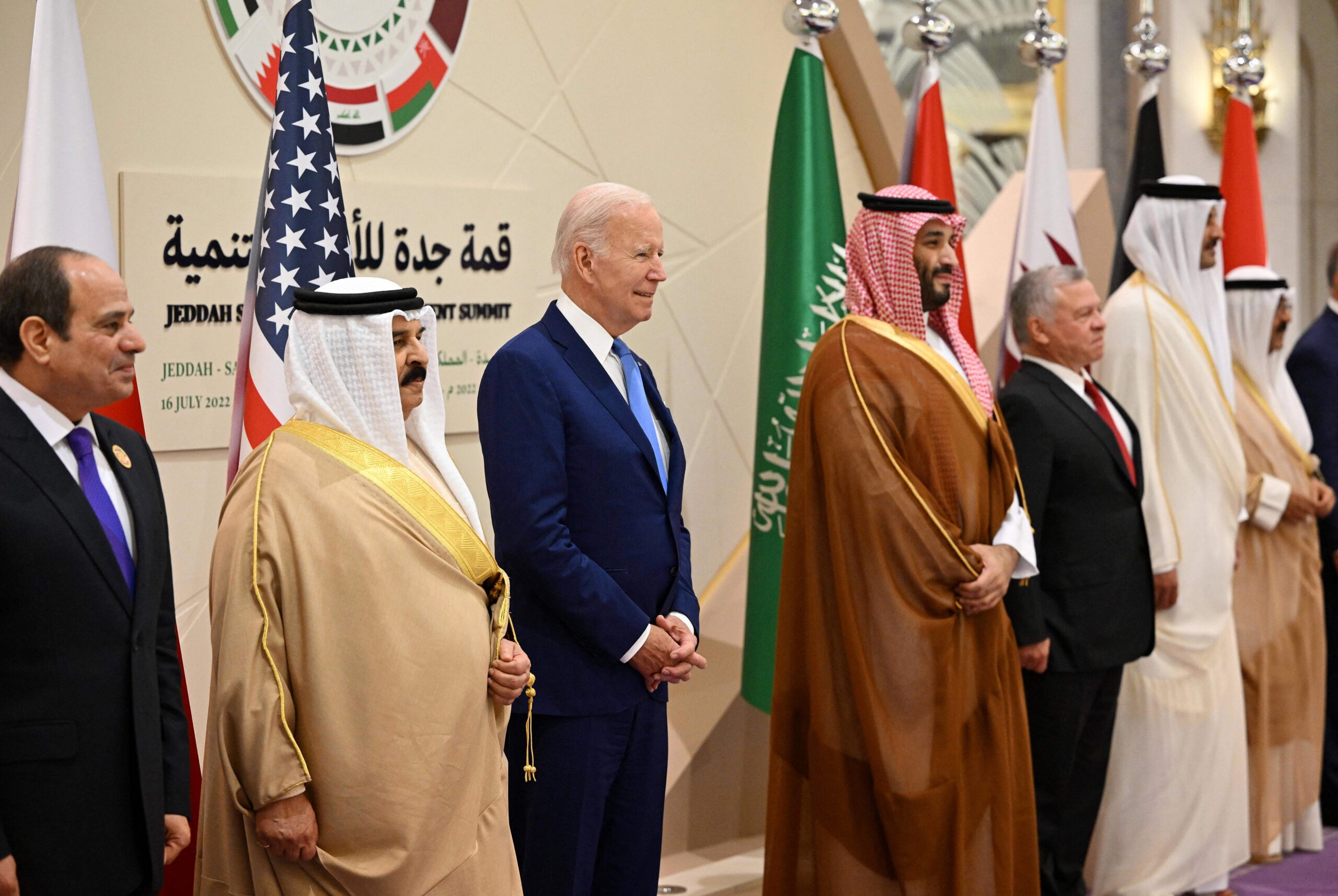
    The current complex situation in the global oil market seriously tests the abilities of OPEC+ to play the role of a regulator, forcing Saudi Arabia to assume the main burden of responsibility for keeping oil prices from declining further and for shoring up the cartel ranks.

    The US and France must push back on Iran to break Lebanon’s political gridlock
    Photo by Bilal Jawich/Xinhua via Getty Images
  • Analysis
  • The US and France must push back on Iran to break Lebanon’s political gridlock

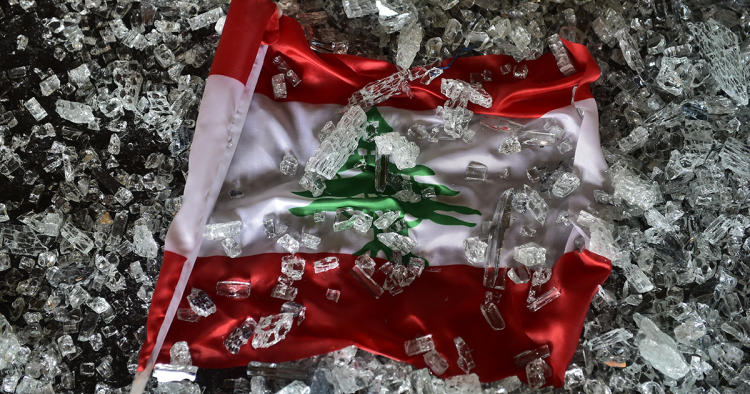
    Jean-Yves Le Drian, French President Emmanuel Macron’s envoy to Lebanon, made a preliminary diplomatic visit to Beirut last week. Le Drian’s appointment marks a potential though uncertain opening to consolidate international support for Lebanon to facilitate an end to the political gridlock and leadership vacuum. A short but timely boost in robust diplomacy on the part of Washington, strengthened by clear coordination with Paris and regional partners, can play a decisive role in preventing the unraveling of another failed authoritarian state that could further destabilize the region and force even more costly engagement in the future.

    The US needs to prioritize a Lebanon response to help avoid total collapse
    Photo by Marwan Tahtah/Getty Images
  • Commentary
  • The US needs to prioritize a Lebanon response to help avoid total collapse

    U.S. leadership has been active in offering short-term humanitarian help in Lebanon, but U.S. interests in the country’s stability will be compromised without longer-term attention to the challenges that will determine its viability: from the catastrophic humanitarian and security breakdown, to the destabilizing domestic and regional implications of mounting social and economic tensions and an unsustainable refugee crisis, and the political repercussions of polarization and continued political uncertainty.

    June 7, 2023

    Biden must thwart French folie in Lebanon
    Photo by CHRISTOPHE SIMON/POOL/AFP via Getty Images
  • Commentary
  • Biden must thwart French folie in Lebanon

    Lebanon is on the verge of complete collapse, and if Washington is serious about preventing not just another failed state but a growing normalization of unchecked authoritarianism in the Middle East, it must stop outsourcing leadership on Lebanon to France.

    Space sector developments across the GCC
    Photographer: Christopher Pike/Bloomberg via Getty Images
  • Analysis
  • Space sector developments across the GCC

    In the Middle East, the Gulf states — working together and on their own — are looking to achieve new scientific and commercial breakthroughs in various areas of the space industry. These ambitions carry major geopolitical implications with them, as an ever-growing number of spacefaring countries negotiate a sensitive and increasingly high-powered sector.

    April 20, 2023

    The long Ukraine war: It’s time to transition to a more rational military assistance paradigm
    Photo by Oz Suguitan, U.S. Transportation Command
  • Analysis
  • The long Ukraine war: It’s time to transition to a more rational military assistance paradigm

    Ukraine’s partners, led by the United States and spread over the globe, have increasingly responded to Russia’s full-scale invasion of February 2022 with a dizzying array of financial, humanitarian, and military assistance. Unfortunately, the way in which the U.S. and Ukraine’s other partners have provided military assistance over the last year — that is, by delivering a wide range of equipment, ammunition, and training — significantly undermines the longer-term objective of developing a sustainable system via which Ukraine can generate combat power in the coming years to overcome Russian aggression.

    April 4, 2023

    Assessing US Assistance to the Lebanese Armed Forces
    Photo by Fadel Itani/NurPhoto via Getty Images
  • Commentary
  • Assessing US Assistance to the Lebanese Armed Forces

    In January 2023, the United States began to reroute $72 million of assistance to Lebanon to support the salaries of Lebanese soldiers and police officers, most of whom could barely make ends meet due to the disastrous economic situation in the country. It took Washington more than two years to make that decision, partly because US laws regarding this type of aid were slightly unclear. But more importantly, the voices inside and outside the US government who argued against further support to the Lebanese Armed Forces (LAF), let alone direct cash assistance, succeeded in delaying the process. This was yet another example of how, despite continued US commitment to the LAF through successive administrations, the US military assistance program remains vulnerable to US domestic politics.https://apnews.com/article/politics-united-states-government-lebanon-bu…

    March 30, 2023

    Arab women break boundaries and stereotypes in Middle Eastern militaries
    Photo by Laughlin Air Force Base
  • Commentary
  • Arab women break boundaries and stereotypes in Middle Eastern militaries

    As Women’s History Month in the U.S. draws to a close, women in the armed forces of several Middle Eastern countries continue to achieve historic milestones, with many now serving as pilots, engineers, peacekeepers, and in special forces units. The role of women is steadily increasing as the result of new initiatives, policies, and gradually changing mindsets in the Middle East.

    March 28, 2023

    Missed opportunities: The billions sacrificed annually to generate electricity in the GCC
    Photo by Artur Widak/NurPhoto via Getty Images
  • Analysis
  • Missed opportunities: The billions sacrificed annually to generate electricity in the GCC

    The GCC governments still cover over 40% of the cost of domestic electricity production. Yet, electricity subsidy bills alone do not reflect the full extent of their economic losses. Once the forgone revenues from the export of natural gas and oil used to meet rising domestic energy demand are added in, the total economic cost of the GCC’s electricity is too great to ignore.

    March 27, 2023

    Paris failed. Washington must lead in breaking the mafia-militia’s chokehold on Lebanon
    Photo by Marwan Naamani/picture alliance via Getty Images
  • Analysis
  • Paris failed. Washington must lead in breaking the mafia-militia’s chokehold on Lebanon

    In response to Lebanon’s seemingly imminent transition into a failed state, this article introduces a new framework to explain the country’s protracted crisis. In turn, we unpack what the past four years of international responses to Lebanon got wrong and make the case for a new assertive approach for Washington to take — one that empowers local stakeholders working to recapture the state and reform the country’s political economy.

    Economic Diversification, Energy Transition, and the Labor Market in Iraq and the Gulf
    Photo by ASAAD NIAZI/AFP via Getty Images.
  • Analysis
  • Economic Diversification, Energy Transition, and the Labor Market in Iraq and the Gulf

    As part of a continued collaboration with the Middle East Peace and Security Forum held in Iraqi Kurdistan at the American University of Kurdistan, the Middle East Institute and the Iraq Policy Group held a workshop on Nov.15, 2022 focusing on challenges of economic diversification, energy transition, and impacts on labor markets in Iraq and the Gulf region. This report provides the insights and analyses of a select group of participants from the workshop.

    Can the Lira Be Saved?
  • Podcast
  • Can the Lira Be Saved?

    MEI’s US-Lebanon Fellow Fadi Nicholas Nassar speaks to Beirut-based international finance professional Mike Azar (@AzarsTweets) on Lebanon’s financial crisis. What is the state of Lebanon’s banking system, and how did it become so dysfunctional? What does Azar recommend to get Lebanon’s economy back on track, and can the Lira be saved? 

    March 10, 2023

    The GCC and the road to net zero
    Photo by FAYEZ NURELDINE/AFP via Getty Images
  • Analysis
  • The GCC and the road to net zero

    The Gulf Arab states, while major oil and gas producers, can play a significant role in supporting global efforts to achieve net-zero goals. They are not only endowed with great potential for renewable energy resources as well as some of the world’s lowest carbon content fuels, but also with, to varying extents, sizable financial resources. Yet, to unlock such huge potential, the Gulf Arab states will need to systematically identify and address the various challenges in their path to net zero.

    March 2, 2023