After the Arab Spring: Toward Political & Economic Inclusion in the Arab World
The Middle East Institute and the UNDP are proud to host a discussion with UNDP Administrator Helen Clark, Under Secretary for Economic, Energy and Agricultural Affairs Robert D. Hormats, and Middle East Institute Scholar Amb. Edward Walker about how best to address political, economic and human development needs in the Arab world today.
Uprising in Syria: Implications for US and Regional Policy
The Middle East Institute is proud to host Syria experts Ammar Abdulhamid, Helena Cobban, and Steven Heydemann for a discussion about the ongoing protests in Syria and the international and regional reactions to the shifting Syrian landscape. As the uprising continues into its third month, how sustainable is the protest movement? Are the Syrian government's tactics in crushing dissent succeeding? What impact has the violence had on the Assad regime's relationship with its neighbors like Turkey and close allies like Iran, Hezbollah and Hamas?
Uprising in Syria: Implications for US and Regional Policy
The Middle East Institute is proud to host Syria experts Ammar Abdulhamid, Helena Cobban, and Steven Heydemann for a discussion about the ongoing protests in Syria and the international and regional reactions to the shifting Syrian landscape. As the uprising continues into its third month, how sustainable is the protest movement? Are the Syrian government's tactics in crushing dissent succeeding? What impact has the violence had on the Assad regime's relationship with its neighbors like Turkey and close allies like Iran, Hezbollah and Hamas?
Developments in Syria have been growing more disturbing. The Assad regime seems to be reacting to the unrest as if it believes it can contain it with much the same approach used against the Syrian Muslim Brotherhood roughly 30 years ago, particularly during 1980-1982. Some have credited Tehran with coaching Damascus on how to contain its current popular challenge.
Various Track Two approaches to peacebuilding in the Middle East have been pursued through ecumenical dialogue and educational programs such as The University of the Middle East Project.[1] Yet the direct use of environmental conservation as a mutually agreeable way to approach territorial conflict resolution has thus far not been seriously deliberated. Some “realists” might be dismissive of such a prospect, but the concept of “peace parks” has shown practical promise in resolving territorial disputes.
Environmental Peacebuilding in the Eastern Mediterranean
Environmental peacebuilding is both the theory and practice of identifying environmental initiatives that promote a sustainable peace between those who have previously been adversaries, and implementing those initiatives. Environmental peacebuilding combines two elements.
Arava Institute for Environmental Studies: Teaching Environment as a Bridge to Peace & Understanding in the Middle East
The Arava Institute for Environmental Studies (AIES) is the premier environmental studies institute in the Middle East and is accredited under the auspices of the Ben Gurion University (BGU) of the Negev. Since 1996, the Institute has been teaching environmental studies to university students from the Middle East and other parts of the world. The unique approach of the Institute is to teach the environment, in which all share, as a bridge to cooperation and peacebuilding in the Middle East.
US-Syrian Relations: Changing Priorities After Egypt
The Middle East Institute is proud to host Joshua Landis and Andrew Tabler for a discussion about the current state of US-Syrian relations and the impact the changing regional dynamic will have on the relationship's priorities. How might the revolutionary wave crossing the Middle East effect Washington's discussions with Damascus? Should there be a greater emphasis on reform? Where does the Syrian-Israeli peace track stand and is it more urgent than ever?
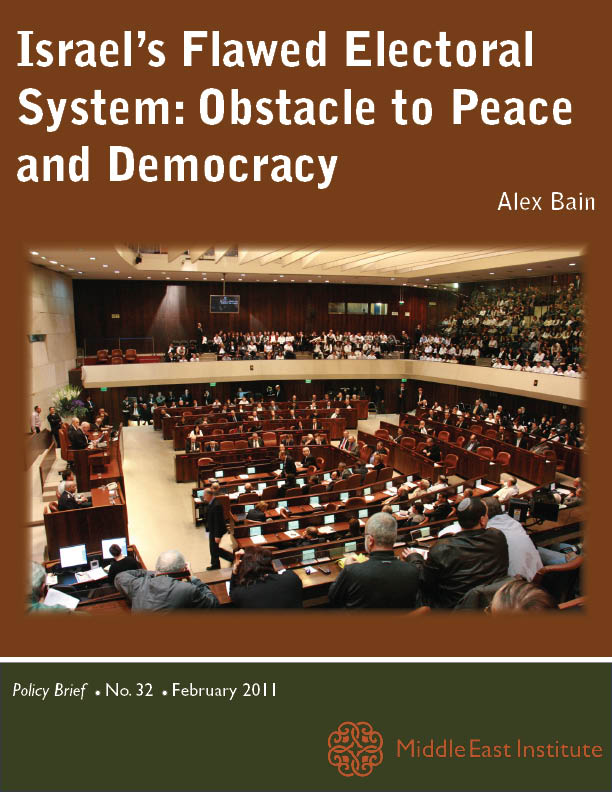
Israel's Flawed Electoral System: Obstacle to Peace and Democracy
Israeli politics is notable for its wide array of parties and unstable coalition governments. The main institutional cause of this chronic instability is the system of nationwide proportional representation, which gives disproportionate influence to minor parties. This instability limits the ability of Israeli governments to pursue coherent long-term strategies and leads to policies that address the concerns of minority groups at the expense of the national interest.
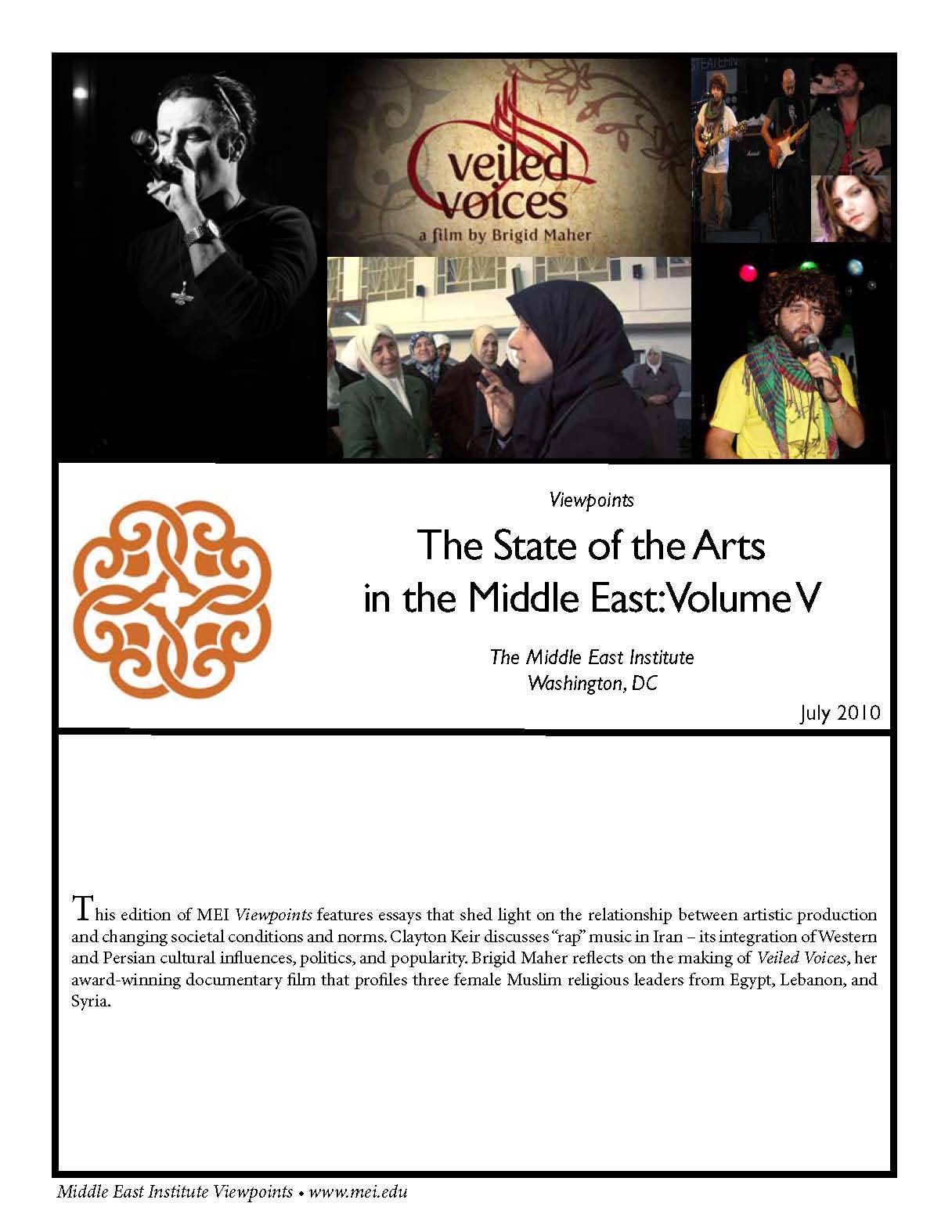
Introduction to The State of the Arts in the Middle East: Volume V
This edition of MEI Viewpoints features essays that shed light on the relationship between artistic production and changing societal conditions and norms. Clayton Keir discusses “rap” music in Iran – its integration of Western and Persian cultural influences, politics, and popularity. Brigid Maher reflects on the making of Veiled Voices, her award-winning documentary film that profiles three female Muslim religious leaders from Egypt, Lebanon, and Syria.
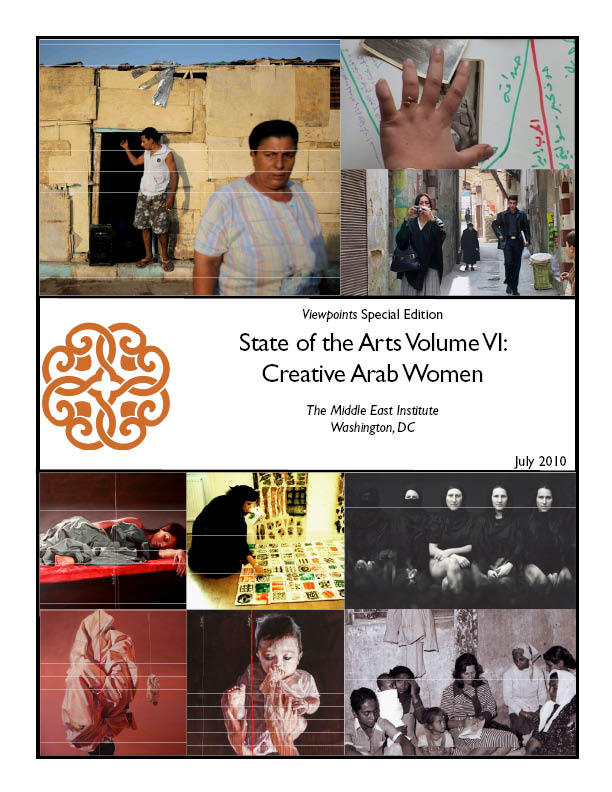
Introduction to The State of the Arts in the Middle East: Volume VI: Creative Arab Women
Creative Arab Women is the sixth edition of the MEI Viewpoints series on the State of the Arts in the Middle East. The 14 essays in this collection offer a glimpse into the rich and varied cultural output of Arab women in the region and the diaspora. Partly reminiscences and partly calls to action, they are essays of survival and empowerment that add a deeply personal dimension to the subject of the role of Arab women as cultural producers. MEI is grateful to Dr.
The Middle East Institute is proud to host journalist and author Nicholas Blanford. With fears running high of a fresh war between Hezbollah and Israel, Blanford will discuss the prospects of a second encounter between these two enemies. He will examine the military developments undertaken by Hezbollah and Israel since the July 2006 conflict and analyze how the next war might be fought on the ground. Blanford will also explore the political implications of such a conflict on the region.
In Search of a Voice: Arab Soccer Players in the Israeli Media
Soccer is the most popular sport in Israel. As such, it is also a strategic research site in which to study Israeli society and its complex social and ethnic relations.
Walls and Goals: The Israeli-Palestinian Encounter in Football
Dedicated to the memory of Israel Tzvi Raab Z”L, a true lover of the game
The long, complex encounter between the Israeli and Palestinian people has been examined in many cinematic and literary creations. In this essay, I will explore several that use football as a lens to read opposing political agendas and as a means to resolve conflict.
A Step on the Path to Peace: How Basketball is Uniting Arab and Jewish Youth in Jerusalem
Basketball is a game where all five players need to share the ball. If it is played with great teamwork, the sum of the parts is greater than the individual. It’s a great forum for building trust. A lot of the game happens with things you can’t see. Communication and trust with teammates is the key. It seems to me that the same can be said of peacemaking.
–R.C. Buford, General Manager of the NBA’s San Antonio Spurs[1]