Skip to Content

Research & Commentary Results

Filter by
1476 Results
Israel's Palestinians: The Conflict Within
  • Video
  • Israel's Palestinians: The Conflict Within

    Ilan Peleg and Dov Waxman, authors of the book Israel's Palestinians:The Conflict Within (Cambridge, 2011), discuss their findings. One in five citizens of Israel are Palestinian. Often overlooked by outside observers, the challenges facing the Palestinian minority in Israel are an inseparable part of the Israeli-Palestinian conflict. Resolving this conflict – a central concern of U.S. foreign policy and current international diplomacy – requires more than the establishment of a Palestinian state. The demands of Palestinian citizens of Israel must also be addressed.

    February 7, 2012

    America's War on Terror
  • Video
  • America's War on Terror

    Mark N. Katz, examines the impact of the current and future US withdrawals from Iraq and Afghanistan on Islamic radicals. Katz argues that the US withdrawals from both countries will lead radicals to conclude they have defeated the US in the "War on Terror" and that US regional strength is on the decline. This, he argues, will spur Islamic radicals to seek further gains elsewhere. But regardless of the boost to their cause that the withdrawals from Iraq and Afghanistan may provide, they will likely meet three key obstacles in their pursuit of increased power and influence.

    February 7, 2012

    Hamas Out in the Cold?
    Middle East Institute
  • Analysis
  • Hamas Out in the Cold?

    One of the most enduring epithets for Hamas, right up there with “terrorist,” is “proxy.” If you Google “Hamas Iran proxy,” you get 1,750,000 hits. The idea that the relationship between Sunni Hamas, the Gaza affiliate of the Muslim Brotherhood, and Shia Iran was merely a marriage of convenience and not a true love match is rejected by those who forget that most enduring maxim of Middle East politics: “The enemy of my enemy is my friend.” And implicit in that maxim are two more words: “for now.”

    January 30, 2012

    Turkey and Iran Find Common Ground in Iraq
  • Analysis
  • Turkey and Iran Find Common Ground in Iraq

    This Opinion piece first appeared in Frontline’s Tehran Bureau on January 19, 2012.

    After months of frosty relations, Iran and Turkey are talking again. The ostensible reason for Turkish Foreign Minister Ahmet Davutoglu’s visit to Tehran two weeks ago was to try to jump start stalled nuclear talks with the so-called P5+1 group of nations. Davutoglu conveyed to Iranian chief nuclear negotiator Saeed Jalili the European Union’s invitation to resume the talks in Turkey that were suspended a year ago for lack of progress.

    December 2010: Transitions in Iraq
  • Analysis
  • December 2010: Transitions in Iraq

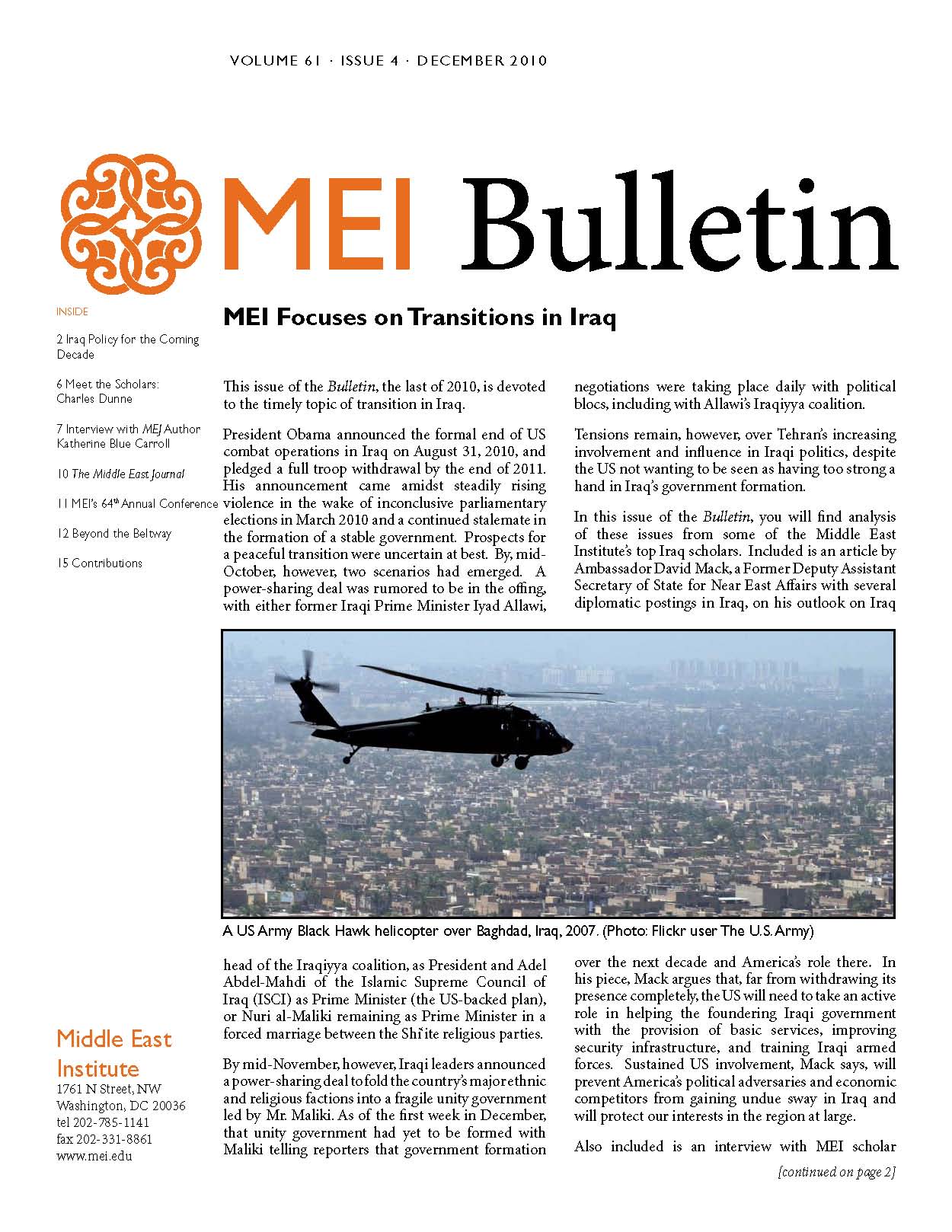
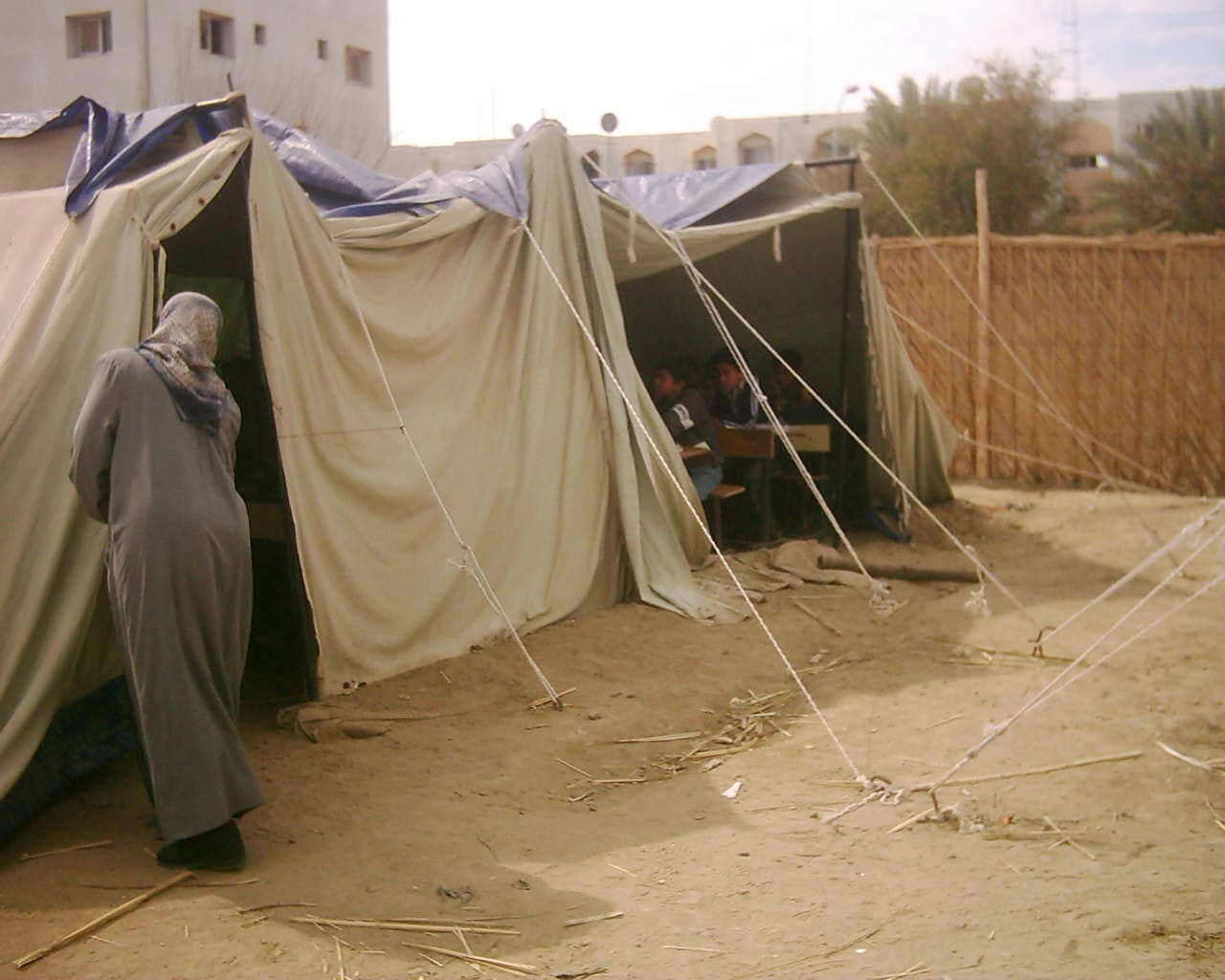
    In the wake of the August 31 drawdown of US forces and the formation of a fragile unity government after months of negotiations, the December 2010 Bulletin features an argument from Ambassador David Mack for sustained US assistance to the Iraqi government, interviews with MEI Scholar Charles Dunne the political situation in Iraq and with Katherine Blue Carroll on her forthcoming MEJ article, and a summary of MEI’s 64th Annual Conference.

    October 5, 2011

    U.N. Palestine Vote: Time to Exhale
    Middle East Institute
  • Analysis
  • U.N. Palestine Vote: Time to Exhale

    This article first appeared as an Op-Ed on Politico.com on September 19, 2011

    Palestinian President Mahmoud Abbas early this week will likely fulfill his longstanding vow to introduce in the U.N. Security Council a resolution to recognize Palestine as the 194th member state. No one should be the least bit surprised.

    September 19, 2011

    The Iraq-SAMHSA Partnership to Strengthen Behavioral Health Studies
    Middle East Institute
  • Analysis
  • The Iraq-SAMHSA Partnership to Strengthen Behavioral Health Studies

    Originally posted September, 2011

    For nearly eight years — since May 2004 — the Substance Abuse and Mental Health Services Administration (SAMHSA) of the US Department of Health and Human Services (HHS) has partnered with the Iraqi Ministry of Health to help Iraq re-establish its behavioral health service system. HHS and SAMHSA have learned much from this effort about improving behavioral health services in the US, particularly for Muslim populations and for persons experiencing extended trauma.

    September 1, 2011

    Implications of the Iraq-SAMHSA Initiative for the Delivery of Behavioral Health Services in the United States
    Middle East Institute
  • Analysis
  • Implications of the Iraq-SAMHSA Initiative for the Delivery of Behavioral Health Services in the United States

    Through the collaboration between Iraq and the Substance Abuse and Mental Health Services Administration (SAMHSA) of the US Department of Health and Human Services (HHS), US providers have learned a great deal about improving behavioral health services, including trauma services, from their Iraqi colleagues since 2004.[1] Two of the many implications for US behavioral health services resulting from this partnership are directly relevant to shaping services for both returning veterans, and refugees and immigrants from the Middle East:

    September 1, 2011

    Turkey's Kurdish Challenge
    Middle East Institute
  • Analysis
  • Turkey's Kurdish Challenge

    F. Stephen Larrabee, Distinguished Chair in European Security at the RAND Corporation, and Gonul Tol, Executive Director of the Middle East Institute’s Center for Turkish Studies, highlight the importance of drafting a new civilian constitution to solve Turkey’s Kurdish issue.

    Israel's Palestinians: The Conflict Within
  • Video
  • Israel's Palestinians: The Conflict Within

    The Middle East Institute is proud to host Ilan Peleg and Dov Waxman, authors of the book Israel's Palestinians:The Conflict Within (Cambridge, 2011), for a discussion about their findings. One in five citizens of Israel are Palestinian. Often overlooked by outside observers, the challenges facing the Palestinian minority in Israel are an inseparable part of the Israeli-Palestinian conflict. Resolving this conflict – a central concern of U.S. foreign policy and current international diplomacy – requires more than the establishment of a Palestinian state.

    July 25, 2011

    Palestinian Peace Strategy in a Changing Middle East
    Middle East Institute
  • Podcast
  • Palestinian Peace Strategy in a Changing Middle East

    The Middle East Institute and The Foundation for Middle East Peace are proud to host Ziad Abu Zayyad a veteran journalist and the co-founder and editor of the Palestine/Israel Journal. In his talk, Mr. Abu Zayyad will address whether a rapprochement between Fatah and Hamas is possible, and will also discuss the main challenges facing the US-Palestinian bilateral relationship.

    Speaker: Ziad Abu Zayyad

    May 5, 2011

    Palestinian Peace Strategy in a Changing Middle East: Prospects for Fatah-Hamas Reconciliation, and US-Palestinian Relations
    Middle East Institute
  • Video
  • Palestinian Peace Strategy in a Changing Middle East: Prospects for Fatah-Hamas Reconciliation, and US-Palestinian Relations

    The Middle East Institute and the Foundation for Middle East Peace are proud to host Ziad Abu Zayyad a veteran journalist and the co-founder and editor of the Palestine/Israel Journal. In his talk, Mr.Abu Zayyad will address whether a rapprochement between Fatah and Hamas is possible, and will also discuss the main challenges facing the US-Palestinian bilateral relationship.

    May 5, 2011