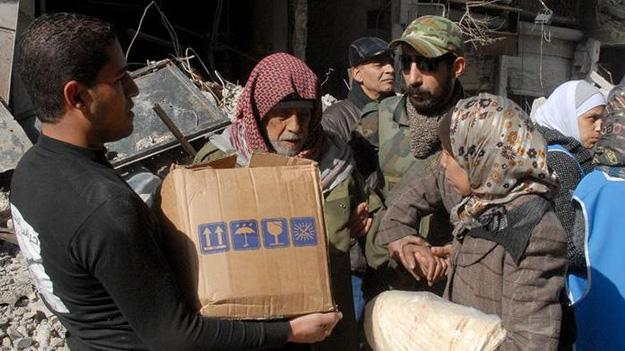
In most wars combatants wield aid as a weapon, circumscribing humanitarian access and impeding assistance to civilians in enemy-held territory, hoping that hunger will starve resistance into submission or undermine the morale of foes. In no war is this truer than in Syria, where the horror of a prolonged vicious conflict has been compounded by aid being held hostage to politics and combat. The lack of adequate medical care, food, and shelter has added to the death toll and misery that has made Syria the world’s worst humanitarian catastrophe this century.
Dressing for Diplomatic Success: Iranian Negotiations Lead the Way
In the Middle East today, diplomatic success and failure are unfolding side by side, often with some of the same players. High-profile attempts are being made to end the conflict between Israel and the Palestinians, to stop the massacre of innocents in Syria, and to bring Iran in from the cold.
Collection Spotlight: America's Great Game: The CIA's Secret Arabists and the Shaping of the Modern Middle East
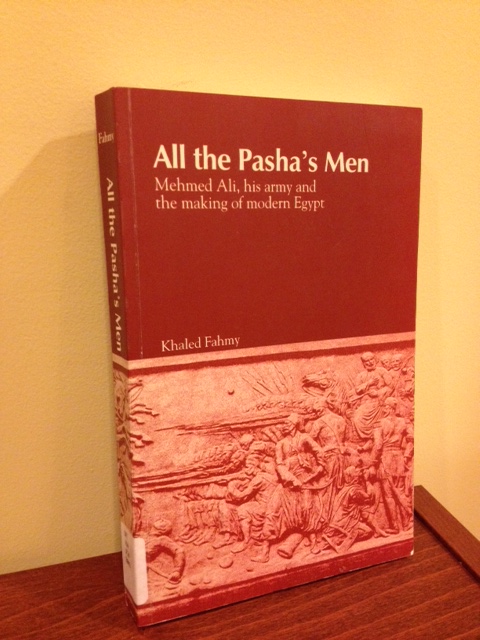
America’s Great Game: The CIA’s Secret Arabists and the Shaping of the Modern Middle East, by Hugh Wilford, 2013
A tale of how the CIA set sail into the Middle East with the best intentions, ran aground on its own failings, and was overwhelmed by forces and events it could not control.
“Amal”[1] fled violence in the countryside outside of Damascus with her husband, father, and five children almost two years ago. The family moved to Salamieh, a Syrian town of approximately 100,000 people 33 kilometers southeast of Hama. Salamieh is still under the control of the government armed forces, and many displaced people, mainly Sunnis from Homs, Aleppo, and the Damascus area, have sought refuge there and in surrounding towns.
With a major push from the U.S., a new Syrian peace conference opened Wednesday in Switzerland, the first such effort since the middle of 2012. It wasn’t easy getting everyone there, and it will be harder still to achieve a breakthrough.
Qanats and Water Cooperation for a Sustainable Future
This essay is part of the Middle East-Asia Project (MAP) series on “Harvesting Water and Harnessing Cooperation: Qanat Systems in the Middle East and Asia.”
Scenarios of Change and Possibilities of Reform in Lebanon
The recent spate of bombings in Beirut underline the degree to which Lebanon has become entangled in the wider regional conflict being fought in and around Syria, but the paralysis of Lebanon’s political institutions indicate an equally deep domestic dysfunction. There is no doubt that part of Lebanon’s problems derive from its difficult geostrategic environment and require external developments and changes, and part of them come from the weaknesses of its domestic political and socioeconomic system and require internal reform.
On January 2, only days after a car bomb in Beirut took the life of former Finance Minister Mohamad Chatah and several bystanders on December 27, another bomb struck the capital’s southern suburbs. With initial reports of four dead and 40 wounded, this latest, and possibly retaliatory, attack fits into an ominous pattern as Syria’s conflict spills into Lebanon.
On Wednesday, December 4, Hassan Laqees, a Lebanese Hezbollah leader who was reportedly involved in the group’s weapons procurement and development, was assassinated south of Beirut. On Sunday, another Hezbollah military commander was killed in Syria, bringing the number of Hezbollah dead in the Syrian conflict into the hundreds.
Turkey-Pakistan Security Relations since the 1950s
The initial impulse for Pakistan and Turkey to pursue security cooperation stemmed from their common opposition to Communism in the 1950s. Over the past decade, Pakistan and Turkey have once again sought to cooperate in the security sphere, this time in countering terrorism and ensuring stability in Afghanistan.
The Tortuous Route of the U.S.-Afghan Security Pact
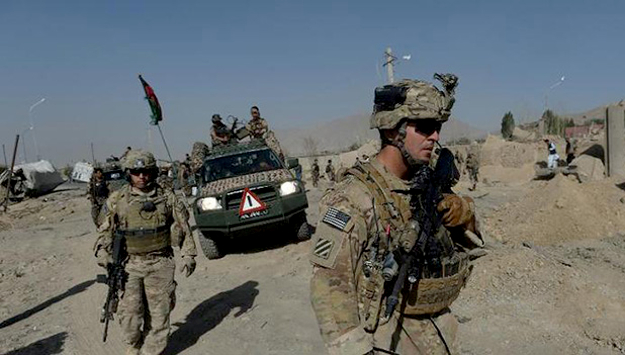
Yesterday, the United States and Afghanistan completed a bilateral security pact ensuring that U.S. troops will remain in the country. It now goes to a council of elders—the loya jirga—for authorization. MEI spoke with Scholar-in-Residence Marvin Weinbaum about the pact’s sticking points, next steps for its approval, and what each country gains from the agreement.
What does the U.S.-Afghan security pact stipulate?
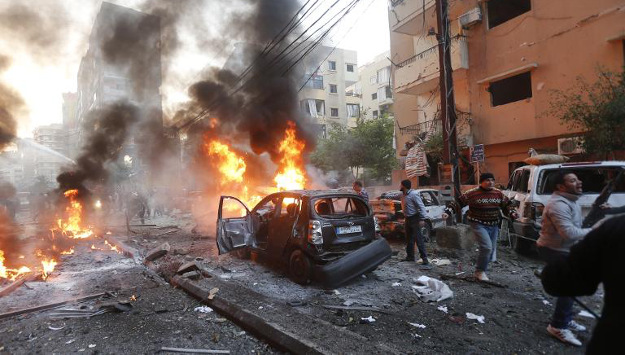
Earlier today, double explosions near the Iranian embassy in Beirut killed at least 23, including an Iranian diplomat. The Abdullah Azzam Brigades, an Islamist group with links to al-Qa`ida, took responsibility for the attack. MEI sat down with its Vice President for Policy and Research, Paul Salem, to discuss the significance of the bombings in Lebanon as well as their regional and global implications.
Tell us about the bombing and the group that claimed responsibility for it.