This individual is a guest contributor. MEI is not able to assist with contact requests.
Natalie Brinham (also known as Alice Cowley) is a Economic and Social Research Council (ESRC) PhD student at Queen Mary University of London researching statelessness and state crime. She has worked for many years in NGOs in the U.K. and Southeast Asia on forced migration, trafficking and statelessness in both frontline service provision roles and research and advocacy roles. This included four years working as a research and advocacy consultant on a multi-country project on the human rights of stateless Rohingya. She co-authored a three-year study on the Slow-Burning Genocide of Myanmar’s Rohingya with Maung Zarni. Her forthcoming research essay (with Maung Zarni) entitled “Reworking the Colonial Era-Indian Peril: Myanmar’s State-directed Persecution of Rohingyas and Other Muslims,” will be published in The Brown Journal of World Affairs, (December 2017). She holds an MA from UCL Institute of Education and a BA (Honors) from the School of Oriental and African Studies.
Ensuring the Safety of Rohingyas as a National Minority Inside Myanmar: Who? How?
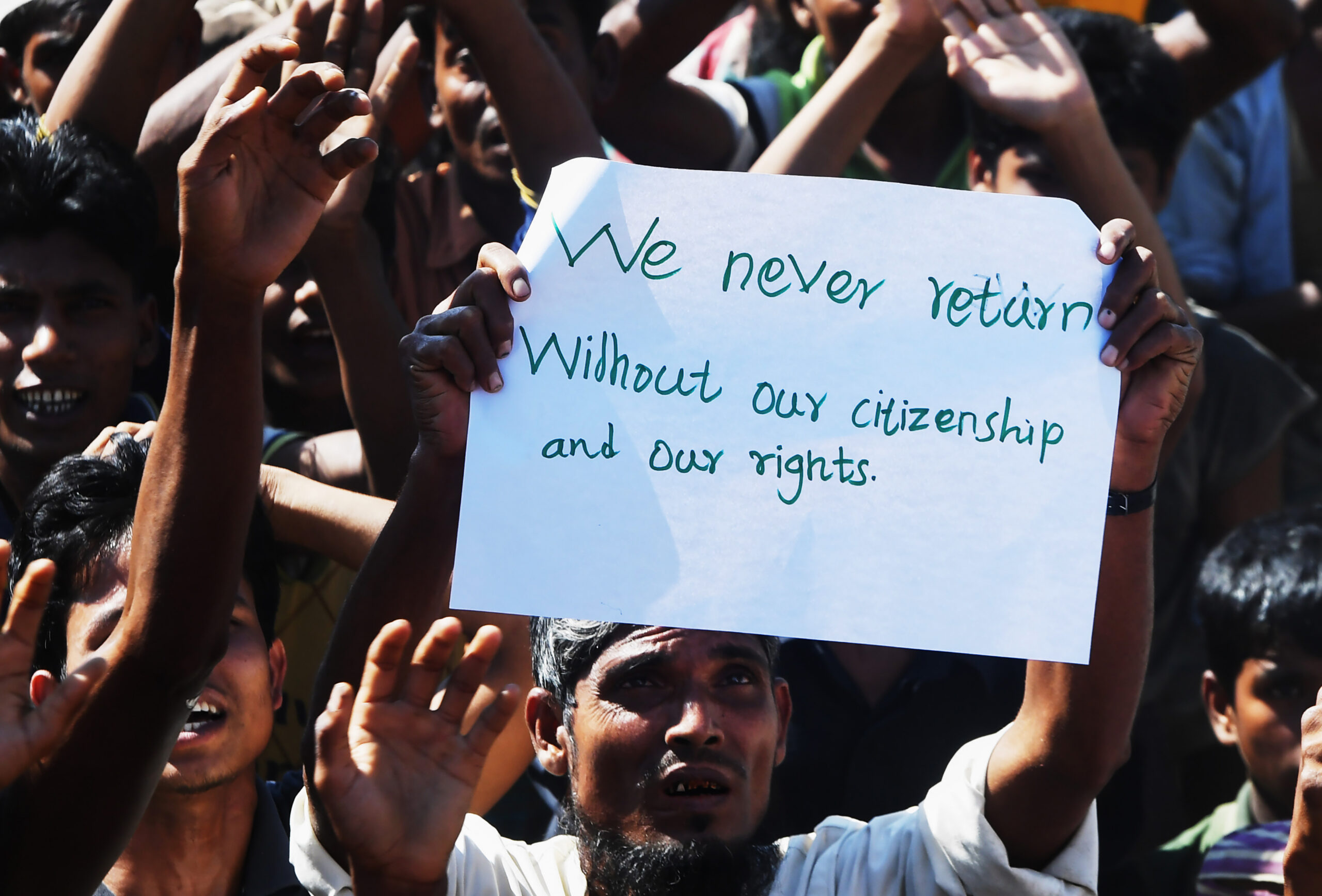
Amid calls for international accountability, the government of Bangladesh has prioritized the repatriation of Rohingyas. In this article, the authors examine the pressures and motivations of the various players that favor repatriation. They argue that, given the current circumstances, it is inconceivable that any repatriation will be voluntary or sustainable.
Waves of Genocidal Terror against Rohingyas by Myanmar and the Resultant Exodus Since 1978
This essay aims to highlight the scope and rhythmic nature of Burma’s persecution of Rohingyas the devastating impact on the Rohingya population. First, it sets out to describe and help readers understand the evolving pretexts given by the successive Burmese governments and the methods of group destruction and resultant waves — five in total — of the outflow of Rohingyas in large number. Then it attempts to offer an interpretive framework within which this cycle of violence-exodus-lull is best understood.
An Evolution of Rohingya Persecution in Myanmar: From Strategic Embrace to Genocide
This essay discusses the persecution of, and violence committed against, Rohingya. The authors argue that recent waves of state-directed violence communal destruction, far from being a new phenomenon, have been occurring since 1978 and are part of a process of “slow-burning genocide.”