Read in PDF
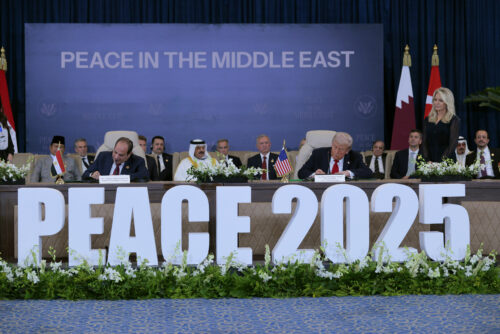
The October 2025 cease-fire and hostage-release deal that ended the Israel-Hamas conflict marks the beginning of a complicated post-war phase. The agreement has created important opportunities to advance stability in the Middle East and build a lasting and sustainable peace marked by enhanced regional security and integration, but there are considerable risks to manage. Achieving these goals will require coordinated international action along multiple lines of effort: security, rule of law, recovery and reconstruction, responsive governance, and steady and focused diplomacy to build confidence among key parties.
Why It Matters for the US
- Reduced security threats to the US and its partners. The end to the Gaza war creates new possibilities to accelerate long-standing military and security efforts involving US regional partners. The deal facilitates burden-sharing for improved security on the Israeli-Palestinian front and would further weaken extremist elements that have long destabilized the Middle East.
- Historic opening for peace and prosperity in the Middle East. Future peace deals and normalization accords between Israel and regional powers like Saudi Arabia are more possible now that active fighting has stopped in Gaza. But countries that might provide financing and security forces will continue to look for assurances about a pathway to a two-state solution.
- A boost to America’s partnerships and regional standing. The US remains the unrivaled strategic partner of choice for many countries in the Middle East. Achieving progress on the Israeli-Palestinian front, a critical prerequisite to regional stability, reinforces its position vis-à-vis competitors like China and Russia.
Policy Considerations
Four key questions to monitor in the coming months:
- Will Hamas disarm? Hamas is unlikely to disarm fully. It has built its reputation by defying Israel with violence, but it has sustained significant damage over the past two years, including the devastating loss of Palestinian lives and the destruction of Gaza. The timeline and verification process for disarmament, which still needs to be defined, will be critical.
- Who governs the Palestinian territories? The current plans about who will govern, administer, and secure Gaza need to be more fully developed beyond the agreed principle that Hamas cannot have a role in the “day after.” Gazans still live in dire humanitarian conditions as a result of this war, and a more functional aid distribution system connected to Palestinian society is necessary. Key questions also loom about self-governance in the West Bank, where the Palestinian Authority (PA) faces major challenges to its legitimacy and capacity. Israel has rejected a potential PA role, while the US, outside of support to security forces in the West Bank, has not prioritized Palestinian political legitimacy and institution-building for nearly a decade.
- How will Israeli politics shift? Israel witnessed significant political turbulence in the years before the Hamas attack on October 7, 2023. It held five elections in 2019-22 and was divided for much of 2023 over controversial proposals to change the constitutional and political structure. The upcoming period will likely witness more unpredictability and discontinuities as the public reckons with the war’s aftermath. Israel is set to hold elections by late October 2026.
- Who will coordinate implementation? The US is sending military advisors to help implement and monitor the plan, and the Trump administration has proposed creating a “Peace Board” to coordinate on reconstruction and post-war governance. Many of these ideas require steady follow up at a time when the US government is shuttered and key entities are short-staffed. The Gulf and EU are widely expected to play a major role in funding reconstruction, while Jordan and Egypt will also be vital partners in the effort.
Photo by Chip Somodevilla/Getty Images