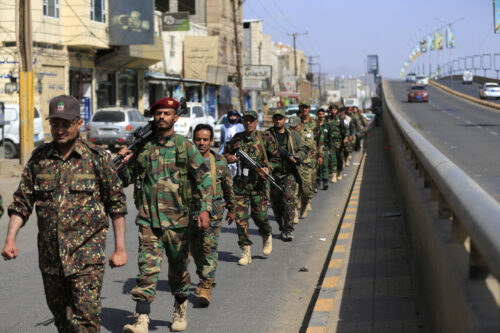
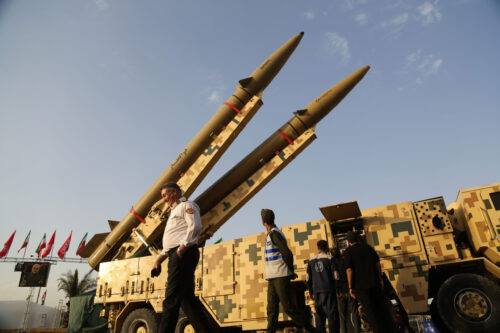
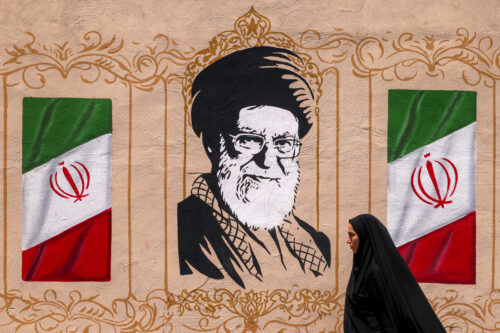
The US-Iran war has entered an unpredictable new phase. After 13 nights of intensifying US airstrikes on Iran, President Trump abruptly halted the bombing campaign. Iran says it will pause its own attacks, but maintains it still controls the Strait of Hormuz. Just today, drone attacks in Saudi Arabia, Jordan, and Iraq raised fears that the fragile pause may not hold. Meanwhile, the Houthis have opened a new front by threatening shipping through the Bab el-Mandeb Strait — a critical artery for global trade.
The Middle East Instituted unpacked what all these developments mean for regional security, the global economy, and US policy in the Middle East.
Speakers
Dr. Karen E. Young is a Senior Fellow at the Middle East Institute (MEI), where she leads the Economics and Energy Initiative. She is also a senior research scholar at the Columbia University Center on Global Energy Policy. A political economist, her work focuses on the Gulf and broader Middle East and North Africa (MENA) region, with particular attention to the intersection of energy, finance, and security.
Alex Vatanka is a Senior Fellow at the Middle East Institute. He specializes in Middle Eastern regional security affairs with a particular focus on Iran. He was formerly a Senior Analyst at Jane’s Information Group in London. Alex is also a Senior Fellow in Middle East Studies at the US Air Force Special Operations School (USAFSOS) at Hurlburt Field and teaches as an Adjunct Professor at DISAS at Wright-Patterson Air Force Base. He has testified before the US Congress and lectured widely for both governmental and commercial audiences, including the US Departments of State and Defense, US intelligence agencies, and a list of international corporations.
Dr. Ken Pollack (moderator) is Vice President for Policy at the Middle East Institute. Previously he was a senior fellow at the American Enterprise Institute (AEI), where he worked on Middle Eastern political-military affairs, focusing in particular on Iran, Iraq, Saudi Arabia, and the Gulf countries.