
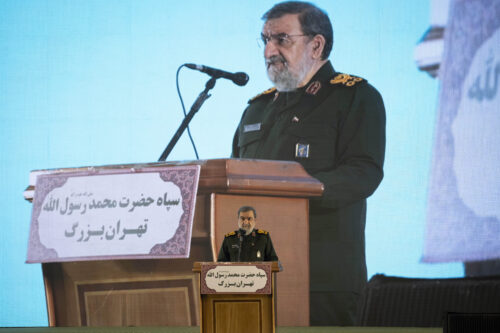
Within 48 hours this week, Iran filled six of the most important posts in its battered military and security establishment. Ali Abdollahi became chief of the Armed Forces General Staff, Kioumars Heydari his deputy; Ahmad Vahidi, who had effectively led the Revolutionary Guards since the war began in February, was formally confirmed as commander, with Mostafa Izadi named his deputy; Ali Azmaei, who had already been running the Guards’ navy since early July, was folded into the same round of decrees; and Hussein Taeb returned to lead the Basij paramilitary force, 17 years after he last ran it. A day earlier, Mohsen Rezaei, the Guards’ longest-serving former commander (1981–1997), had returned to the centre of decision-making as secretary of the Supreme National Security Council (SNSC)…
Read together with the biographies and mandates behind them, [the appointments] show how Tehran is drawing lessons from successive wars and preparing for a prolonged period of insecurity, without proving it has abandoned negotiation.
Photo by Morteza Nikoubazl/NurPhoto via Getty Images
The Middle East Institute (MEI) is an independent, non-partisan, not-for-profit, educational organization. It does not engage in advocacy and its scholars’ opinions are their own. MEI welcomes financial donations, but retains sole editorial control over its work and its publications reflect only the authors’ views. For a listing of MEI donors, please click here.

Yemen: The Houthis’ Role in the Next Evolution of the Axis of Resistance

US Regional Foreign Policy: Unforced Diplomatic Errors Risk Accelerating American Retrenchment