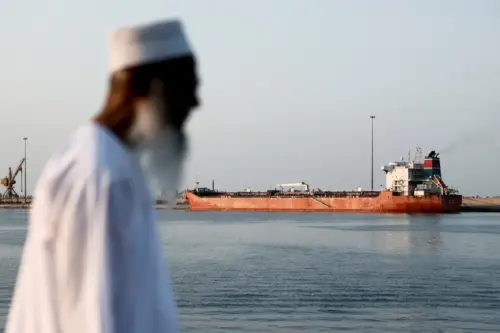
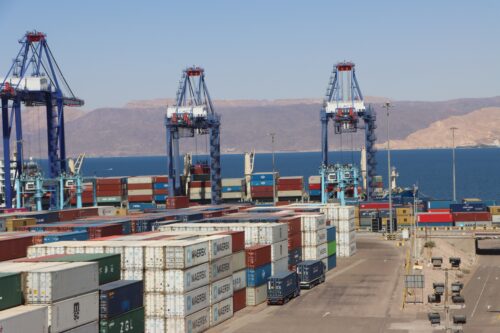
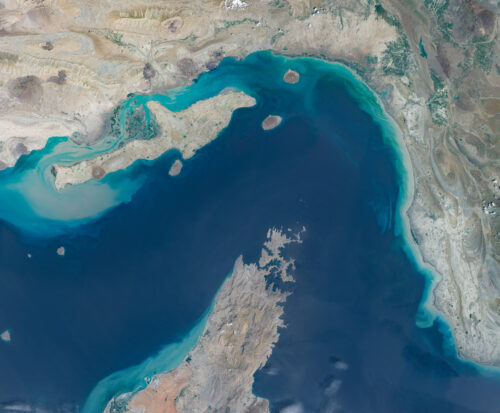
The U.S.-Israeli war against Iran has created the largest disruption to global oil and liquefied natural gas supplies in modern history. Just before the war, roughly 20 percent of the world’s oil supply and 20 percent of liquefied natural gas exports flowed through the Strait of Hormuz. Over the past month, traffic through the strait has collapsed, slowing to a daily average of five percent of its normal flows. Saudi Arabia and the United Arab Emirates have sought to reroute crude oil shipments, but these other pipelines and avenues cannot make up the lost volume and are themselves vulnerable. And the damage to Ras Laffan, Qatar’s main liquefied natural gas export facility, from an Iranian attack on March 18 means that the world’s largest LNG producer may face reductions in its capacity for years to come…
There is a tremendous amount of economic uncertainty for Gulf states to navigate, and it will reshape the way they engage with one another and with Iran, Israel, and the United States for years to come. But this war has also laid bare how urgently the United States needs to update its own approach toward the Gulf states when it comes to energy. Especially under U.S. President Donald Trump, Washington has viewed these countries as piggy banks and energy reservoirs instead of what they have really become: increasingly valuable partners in states’ broader efforts to achieve energy security in oil and gas and navigate the transition toward renewables. Trump has said that if the United States ends its direct conflict with Iran, it intends to protect the Gulf Arab states “from far away,” but has not signaled he will cease calling on Saudi Arabia to use its spare capacity to meet U.S. and global oil needs. Trump’s frequent demands that the Gulf states invest in U.S. energy suggest an assumption that these countries should settle for a little security in exchange for a lot of money.
But the Gulf oil producers are changing how they think about energy.
The Middle East Institute (MEI) is an independent, non-partisan, not-for-profit, educational organization. It does not engage in advocacy and its scholars’ opinions are their own. MEI welcomes financial donations, but retains sole editorial control over its work and its publications reflect only the authors’ views. For a listing of MEI donors, please click here.