After Khamenei: The Security State He Built, and the Son Who Inherits It
External Publication
July 10, 2026
Share
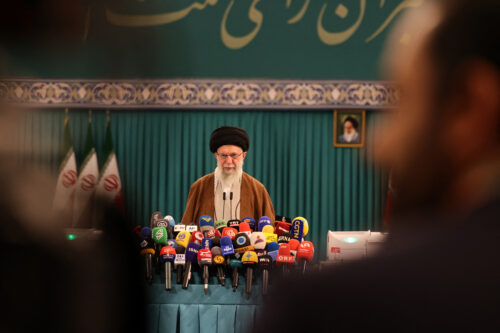
When it came to the funeral of Iran’s Supreme Leader Ali Khamenei in Tehran this week, the most important man—his son and successor—did not appear. Other relatives came, as did senior officials, who spoke of loyalty and bay’a (the oath of allegiance), as the crowds were told to chant for revenge. But Mojtaba Khamenei was nowhere to be seen at the ceremony designed partly as a handover.
His absence may have been one of caution, or clerical mystique, or stagecraft, but politically, it exposed the problem the whole event was meant to hide: that Mojtaba needs his father’s legacy. He cannot simply inherit his father’s power. An office can be transferred in an afternoon, but authority cannot. The funeral tried to convert grief into legitimacy, but the empty place where the heir should have stood left the transaction visibly unfinished.
The Middle East Institute (MEI) is an independent, non-partisan, not-for-profit, educational organization. It does not engage in advocacy and its scholars’ opinions are their own. MEI welcomes financial donations, but retains sole editorial control over its work and its publications reflect only the authors’ views. For a listing of MEI donors, please click here.